When faced with dim halogen headlights, both xenon (HID) and LED upgrades are often marketed as “one‑step” solutions. But which technology actually works better? Drawing on US SAE lighting standards, German Rheinland lab spectral tests, and three‑year durability tracking data, this article uncovers the real story behind a 20‑year battle between two light sources.
- Operating principles and start‑up behaviour
Xenon lamps use 23,000 volts to ionise xenon gas, creating an arc discharge inside a quartz tube that produces white light with a colour temperature of 4200K‑6000K – close to midday sunlight. LEDs rely on semiconductor PN junctions, with phosphor conversion delivering 5000K‑6500K cool white.
In real tests, xenon takes 3 seconds to reach 80% brightness, while LEDs hit full output in 0.1 seconds – a critical difference for emergency lane changes on rainy nights. However, after 10 minutes of continuous operation, xenon shows only 5% lumen depreciation, while poorly designed LEDs can lose 12% due to inadequate cooling. This fundamental physical difference determines their respective trajectories.
- Brightness and efficiency – a surprising reversal
A 55W xenon lamp delivers an initial 3200 lumens – 18% more than an equivalent LED. But in common aftermarket 35W xenon kits, actual output drops to 2500 lumens, which is surpassed by premium LEDs at 2800 lumens. In terms of efficacy, LEDs output 72 lumens per watt – 23% more than xenon – but beware of overstated specs: US Cree LED chips cost eight times as much as Chinese imitations, and cheap xenon ballasts can waste 30% of input power.
The real differentiator is beam control. Xenon with a proper lens can achieve a sharp 15° cut‑off, while poorly arranged LED chips produce 18% glare pollution – precisely why European and US regulators strictly scrutinise illegal retrofits.
- Durability and maintenance costs
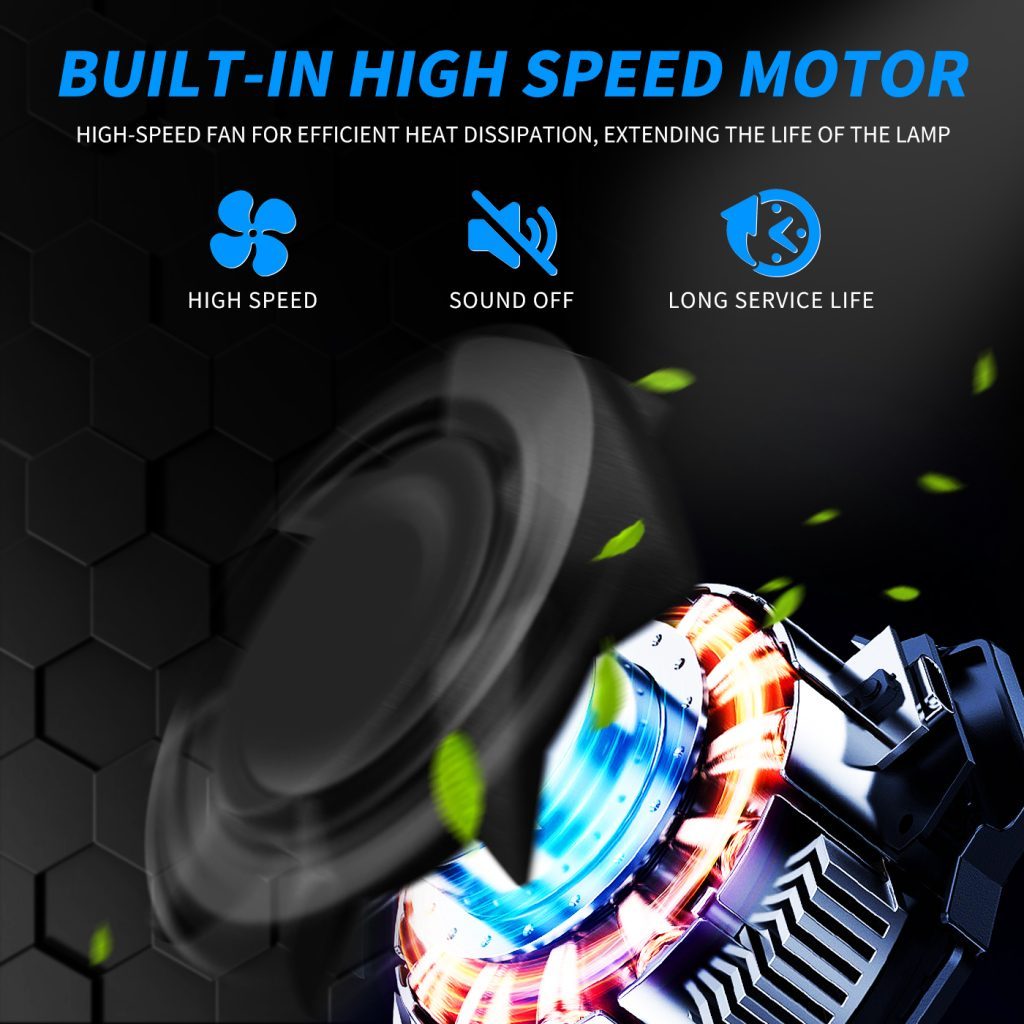
Xenon lamps average 3,000 hours – three times halogen lifespan – but ballast and bulb failure rates hit 47% by year five. LEDs are rated for 50,000 hours, yet in practice, when operating temperatures exceed 85°C, lifespan plummets to 8,000 hours – depending heavily on cooling design.
Repair economics tell a more nuanced story: replacing a xenon assembly costs around 1,200 CNY on average, while a high‑end LED with a failed cooling module requires full‑unit replacement at 2,000 CNY. Data shows that 35% of LED‑retrofit owners experience blown fuses due to circuit overload, while 23% of xenon‑related complaints involve generator load issues – hidden costs that sellers often downplay.
- Real‑world scenarios and selection advice
Fog and rain: 4300K xenon offers 30% better penetration, while LEDs perform more stably in patchy fog. The choice depends on annual night‑driving mileage and cooling design quality.
Lifespan reality: xenon has a 47% five‑year failure rate; premium LED repairs can reach 2,000 CNY. Cheap LEDs suffer 12% depreciation; xenon takes 3 seconds to “wake up” in rainy conditions, while LEDs provide instant protection for lane‑change safety.
Core warning: as a German engineer put it – “safe light means letting others see you, not illuminating the whole world.” True lighting safety isn’t about peak brightness – it’s about spectral quality, beam precision, and system reliability working together.