If you’re shopping for LED headlights, you’ve probably seen all kinds of numbers thrown around. “50,000 lumens!” “10,000K!” “Super bright!” — but what do these numbers actually mean in the real world? And how bright do you really need your headlights to be?
Here’s what I’ve learned from testing and comparing a bunch of LED headlight bulbs over the years.
First, let’s talk actual numbers.
A good 35W LED headlight typically puts out around 3200 lumens. That’s roughly 91 lumens per watt, which is pretty decent. Generally speaking, anything in the 80–100 lumens per watt range is considered good efficiency.
For comparison:
- A halogen low beam gives you about 1000 lumens. High beam? Around 1200 lumens.
- HID (xenon) bulbs can hit up to 3200 lumens in theory, but in real-world use, they’re usually around 2000+ lumens.
- A standard 40W incandescent bulb (like the ones you use at home) puts out only about 400 lumens. That’s why you don’t use those for your car, obviously.
So just based on the numbers, LEDs are already ahead of halogens and on par with — or better than — HIDs.
But here’s the catch: not all LEDs are created equal, and wattage numbers are often overstated.
Most LED headlight bulbs on the market fall in the 20W–40W range, and in real-world performance, they deliver roughly 2000–4000 lumens. But you’ll often see listings claiming “40W” or even “50W” with huge lumen numbers — and a lot of those are straight-up inflated.
Why do manufacturers exaggerate wattage? Because power gets attention. People see a big number and think “more watts = more light.” But the reality is, when you push an LED to higher wattage, it generates a lot of heat. And heat is the enemy of LEDs — if it can’t be properly dissipated, the bulb will overheat and start to degrade quickly, sometimes within minutes. High-wattage LEDs require serious cooling solutions — big heatsinks, efficient fans, quality materials — and that costs money. Cheap brands skip all that and just claim the numbers anyway.
So when a product says “50W LED” and gives you a lumen number that seems too good to be true, it probably is.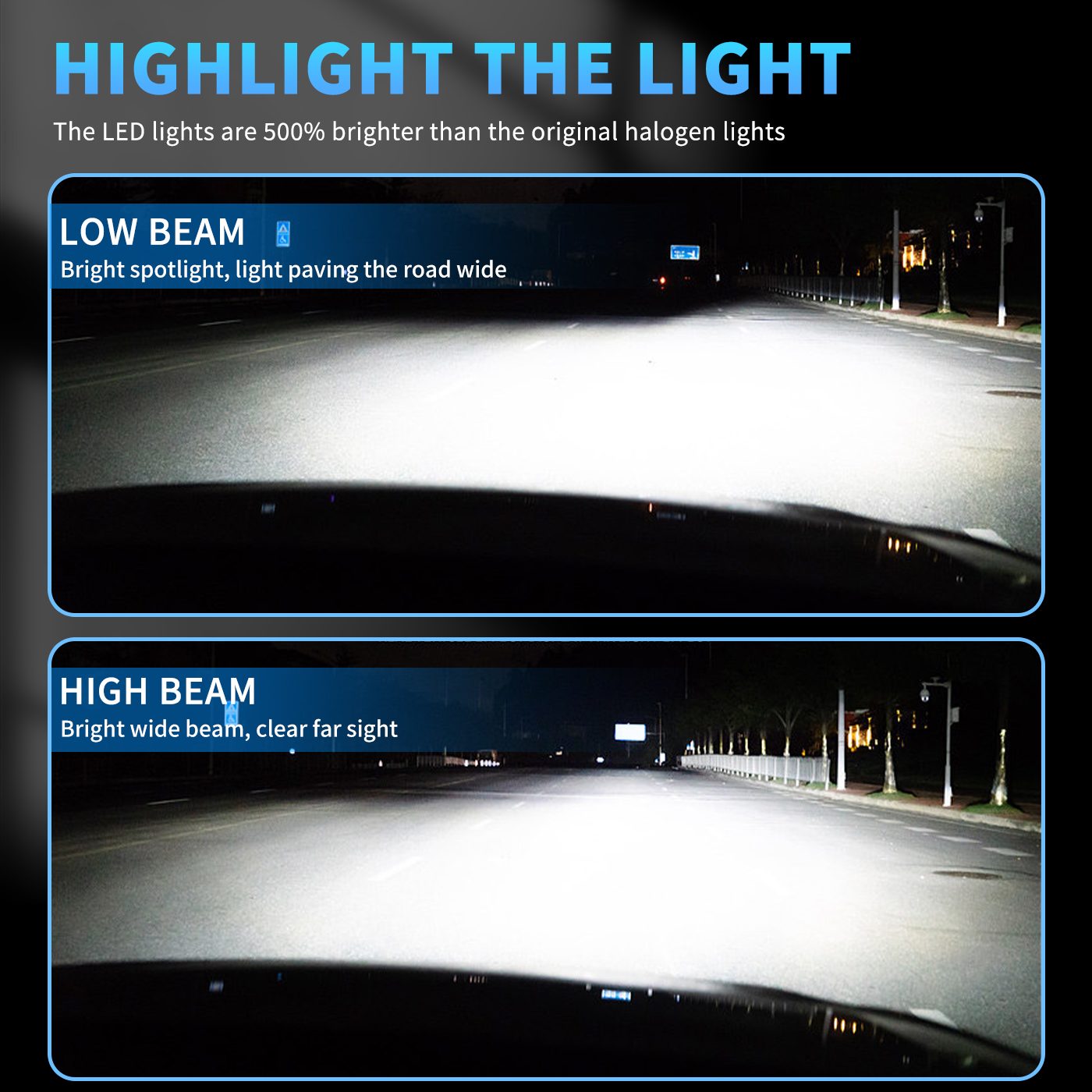 https://zblled.com/shop
To put it another way: 6200 lumens is about the brightness of 6200 candles. That’s the kind of output you can get from a high-end LED system. Meanwhile, a halogen bulb tops out at around 1200 lumens, and a good HID system can reach about 4500 lumens.
So LED headlights are very bright — but brightness alone isn’t everything. You need good beam pattern, proper cooling, and a reliable driver. Otherwise, you’re just buying a number on a box.
In short: if you’re choosing LED headlights, look for a trusted brand, check the lumens per watt (not just total lumens), and don’t chase the highest wattage. A solid 35W LED is more than enough for most drivers, and it’ll keep you safe without cooking your headlight housing.
Because at the end of the day — it’s not about having the brightest light. It’s about having light that works, when you need it most. zblled.com