Full Article (English, Human-Style, Conversational)
So you’re looking at LED headlights and all you see are lumen numbers — 2500, 4000, 6000, sometimes even 10,000. It‘s easy to get sucked into thinking “bigger number = better light.” But that’s not really how it works. Let me break down what you actually need to know — without all the marketing fluff.
First, what’s a good baseline?
For most daily driving, a 35W LED headlight putting out around 2500–3500 lumens is more than enough. That’s roughly 80–100 lumens per watt, which is the sweet spot for efficiency. It gives you clear visibility on regular roads at night — and more importantly, the heat is manageable.
If you frequently drive on dark mountain roads or poorly lit highways, you might want to bump up to 4000+ lumens (something like a 45W unit). But here‘s the catch — higher brightness means more heat, so you’ll need better cooling. And not all cars are built to handle that.
What if you’re replacing halogen or HID bulbs?
This is where a lot of people get it wrong.
If you’re swapping out halogen bulbs:
- Low beam: aim for 1000–1200 lumens
- High beam: look at 1200–2000 lumens
The challenge here isn‘t just brightness — it’s beam pattern. Halogen reflectors are designed for a specific light spread. If you drop in an LED that‘s too bright or has the wrong beam shape, you’ll end up with scattered light that blinds other drivers and doesn’t actually light up the road properly.
If you’re replacing HID (xenon) bulbs:
Go for 2000+ lumens. HIDs are already bright, so if you want to feel an upgrade, you need something that actually outshines them.
Now let’s talk about something most people ignore: heat and power.
LEDs run hot. If the temperature goes above 85°C, they start to degrade — fast. That’s why good LED bulbs come with fans or metal heatsinks to pull heat away. If you skip cooling, you’re basically burning money.
Also, don’t exceed your car’s wiring capacity. A safe rule is not to go over 30% of your original bulb’s wattage. So if your car came with 55W halogens, replacing them with a 35–45W LED is usually fine. Anything higher and you’re risking melted wires or blown fuses.
What about efficiency?
Look for products that deliver at least 90 lumens per watt. For example, a 35W LED that gives 3200 lumens is doing about 91 lumens per watt — that‘s solid. If a product claims huge lumen numbers but the wattage is low, it’s likely overpromising. And if the wattage is high but the cooling looks cheap — run away. It won’t last.
So, what’s the sweet spot?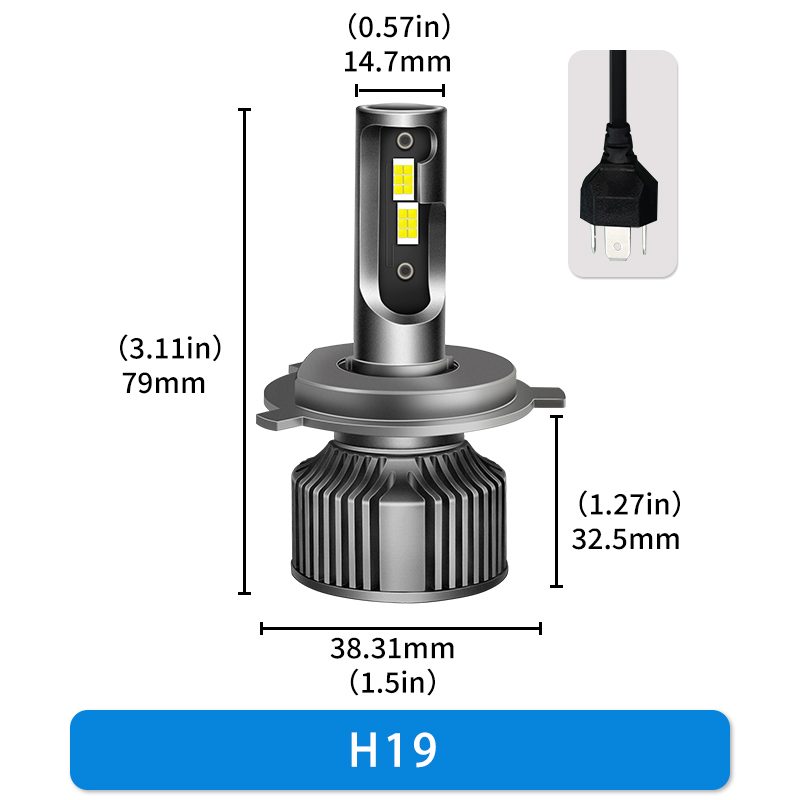
For most drivers, 2500–4000 lumens is the range you want to be in. And 35W (around 3200 lumens) is probably the best balance of brightness, safety, and longevity — it’s the “goldilocks” zone for LED headlights.
Before you buy, ask yourself:
- What kind of driving do you do most? (city? highway? back roads?)
- What‘s your original bulb type? (halogen? HID?)
- Does the product have proper cooling? (fan? heatsink? airflow design?)
- Can you adjust the beam angle? (to avoid glare and get the beam pattern right)
Choose wisely, and your LEDs will serve you well — with better visibility, safer night driving, and fewer headaches down the road.