In automotive lighting evolution, “luminous flux,” “colour temperature,” “beam angle,” and “start‑up response time” are the four core parameters that define light source performance. These differences aren’t just about “which is brighter” – they directly affect night‑driving visibility, cornering detection, and safety margins during high‑beam switching.
- Core specifications at a glance
Xenon lamps emit light through a high‑voltage arc discharge, with colour temperatures typically between 4300K and 6000K, luminous efficacy around 80‑100 lumens per watt – but with a noticeable delay of 3‑5 seconds to full brightness, and significant depreciation over time.
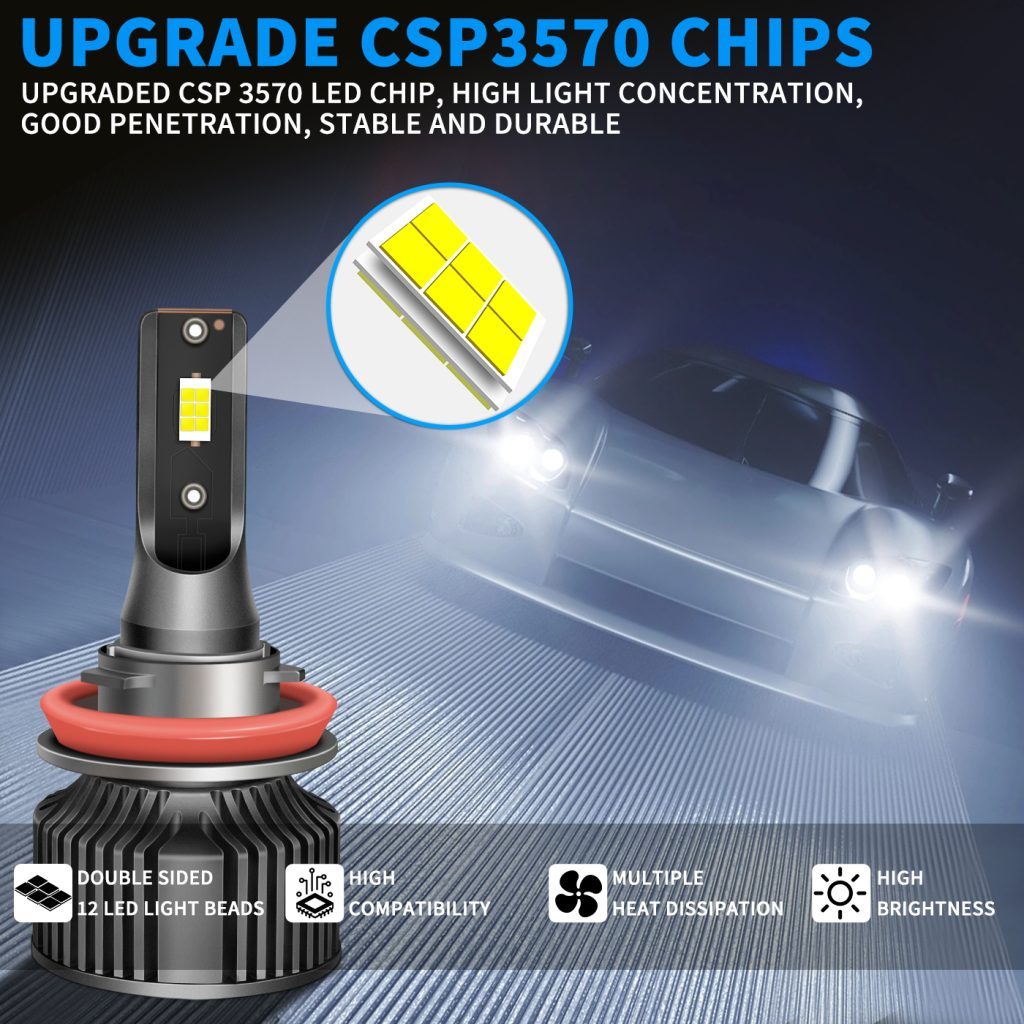
LEDs are based on semiconductor emission, with microsecond‑level response times, efficacy typically exceeding 120 lumens per watt, and more natural colour rendering. Their compact, shock‑resistant design makes them better suited to modern vehicles requiring precise beam control and instant response.
- Brightness comparison
LEDs are semiconductor cold‑light sources with high efficiency and low energy consumption. High‑quality LEDs deliver excellent brightness, and with ongoing technological advances, many now meet or exceed the output of conventional sources.
Xenon lamps are high‑intensity discharge lights with very high brightness – often reaching 3200 lumens or more – excelling in night‑time illumination. Their wide colour‑temperature range produces light close to natural daylight, offering a more comfortable visual experience.
Conclusion: both deliver excellent brightness. Which one is brighter depends on product quality and model. Generally, high‑quality LEDs and xenon lamps are closely matched in brightness, both meeting night‑time lighting needs.
- Efficiency and lifespan comparison
LEDs offer extremely high efficacy – far lower energy consumption than traditional sources – with lifespans of tens of thousands of hours, saving significant energy and maintenance costs over the long term.
Xenon lamps are bright but consume more energy. Their lifespan is reasonable but shorter than LEDs. However, they offer advantages in light quality, with a softer beam and wider colour‑temperature range.
Conclusion: LEDs have a clear advantage in efficiency and lifespan – they are more economical and environmentally friendly in the long run.
- Overall assessment and selection advice
When choosing a light source, consider not just brightness but also efficiency, lifespan, cost, and personal preference:
LED: excellent brightness, clear efficiency and lifespan advantages, compact size, easy installation and maintenance – ideal for most daily driving scenarios
Xenon: equally excellent brightness, softer light, wide colour‑temperature range – still holds value for specific high‑output needs (e.g., long‑distance night driving in remote areas)
Final recommendation: for daily driving, LEDs offer the better overall value; if you have specific needs – such as frequent driving on unlit remote roads – xenon remains a viable option.