LED headlights generally outlast xenon lamps by a significant margin, and their replacement frequency is far lower. According to authoritative data, LEDs – based on solid‑state lighting technology – typically last over 30,000 hours, with premium products approaching 100,000 hours – enough to cover the entire service life of a vehicle. Xenon lamps, which rely on arc discharge through xenon gas, have lifespans concentrated between 2,000 and 10,000 hours. Even high‑quality factory‑fitted xenon units only maintain stable performance beyond 3,000 hours; aftermarket units – affected by materials and installation – can drop to as low as 500 hours. This lifespan gap directly translates to replacement frequency: LEDs need no replacement during a vehicle’s normal life, while xenon lamps require regular checks and replacement depending on usage intensity – especially for vehicles with frequent night driving.
1. The Root Cause: Different Light‑Generation Principles
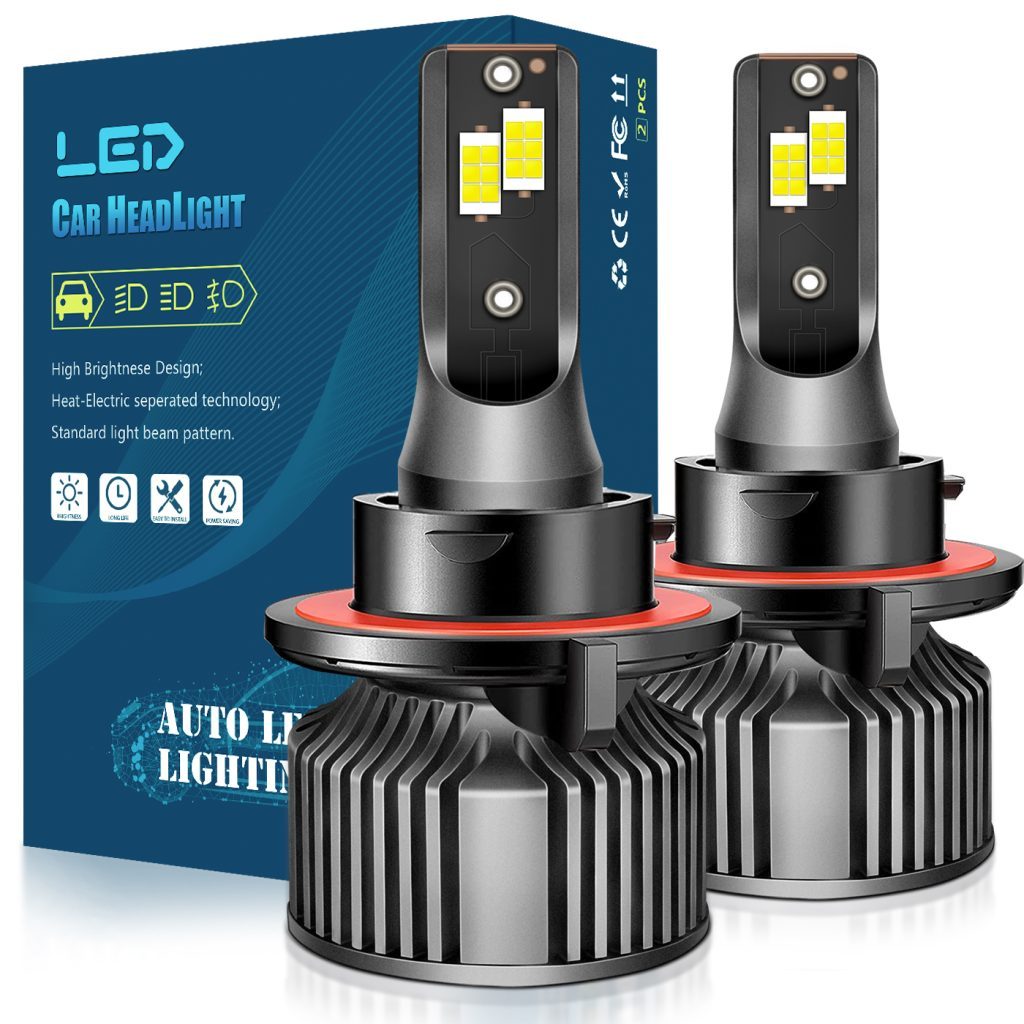
- LED: Semiconductor chips emit light when energised – a solid‑state light source with no moving parts or gas‑discharge components. Exceptional stability – brightness barely degrades over time, maintaining initial performance.
- Xenon (HID): High‑voltage arc discharge through xenon gas. Electrode materials are continuously consumed during arcing, and gas purity gradually decreases – causing annual brightness depreciation. When brightness drops below 70% of its original value, replacement is necessary for night‑driving safety.
2. Real‑World Lifespan Performance
| Xenon Type | Lifespan | Reason |
|---|---|---|
| OEM‑fitted xenon | 3,000+ hours | Rigorous compatibility testing – quality materials and electrode processes |
| Premium aftermarket xenon | 2,000‑3,000 hours | Better materials – but lower compatibility than OEM |
| Cheap/low‑quality aftermarket | Under 500 hours | Poor electrodes and seals – voltage or cooling mismatch causes early degradation |
LEDs – whether OEM or compliant aftermarket – consistently outlast the vehicle itself, requiring virtually no maintenance barring severe impact or circuit failure.
3. Replacement Frequency Comparison
| Metric | LED | Xenon (HID) |
|---|---|---|
| Average lifespan | 30,000‑100,000 hours | 2,000‑10,000 hours |
| Replacement frequency | None for vehicle life | Check/replace every 2‑3 years (shorter with frequent night driving) |
| Long‑term maintenance cost | Very low | Moderate–high |
LEDs are essentially “install once, forget forever.” Xenon owners must monitor brightness depreciation and replace bulbs promptly to avoid night‑driving hazards.
4. Beyond Lifespan – Other Performance Differences
- Energy consumption: LEDs use roughly half the power of xenon – reducing battery load and indirectly saving fuel.
- Start‑up speed: LEDs reach full brightness instantly; xenon requires 3‑5 seconds warm‑up. For night overtaking or emergency braking, LEDs provide quicker illumination support.
5. Summary and Recommendations
| Dimension | LED | Xenon (HID) |
|---|---|---|
| Lifespan | 30,000‑100,000 hours | 2,000‑10,000 hours |
| Replacement frequency | Very low – lasts vehicle life | High – regular replacement needed |
| Energy consumption | Low – ~50% of xenon | Higher |
| Start‑up speed | Instant full brightness | 3‑5 sec warm‑up |
| Maintenance | Virtually none | Regular checks and replacement |
For owners who value long‑term cost efficiency and driving safety, LEDs’ ultra‑long lifespan and low replacement frequency significantly reduce maintenance effort – while delivering stable, reliable illumination for night driving. Xenon once dominated with its brightness advantage, but its inherent technical limitations mean it has gradually fallen behind LEDs in lifespan and convenience.