“Halogen headlights penetrate fog better than LEDs” – this has almost become conventional wisdom in the automotive world. But is it really true? This article puts both light sources to the test in real fog conditions.
- Real‑World Test: LED Low Beam vs Halogen High Beam
Test vehicle: LED low beams, halogen high beams. The LED low beams were turned on first, followed by the halogen high beams – comparing illumination performance.
The test showed that the LED low beams delivered excellent brightness and coverage – with no noticeable weakness in fog penetration. When the halogen high beams were added, the overall light became more even, but there was no clear sense that the halogens outperformed the LEDs in fog penetration.
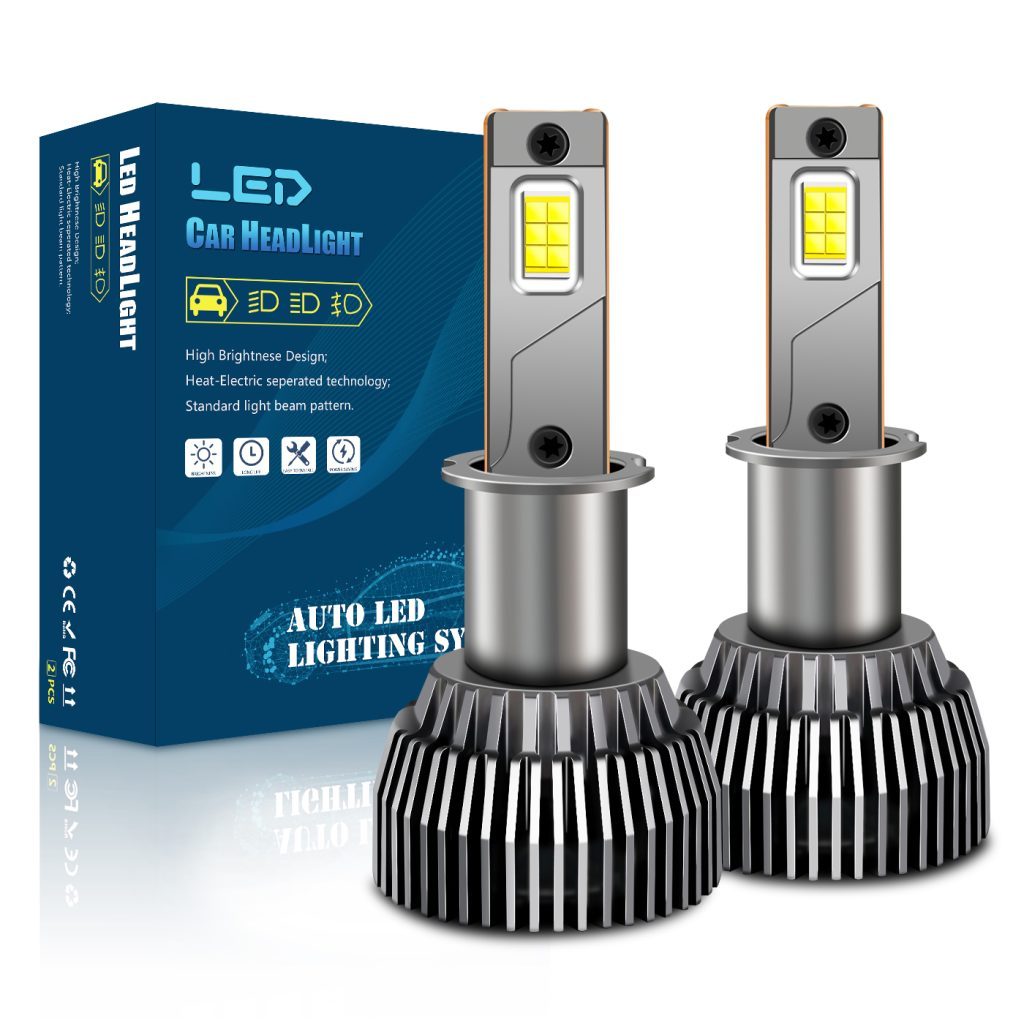
- Why Do People Say Halogens Penetrate Fog Better?
This belief stems mainly from colour temperature differences:
Light Source Typical Colour Temp Light Colour Fog Performance
Halogen ~3000K Warm yellow Longer wavelength – less scatter – better penetration
LED 5000K‑6500K Cool white Shorter wavelength – scatters more – “fog wall” effect
Physically, halogen’s warm‑yellow light has a longer wavelength, which scatters less in fog/rain – improving penetration. LED’s cool white light can produce more diffuse reflection in dense fog, creating a “fog wall” effect.
- Why Does the Test Show a Narrower Gap? – Technology Has Changed the Game
Despite the theoretical difference, modern LED technology has advanced significantly – and its overall illumination far exceeds that of halogens, so “poor penetration” is not inevitable:
Brightness advantage: LEDs are typically 2‑3 times brighter than halogens – even with some scatter, the higher output partially compensates.
Beam‑pattern optimisation: Some LED headlights are optimised for fog – using lens design and colour‑temperature tuning to improve wet‑weather performance.
Adjustable colour temperature: Modern LEDs can be had in lower colour temps (e.g., 4300K warm white) – balancing brightness and penetration.
- The Right Approach to Fog Driving
Regardless of which light source you have, fog‑driving safety depends on multiple factors:
Use fog lamps: Fog lamps have lower colour temps (3000K‑3500K) – specifically designed for fog – with a low‑beam angle that reduces scatter.
Reduce speed: In low visibility, no light can replace the safety of slowing down.
Keep distance: Wet roads + reduced visibility call for longer stopping distances.
Use lights correctly: In fog, use fog lamps and low beams – avoid high beams (they reflect off moisture, reducing visibility).
- Conclusion
Each light source has its strengths. Halogens theoretically offer better penetration in extreme fog, but modern LEDs – with their brightness, beam‑pattern design, and colour‑temp optimisation – perform on par with halogens in real‑world fog conditions.
Key takeaways:
Halogens: rely on “penetration” – suited for extreme fog
LEDs: rely on “brightness + optimisation” – cover a wider range of scenarios
Ultimate safety comes from: proper light use + fog lamps + reduced speed