Can I Directly Replace Halogen Bulbs With LED Bulbs?
Short answer: Yes, but you must address several critical hidden issues before replacement to avoid poor lighting performance and vehicle system faults.
Lots of car owners intend to upgrade dim factory halogen bulbs to brighter LED alternatives, and direct replacement is technically achievable. However, ignoring key differences between the two light sources will lead to common pitfalls. Below are the core points you need to know before installation.
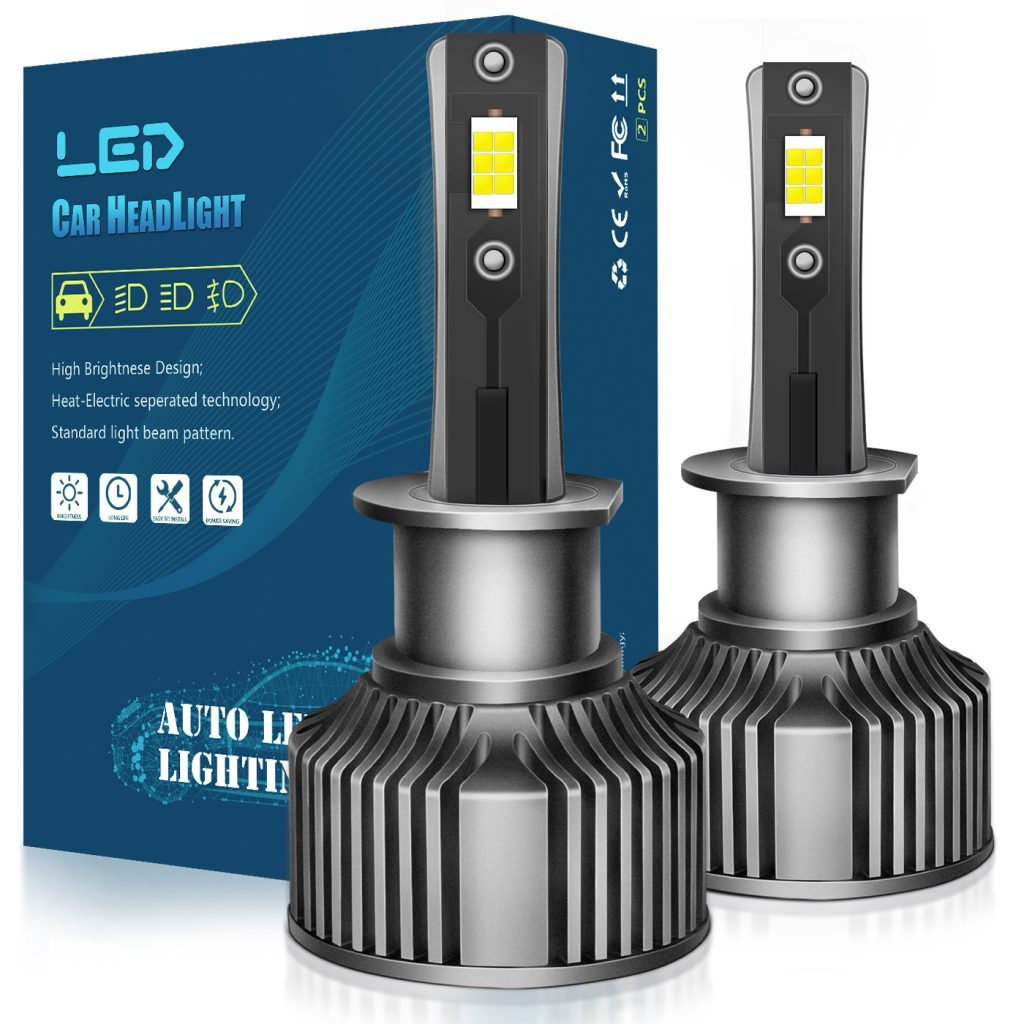
- Different Light-Generating Principles
Halogen bulbs rely on electric current heating a tungsten filament to high temperature for thermal radiation lighting. They feature a simple structure and light up immediately once powered on.
LED bulbs adopt semiconductor electroluminescence. Electrons and holes recombine inside chips to emit light, which requires a built-in driver to convert the vehicle’s 12V DC voltage into stable, matching current and voltage for normal operation.
This structural difference causes potential problems: simply plugging an LED bulb into the original halogen socket may result in failure to light up or continuous flickering. Most mainstream LED headlights come with integrated drivers, yet quality varies wildly across cheap generic products, so careful selection is required. - The Most Common Pitfall: Glare for Oncoming Traffic, Poor Road Illumination
This is the top complaint after unoptimized LED upgrades. Many drivers find their new LED lights extremely dazzling to oncoming vehicles, while their own forward road vision remains blurry. The light scatters randomly, creating uneven bright patches on the road surface, making potholes and road obstacles hard to distinguish.
Root Cause: Mismatched Light Emission Points
The original reflector bowl is precisely engineered around the filament position of halogen bulbs. The thin tungsten filament emits light 360° from the focal point of the reflector, forming a standard, well-defined beam pattern after reflection.
By contrast, LED chips are flat surface light sources with different emission positions and angles. If the LED chip cannot perfectly align with the original filament focal point, reflected light will disperse widely without a clear light-dark cutoff line. The stray light blinds opposite drivers, while the actual road surface receives insufficient focused illumination.
Effective Solutions
Prioritize LED bulbs designed with a 1:1 filament replication structure to match the factory focal position accurately. For vehicles without factory lens assemblies, adding a dedicated headlight lens is the optimal solution to fix scattered light. - Luminous Decay Over Time
All LED bulbs suffer from irreversible luminous decay. They deliver maximum brightness right after installation but gradually dim after months or years of use. Premium LED units slow down light loss and maintain brightness for several years, while low-quality cheap bulbs lose obvious brightness within just a few months.
Heat dissipation determines the rate of light decay. Higher operating temperatures accelerate chip aging and brightness drop. Reliable LED bulbs adopt premium cooling structures including aviation aluminum heat sinks, copper heat pipes and silent cooling fans to control chip temperature within a safe range. - Circuit Compatibility & Hidden Safety Risks
Halogen bulbs are high-power resistive loads with large operating current. LED bulbs consume only a fraction of halogen power and draw far less current.
Vehicles’ on-board computer systems monitor current flow to detect burnt-out bulbs. After switching to low-power LED bulbs, the computer misjudges the abnormal low current as a faulty lamp, triggering dashboard warning error codes or persistent light flickering.
Most modern LED headlights integrate CANBUS decoders that simulate the resistance load of halogen bulbs to trick the vehicle’s monitoring system. When purchasing, choose models with built-in decoding, or prepare external load resistors separately.
All electrical modifications carry minor potential risks, yet these hazards can be nearly eliminated by using genuine branded parts and professional standardized installation. Always pick LED products with official warranty support.
Final Selection & Installation Checklist
表格
Key Point Professional Recommendation
Replacement Feasibility Direct swap of halogen with LED bulbs is allowed
Beam Pattern Matching Choose 1:1 filament aligned LED bulbs to avoid scattered light
CANBUS Compatibility Built-in decoder to eliminate dashboard fault alerts
Thermal Performance Prioritize bulbs with aviation aluminum, heat pipe or fan cooling systems
Installation Advice Simple plug-and-play can be DIY; any wiring modification needs professional technicians
Critical Reminder Overall lighting effect heavily depends on bulb quality; avoid ultra-low-cost inferior products