Drivers who regularly travel at night know that different factory headlights deliver vastly different visibility. Some lamps reach full brightness instantly with clean, balanced light for comfortable night vision; others require a few seconds to warm up, producing stark white light that easily causes glare. LED and Xenon (HID) are the two dominant headlight technologies on the market. Many car owners struggle to tell their lighting differences and cannot decide which suits their vehicle better. This guide systematically compares illumination performance, core parameters, pros & cons and applicable driving scenarios.
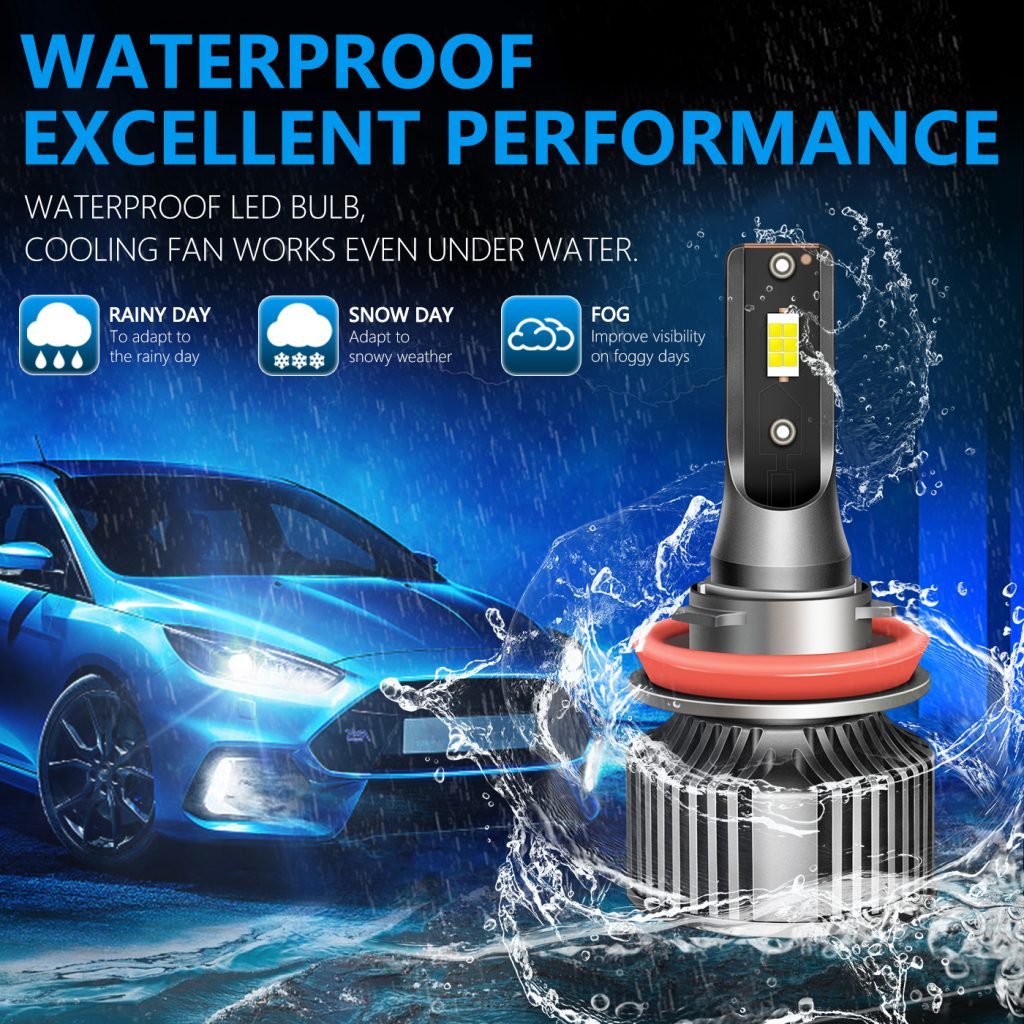
- Core Technical Parameters of LED Headlights
Service Life: Solid-state structure with strong vibration resistance. Brightness remains stable over long-term operation; rated lifespan reaches 50,000 hours. Classified as eco-friendly lighting with no filament burnout risk.
Spectral Characteristics: Narrow, controlled spectrum with minimal infrared and ultraviolet radiation. No mercury or hazardous materials; low heat and radiation output.
Energy Efficiency: Directly generates required light colors without color filtering. Light energy utilization exceeds 80%.
Response Speed: Near-instant activation; response time measured in nanoseconds. Zero warm-up delay. - Advantages & Disadvantages of LED Headlights
✅ Advantages
2–3 times brighter than halogen bulbs at equal power, offering wide illumination range to clearly identify road signs and obstacles.
Long service life of 50,000–100,000 hours, often lasting the whole vehicle lifespan.
Power consumption is only one-third of halogen lights, reducing fuel or electric power consumption.
Compact size enables flexible styling, supporting sequential turn signals and modern aesthetic designs.
Stable low-voltage DC drive, strong anti-interference capability and high safety.
Easy retrofit: Most versions support plug-and-play direct bulb replacement without rewiring the factory harness.
❌ Disadvantages
Higher upfront cost; reliable complete assemblies often command a premium price.
Inferior penetration in heavy rain and fog. Cool white light reflects off water vapor and reduces forward visibility.
Strict installation requirements. Direct bulb replacement in reflector housings without lenses causes severe scattered light, dazzling oncoming traffic — unsafe and likely to fail official vehicle inspections. - Characteristics of Xenon (HID) Headlights
Xenon headlights rely on high-pressure gas discharge. The lamp capsule is filled with inert xenon gas. High voltage ionizes the gas to generate a powerful electric arc light source.
✅ Advantages
High luminous output and strong long-distance penetration, delivering far-reaching illumination.
Provides wide, open vision for high-speed night driving.
Balanced cool-white light; widely equipped on mid-to-high-end vehicles in previous generations.
❌ Disadvantages
Cannot reach maximum brightness instantly after switching on; requires a warm-up period for light output to rise gradually.
Slow response for quick flashing used during overtaking or traffic communication.
Complex system design requiring a dedicated ballast for voltage boosting.
Higher power consumption and significant heat generation during continuous operation, accelerating component aging.
Higher long-term maintenance costs. - Direct Comparison of Lighting Performance
表格
Evaluation Dimension LED Headlights Xenon (HID) Headlights
Startup Performance Instant full brightness, zero delay Requires warm-up; brightness rises gradually
Light Uniformity Balanced, neat light spots Generally uniform with occasional uneven hot spots
Short-Range Urban Illumination Clear and comfortable for city roads Good performance
Long-Distance Penetration in Dark Conditions Moderate Stronger long-range beam throw
Response for Light Flashing Ultra-fast, ideal for overtaking signals Slower reaction
Power Draw & Heat Output Low power consumption, mild heat generation Higher power consumption, significant heat buildup
Service Life 50,000–100,000 hours Shorter, faster aging over time - Scenario-Based Selection Guidance
Xenon headlights excel at long-distance penetration and far-field illumination, making them ideal for drivers who frequently take long-distance highway night trips on unlit roads.
LED headlights feature instant activation, long service life, uniform light distribution and low maintenance. They are perfectly suited for daily urban commuting and short journeys.
Nearly all new mass-production passenger vehicles now come factory-fitted with LED headlights, as the technology strikes the best balance between practicality, safety and durability. Neither technology is universally superior. Drivers should choose according to their typical driving habits and local environment.