In today’s automotive lighting landscape, matrix and LED headlights are two highly regarded high‑tech solutions. Each offers distinct advantages, providing drivers with brighter, safer road illumination. But when directly compared, one question naturally arises: which is actually brighter – matrix or LED?
First, we need to clarify what “brightness” means in this context. In automotive lighting, brightness typically refers to a combination of light intensity, light distribution, and luminous efficacy. Light intensity determines how bright the road appears; light distribution governs uniformity and coverage; luminous efficacy relates to energy consumption and environmental impact. So when comparing matrix and LED headlights, we need to consider all these factors together.
- Matrix headlights – the intelligent optical pioneer
Matrix headlights use advanced camera and computer‑vision technology to control each individual LED source – switching it on/off and adjusting brightness independently. Through precise control, matrix systems achieve high intensity, high efficacy, and highly accurate beam distribution, significantly improving night‑driving safety. Their intelligent control also delivers strong energy and environmental performance.
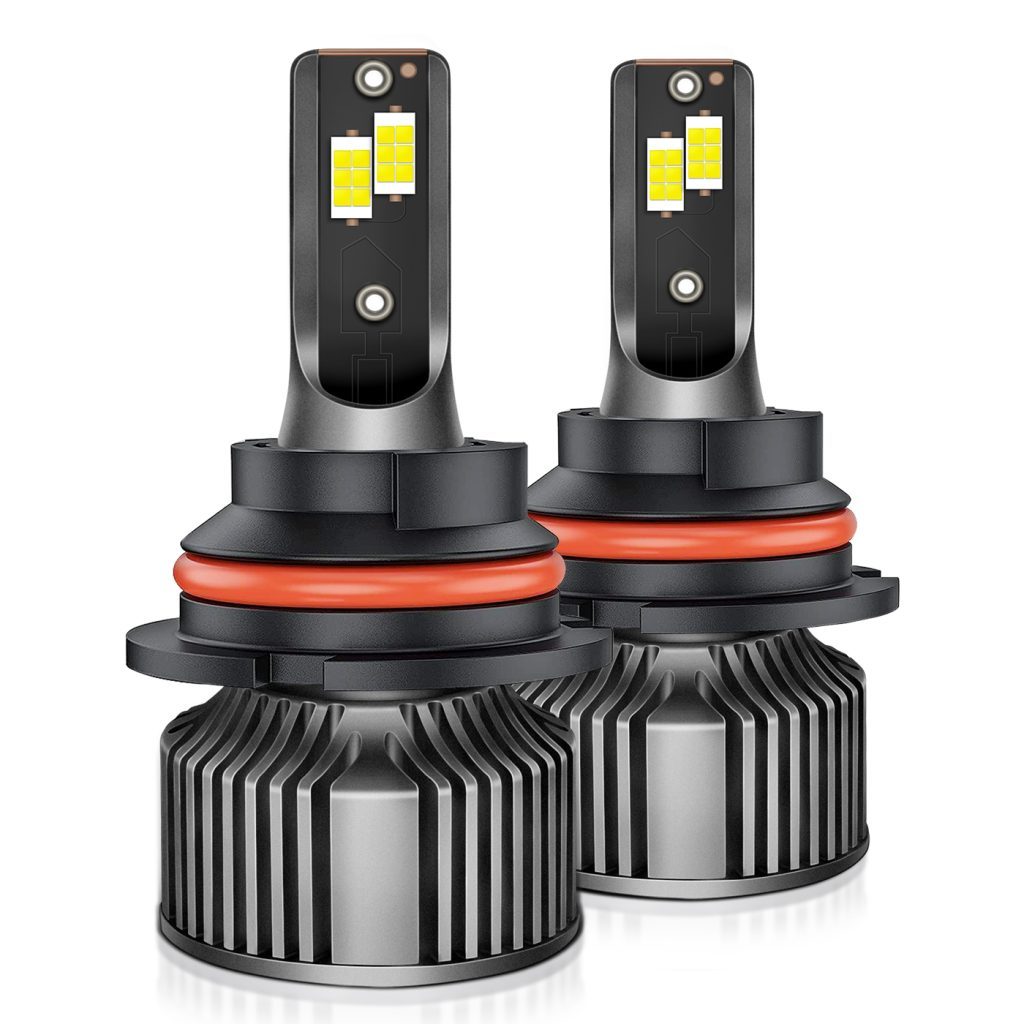
- LED headlights – the proven, reliable foundation
As a more established solution, LED headlights have already secured a strong market position. Their high efficacy, long life, and low energy consumption make them popular with consumers. Compared with traditional halogen and xenon lamps, LEDs provide brighter, more stable illumination while reducing energy use and maintenance costs.
- Comparing the three elements of brightness
Intensity: matrix headlights achieve high intensity through precise individual‑chip control; LEDs, with their inherently high efficacy, also deliver ample intensity. The two are closely matched.
Distribution: matrix headlights, with their intelligent control, achieve more precise beam shaping – working with navigation systems and cameras to adjust each LED in real time for different road conditions and driving needs, delivering more uniform and wider coverage. LEDs, through good optical design, also produce reasonably even light, but fall slightly short in flexibility and adaptability.
Efficacy and energy consumption: LEDs offer high efficacy – bright light at low power – and their long life reduces replacement frequency, lowering maintenance costs. Matrix headlights, despite their excellent efficacy, may consume slightly more energy due to their complex control systems and multiple LED chips.
- Conclusion
Both matrix and LED headlights have their brightness strengths. Matrix headlights excel through intelligent control – delivering high intensity, high efficacy, and precise beam distribution to enhance night‑driving safety. LEDs are valued for their high efficacy, long life, and low energy consumption. Which is “brighter” depends on the specific driving needs and scenario – in some situations, matrix may outperform; in others, LEDs may be the better fit.