- Theoretical brightness specifications
Lumen comparison at the same power: a 35W xenon lamp delivers 3200‑3500 lumens, while a comparable LED produces 2500‑3200 lumens. Xenon has a 10‑15% numerical advantage, though premium LEDs are narrowing the gap.
Technology evolution: early LEDs had lower lumen output, but by 2026 products are approaching xenon levels. High‑power LEDs (50W+) with multi‑chip arrays can exceed 4000 lumens.
Measurement differences: xenon tests include a 2‑4 minute warm‑up period; LEDs are measured at instant‑on brightness. The real‑world gap may be smaller than lab data suggests.
- Real‑world illumination performance
Light characteristics:
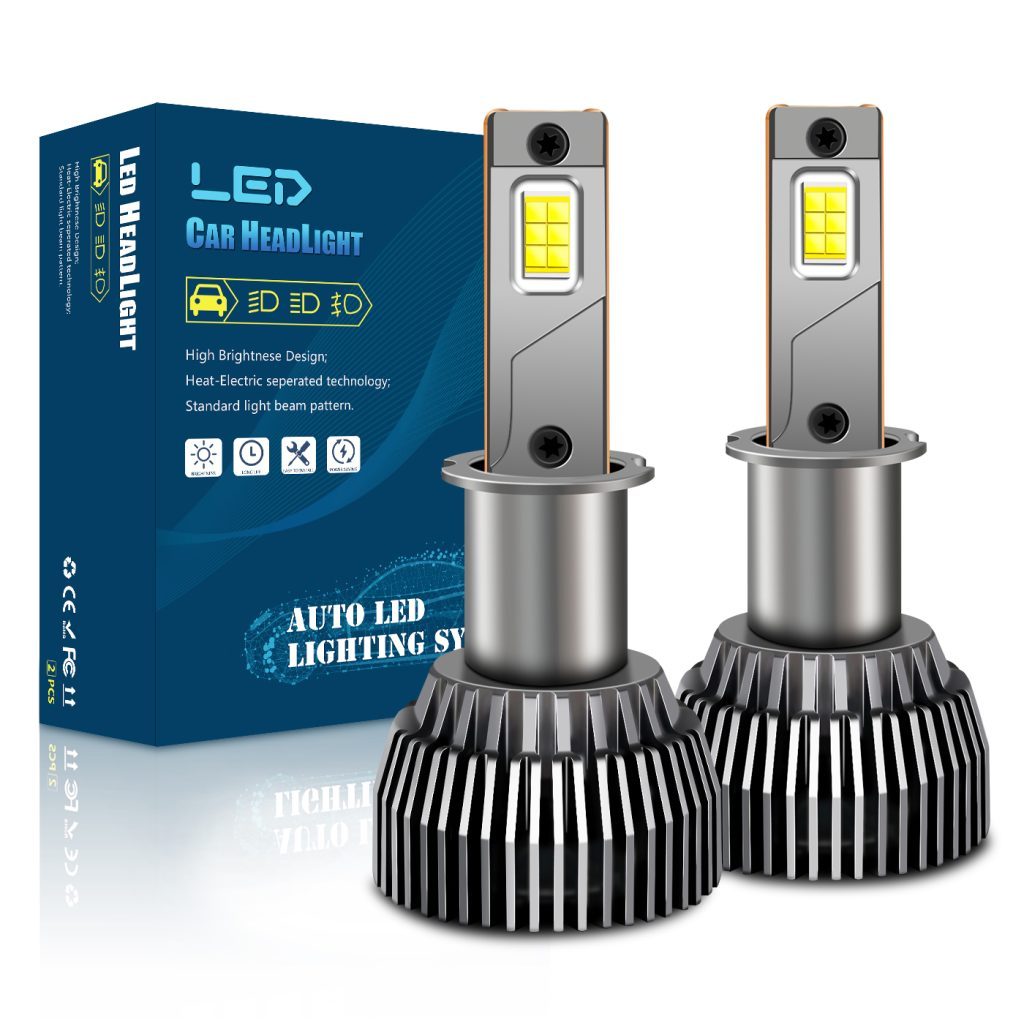
Colour temperature and spectrum: xenon’s 4300K‑6000K warm white appears more natural to the human eye; LEDs at 5000K‑6500K offer better colour rendering but can appear slightly blue.
Beam spread: xenon diffuses light over roughly 120°, giving even road coverage; LEDs concentrate light with strong centre brightness but faster edge fall‑off.
Environmental adaptability: xenon penetrates fog and rain about 20% better than LEDs; LEDs improve road‑marking reflection recognition by about 15% in urban settings.
Dynamic response:
Start‑up time: xenon takes 3‑5 seconds to reach 80% brightness and up to 2‑4 minutes for full output; LEDs reach full brightness instantly – a clear emergency advantage.
Flicker stability: low‑quality xenon may show arc instability; LEDs with constant‑current drivers are flicker‑free and more stable.
- Technical principle differences
Light‑generation mechanisms:
Xenon: 23kV high voltage ionises xenon gas to create an arc – requires a ballast, with roughly 70% efficiency.
LED: electron transitions in semiconductor PN junctions emit light directly – theoretical efficiency up to 90%.
System components:
Xenon: includes ballast and lens assembly, total weight over 500g – complex circuitry increases failure rates and repair costs.
LED: integrated driver circuit, under 200g – modular and easy to maintain, but demands robust cooling.
- Scenario‑based selection and retrofit advice
When to choose xenon:
Frequent highway or unlit country‑road driving
Rain/fog‑prone areas with a limited budget
Vehicles already equipped with factory projector lenses
When to choose LED:
City commuting with frequent stop‑and‑go
EVs or models where energy efficiency matters
Owners prioritising long life and low maintenance
Retrofit cautions:
Compliance: xenon retrofits absolutely require compliant lenses – otherwise they’re illegal; LEDs must match the vehicle’s power rating to avoid circuit overload.
Optimal specs: colour temperature in the 4300K‑5500K range; lumen output around 3000‑4000 gives the best balance.