There is a clear difference in energy consumption between halogen and LED headlights for family cars. Halogen headlights consume relatively more power, while LED headlights feature lower energy consumption.
Halogen headlights work by heating a tungsten filament to produce light. Electric energy is converted into both heat and light, and most energy is lost in the form of heat, leading to higher power draw. A common 55W halogen bulb consumes more electricity over the same lighting duration compared with LED headlights.
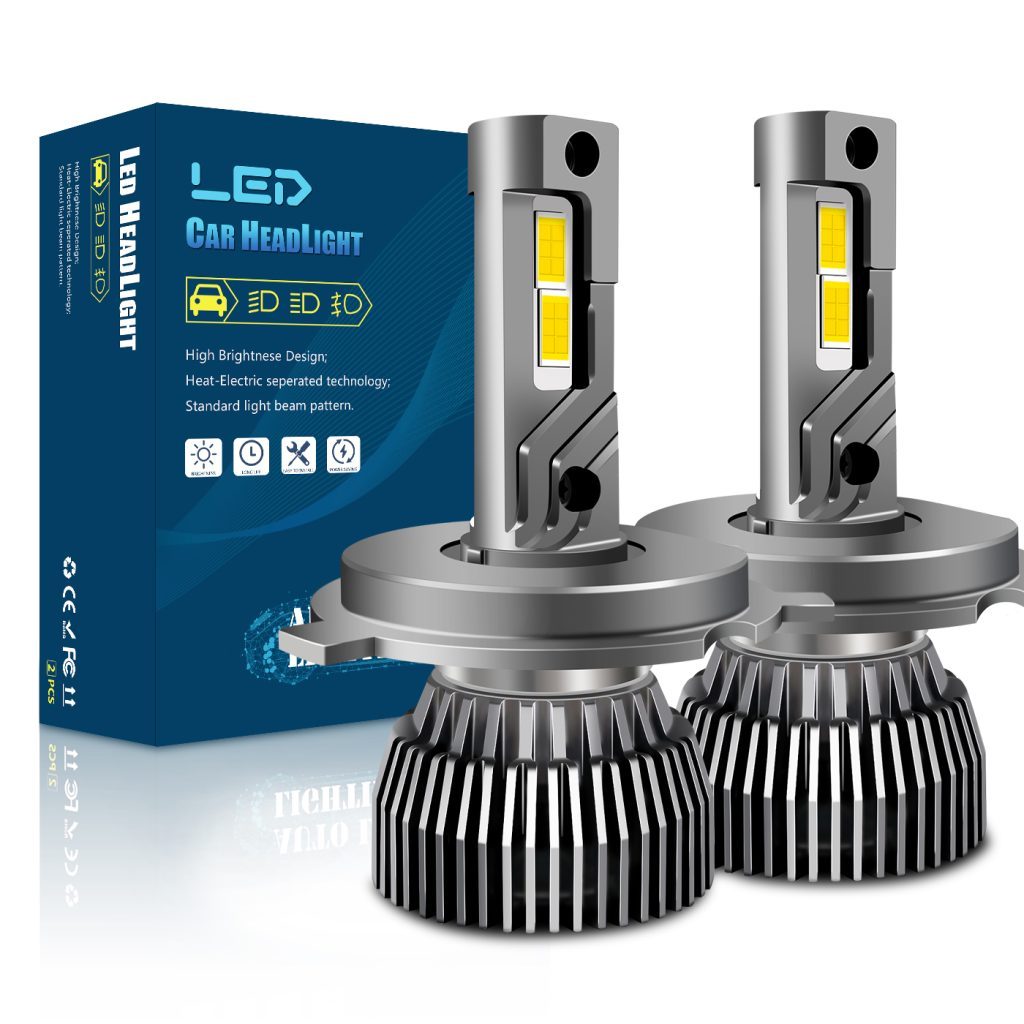
LED headlights adopt light‑emitting diodes for illumination. They deliver high photoelectric conversion efficiency with little extra heat waste. Normally, a 30W LED headlight can match or even outperform a 55W halogen bulb in brightness with much lower power consumption.
From the energy‑saving perspective, LED headlights have obvious advantages. Besides saving energy, they reduce the load on the vehicle electrical system. LED headlights also enjoy a much longer service life, cutting the replacement cost of bulbs. Moreover, LED headlights provide brighter and clearer vision for safer night driving. Considering long‑term cost and overall experience, LED headlights are cost‑effective options.
Core Differences
Working Principle
Halogen bulbs are improved incandescent lamps. Light is generated when the internal tungsten filament heats up after power‑on.
LED headlights use solid‑state semiconductor chips. Photons are released through carrier recombination to achieve direct electro‑optical conversion.
Light Color
Halogen lamps are filled with halogen gas such as iodine or bromine. Sublimated tungsten reacts with halogen under high temperature and outputs warm yellow light.
LED headlights convert electricity through semiconductor chips and mostly produce cool‑white light.
Color Temperature
Halogen headlights: 2000K‑4000K
LED headlights: usually above 5000K. Color temperature determines the visual tone of light output.
Cost
Halogen bulbs are low‑cost and widely used on entry‑level family vehicles.
Complete LED headlight assemblies are more expensive and commonly fitted on mid‑to‑high‑end factory vehicles.
Neither halogen nor LED headlights is absolutely perfect; your choice depends on real‑world driving demands. Generally speaking, LED headlights show great advantages in brightness, service life and energy‑saving performance.
Many car owners upgrade factory halogen lamps to LED. A reliable modification solution: upgrade low beam to LED with bi‑xenon lens, keep original halogen high beam. This solution guarantees bright road illumination while maintaining good penetration in rain and fog for higher driving safety.