Choosing between LED and halogen headlights comes down to your actual driving environment and specific needs. There’s no absolute “better” – only “better suited.” This article compares the two across technical characteristics, use‑case scenarios, retrofit considerations, and mainstream configuration logic – helping you find the right lighting solution.
1. LED Lights: High Brightness, Long Life, Low Energy – The Modern Choice
LEDs use semiconductor emission technology – consuming only about 1/3 of halogen’s power – with high brightness, lifespans reaching tens of thousands of hours, and fast response. Their high electro‑optical conversion efficiency converts most electricity directly into visible light – significantly reducing energy loss. This cold‑light characteristic ensures stable output over long periods – with no significant brightness depreciation.
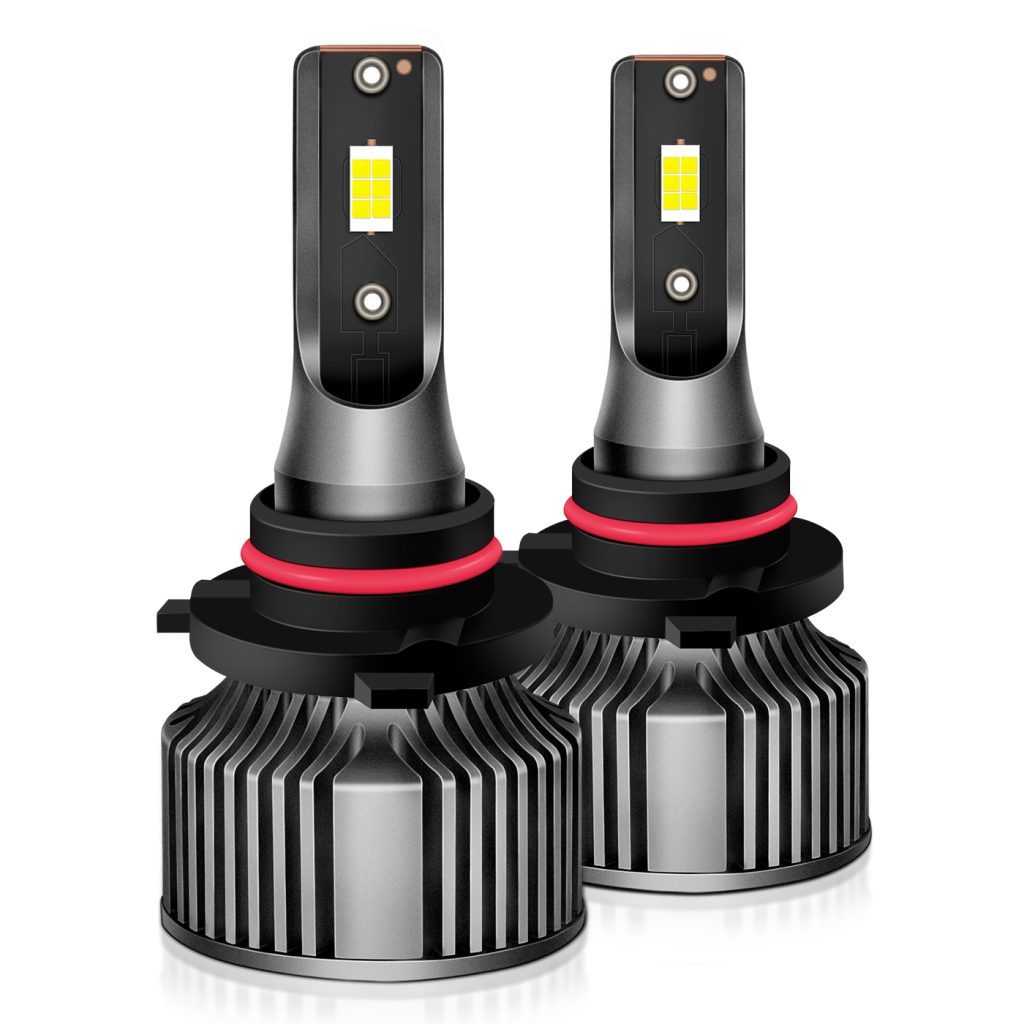
Best for:
- Frequent highway driving or high night‑driving mileage
- Users who value technology and long‑term performance
- Owners with a larger budget who prioritise total cost of ownership
Key advantages:
- Wide colour‑temperature range (3000K‑6500K) – simulates natural daylight
- High brightness and broad coverage – effectively expands visibility range
- Instant‑on – no start‑up delay
2. Halogen Lights: Strong Fog/Rain Penetration, Low Cost – The Practical Choice
Halogens are traditional thermal‑emission sources. Their warm‑yellow light (~3000K) penetrates fog and rain better – reducing scatter from suspended particles – allowing drivers to distinguish road markings and obstacles more clearly in poor visibility. The technology is mature, with low per‑unit cost and easy replacement.
Best for:
- Owners in fog/rain‑prone regions
- Budget‑conscious users with low driving frequency
- Those prioritising practicality and special‑weather safety
Key advantages:
- Excellent penetration in rain, snow, and fog
- Low manufacturing cost – easy and cheap to replace
- Proven, reliable technology
3. Retrofit Considerations – Upgrading to LEDs
If upgrading from halogen to LED, keep these points in mind:
- Lenses are mandatory: LEDs require proper projector lenses – without them, light scatters, reducing effectiveness and dazzling oncoming traffic.
- Colour temperature: Choose 4300K‑5500K certified products – balancing brightness with fog/rain penetration.
- Keep halogen fog lamps: Retain factory halogen fog lamps to compensate for LEDs’ weaker fog/rain penetration.
- Legal compliance: Ensure the modification meets local regulations – avoid inspection failure or penalties.
4. Mainstream Configuration Logic – Complementary High/Low Beam Pairing
In modern vehicle lighting, a common approach is to assign different light sources to high and low beams:
| Configuration | Low Beam | High Beam | Use Case |
|---|---|---|---|
| Option 1 | LED | Halogen | Balances daily brightness with fog/rain penetration |
| Option 2 | LED | LED (low colour temp) | Full‑LED experience with penetration considered |
| Option 3 | Halogen | Halogen | Budget‑friendly, fog/rain‑prone areas |
Many models adopt the “LED low beam + halogen high beam” strategy – leveraging LEDs’ brightness for near‑field illumination and halogens’ penetration for long‑range visibility. This combination offers a rational balance of performance and cost.
5. Summary – Choose Based on Needs
| Priority | LED | Halogen |
|---|---|---|
| Brightness | ★★★★★ | ★★★ |
| Lifespan | ★★★★★ (tens of thousands of hours) | ★★★ (hundreds‑thousand hours) |
| Energy efficiency | ★★★★★ (1/3 halogen) | ★★★ |
| Fog/rain penetration | ★★★ (weak on high‑colour‑temp models) | ★★★★★ |
| Upfront cost | ★★★ | ★★★★★ |
| Long‑term total cost | ★★★★★ | ★★★ |
In a nutshell: choosing between LED and halogen is essentially a trade‑off between “brightness + longevity” and “penetration + cost.” For users who value technology and long‑term performance, LEDs are the clear trend. For those prioritising practicality and special‑weather safety, halogens remain irreplaceable. Understanding your driving environment is the key to making the right choice.