There is no fixed standard for the lumen output of automotive LED lights, and 80 to 100 lumens per watt is generally the ideal luminous efficiency. Lumen is the unit of luminous flux, which measures the visual intensity of light radiated by a light source. For example, a 35W car LED light produces roughly 3200 lumens, equivalent to 91 lumens per watt. Your final choice should match the power rating of the original factory lamp. If the stock bulb has low power, excessively high lumens may overload the car’s circuit. Personal brightness demands also matter: drivers who frequently drive at night can pick LED lights with moderately higher lumens for better road illumination.
Stock lamps of different types deliver distinct lumen outputs. Factory halogen low beams generate about 1000 lumens, while halogen high beams reach around 1200 lumens. Factory xenon HID lights top out at 3200 lumens, with regular output above 2000 lumens. These figures serve as the baseline reference when selecting replacement LED lights.
Low beams and high beams require different lumen ranges for practical use. High beam bulbs usually run 35–60W with 3400–5900 lumens, while low beam bulbs range from 35–55W and output 3400–5400 lumens. Such power and lumen configurations cater to various driving scenarios. On open dark roads, high-lumen high beams extend visibility far ahead, helping drivers spot road conditions and obstacles in advance. For urban driving, moderate-lumen low beams offer sufficient lighting without creating harsh glare that disturbs oncoming vehicles and pedestrians.
Theoretically, higher wattage LED headlights produce more lumens and brighter light, yet higher power does not always equal better performance. High-wattage bulbs generate more operating heat and demand an efficient heat dissipation structure to maintain stable performance. If the lamp’s cooling system fails to handle excess heat, the service life will be shortened, and potential safety hazards may arise.
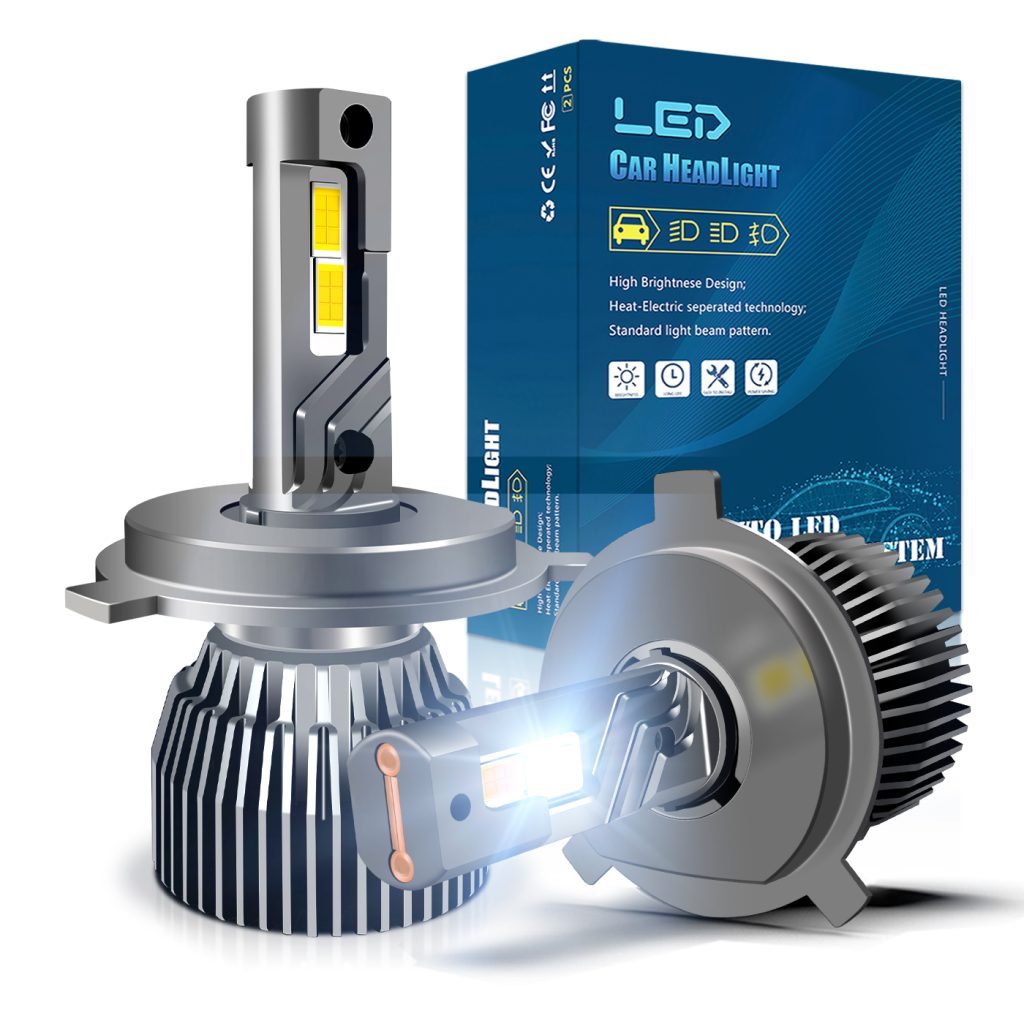
Multiple factors need to be weighed when picking lumen values for car LED lights. Do not blindly chase ultra-high brightness via high lumens while ignoring vehicle compatibility and safety. Match the LED power to your original lamp to guarantee stable operation, and combine your daily driving routes and brightness preferences to select the most suitable lumen level for comfortable and safe night driving.
Lumen is a physical unit for luminous flux, simply defined as the measurement of a light source’s light-emitting capacity. A higher lumen rating means the lamp emits more light, covering a wider area and creating a brighter visual effect under identical surroundings. During night trips, high-lumen headlights help drivers clearly identify the road ahead, obstacles and surrounding traffic. However, perceived brightness is also affected by other elements. Improper beam angle will fail to light up key road zones even with high lumens. Reflective surfaces around the vehicle, such as billboards or puddles, can also interfere with your judgment of actual headlight brightness.
The definition of lumen determines its correlation with brightness
As a measurement of total luminous flux, lumen directly reflects the total light released by a light source. It can be compared to water flow from a tap: higher lumens equal larger light output, resulting in brighter illumination. For instance, a 1500-lumen headlight covers a much wider area and appears noticeably brighter than a 1000-lumen model under the same dark environment.
External factors that affect perceived headlight brightness
Beam angle plays a vital role. If light shoots upward instead of forward onto the road, drivers cannot gain clear forward vision no matter how high the lumen value is. This issue often occurs on poorly adjusted modified headlights. Roadside reflective billboards or water puddles also add extra light into your sight, distorting your perception of headlight brightness even though the lumen output stays unchanged.