Upgrading halogen headlights with LED bulbs usually delivers obvious lighting improvements, yet professional calibration and compliant operation are essential to achieve optimal results. Featuring higher luminous efficiency and daylight-matched color temperature, LED bulbs greatly expand night driving vision while lowering the electrical load on the vehicle.
However, the light-emitting position differs fundamentally from halogen filaments. Simple direct replacement often requires re-calibrating focal length and beam height to guarantee a compliant beam pattern without dangerous glare. If you select standard-certified products fitted by professional technicians, this upgrade effectively improves road visibility and enhances safety for daily driving.
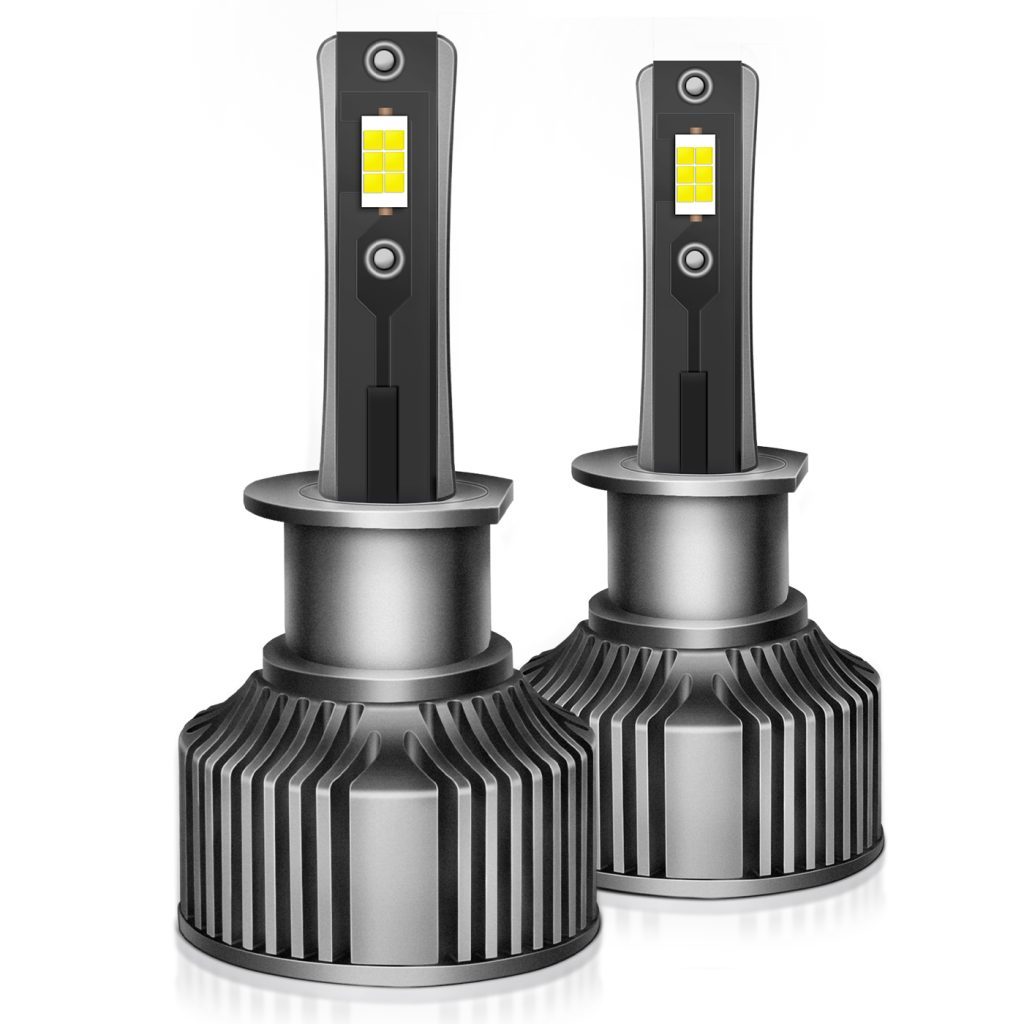
- Noticeable Improvements in Lighting Performance
LED bulbs deliver 2–3 times higher brightness than halogen lights, with color temperature ranging from 5000K–6000K, which improves recognition of road objects. Low-beam illumination covers the road more evenly, and high beams reach further, creating a wider field of vision at night.
Meanwhile, LED power consumption equals roughly one-third of halogen lamps, reducing the load on the alternator and battery.
Real-world experience: Drivers who frequently travel at night clearly notice huge differences between different headlight setups. Quality LED lights reach full brightness instantly with clean, gentle illumination. In contrast, xenon HID requires warm-up time, and poorly configured lights produce harsh, dazzling white light. The core advantage of LED is zero warm-up delay, achieving maximum brightness immediately after switching on. - Technical Compatibility: Not Simply Plug-and-Play
The original halogen reflector bowl or projector optics are engineered around the focal point of halogen filaments. If the LED chip position deviates from the factory-designed focal point, light cannot converge properly.
Even ultra-bright LED bulbs will suffer scattered light and distorted beam patterns without precise positioning calibration, creating glare that endangers oncoming traffic.
Critical Operation Checklist
Focal length calibration: Adjust after installation to form a sharp beam cutoff line
Beam height tuning: Avoid excessive upward glare or insufficient forward illumination
Beam pattern verification: Wall test to confirm clean, horizontal low-beam cutoff without upward stray light
Professional alignment: Use optical positioning tools for accurate calibration at a specialist workshop - Regulatory Standards & Vehicle Inspection Risks
Light upgrades must comply with mandatory national safety standards. Official inspection rules set clear limits for luminous intensity, beam position and color temperature for vehicle headlamps.
Potential Compliance Risks
Unauthorized lighting modifications that deviate from factory certification specifications may fail annual inspection
Color temperature exceeding 6000K weakens penetration in rain and fog
Severe light scattering leads to automatic inspection rejection
Recommendation: Choose certified, reputable branded products. Their luminous flux and color temperature undergo strict testing to boost visibility while remaining within legal limits. - Durability & Energy-Saving Advantages
Halogen lamps: Rely on thermal radiation, generating massive heat. Tungsten filaments gradually evaporate and burn out under sustained high temperature.
LED light sources: Semiconductor electroluminescence delivers superior energy conversion efficiency and moderate operating temperature. Theoretical service life reaches 20,000–50,000 hours, compared to only 500–1000 hours for halogen bulbs.
Low power draw and long service life cut long-term replacement costs and ease the burden on the vehicle’s charging system and battery. - Supplementary Differences Between LED and Xenon Headlights
The two mainstream automotive lighting technologies feature distinct working principles, leading to different illumination performance and suitable scenarios.
Xenon (HID) Headlights:
Light generated via high-pressure gas discharge. High brightness, strong penetration and long beam throw; widely fitted on mid-to-high-end vehicles in previous generations.
Drawbacks: Requires 2–4 seconds warm-up to reach full brightness; slow response for quick flashing; complete system needs a dedicated ballast; higher power consumption, significant heat generation, faster aging and higher maintenance costs.
LED Headlights:
Light produced by energized semiconductor chips. Simple structure, ultra-fast response with instant full brightness, low power consumption and mild heat output. Resists aging during long-term operation, delivers extended service life and simpler maintenance. - Summary & Operational Guidance
| Operation Stage | Key Requirements |
|---|---|
| Product Selection | Reputable certified brands; recommended color temperature: 4300K–6000K |
| Installation | Professional fitting to guarantee correct focal position and beam height |
| Beam Calibration | Wall test for sharp, horizontal cutoff; eliminate scattered upward light |
| Legal Compliance | Confirm brightness and color temperature meet local inspection standards |
| Maintenance | LEDs have long service life; keep lenses clean with regular inspection |
Replacing halogen bulbs with LED brings tangible upgrades: higher brightness, wider vision, lower energy consumption and longer lifespan. Nevertheless, technical matching and regulatory rules cannot be overlooked. Professional installation and precise optical calibration ensure the upgrade is both safe and legally compliant.