Conclusion: Yes. LED headlights gradually dim due to lumen depreciation, an irreversible aging process
It is an objective rule that LED headlights lose brightness after long service. According to the widely adopted L70 standard in lighting industry, LED reaches the end of its service life once luminous output drops to 70% of the original brightness.
Under ideal working conditions, premium automotive LED bulbs only depreciate less than 5% brightness within the first year. After 3 years of regular use, light flux decreases roughly by 15%. After 8–10 years, lumen depreciation often exceeds 30%. Cheap aftermarket LED bulbs with poor thermal design may show obvious dimming within only 1–2 years.
The speed of lumen depreciation depends mainly on five key factors:
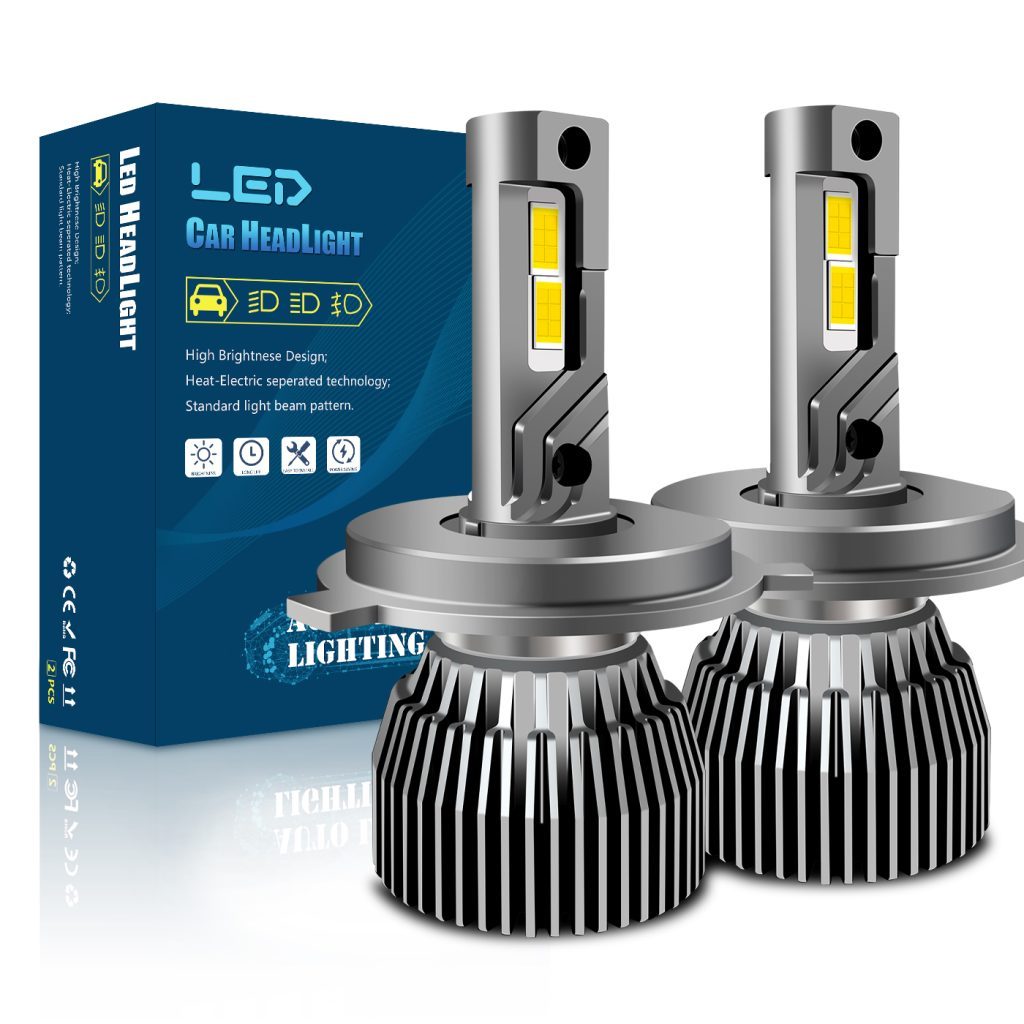
- Quality of LED chips and packaging
LED chips, phosphor coating and sealing materials decide anti-aging performance. Low-cost LEDs adopt low-grade chips with weak heat resistance. Under continuous high temperature, phosphor layers degrade and turn yellow, sealing glue deteriorates, which continuously cuts luminous efficiency. Automotive-grade high-quality chips with heat-resistant packaging effectively slow down light decay. - Heat dissipation (the primary trigger)
LED is a semiconductor light source. Most electric energy turns into heat instead of light during operation. Every 10℃ rise of junction temperature nearly doubles the speed of lumen depreciation.
If cooling fans fail, heat sink structure is insufficient, or dust caps block airflow after installation, heat accumulates inside the housing. Long-term overheating leads to permanent aging of chips. Many LED headlights do not burn out instantly; they slowly dim because of excessive heat. - Performance of LED driver
The driver supplies stable constant current for LED chips. Low-quality drivers cannot stabilize electric current. Voltage fluctuations during vehicle operation create continuous impact on LED chips and accelerate aging gradually, resulting in slow brightness loss and occasional flickering. - Partial damage of LED beads
Burnt LED beads or broken bonding wires reduce effective luminous area, making headlights visibly dimmer. This kind of hardware failure differs from natural lumen depreciation. - External environment & driving habits
High temperature inside engine bay in summer, frequent long-distance night driving, moisture and condensation inside lamp housing all speed up component aging. Besides, oxidized yellowed headlight lens blocks light, which is often mistaken as LED chip light decay.
Practical Tips & Maintenance Advice
Daily inspection: Shorter illumination distance or foggy yellowish beam indicates serious light depreciation;
Choose automotive-grade LED headlights equipped with active cooling fan and reliable constant-current driver for retrofit;
Do not fully seal the lamp housing to block ventilation during installation;
Replace headlights in pairs to avoid uneven brightness on left and right sides;
Replace dimmed LED bulbs timely once lighting performance cannot meet night driving safety requirements.