When it comes to upgrading automotive lighting, owners often face a choice: LED with lenses, or xenon (HID) with lenses? Both approaches have their strengths, and the decision usually comes down to individual needs and budget. This article compares them across brightness, energy consumption, lifespan, maintenance, and use‑case fit.
- Brightness and energy efficiency – the trade‑off
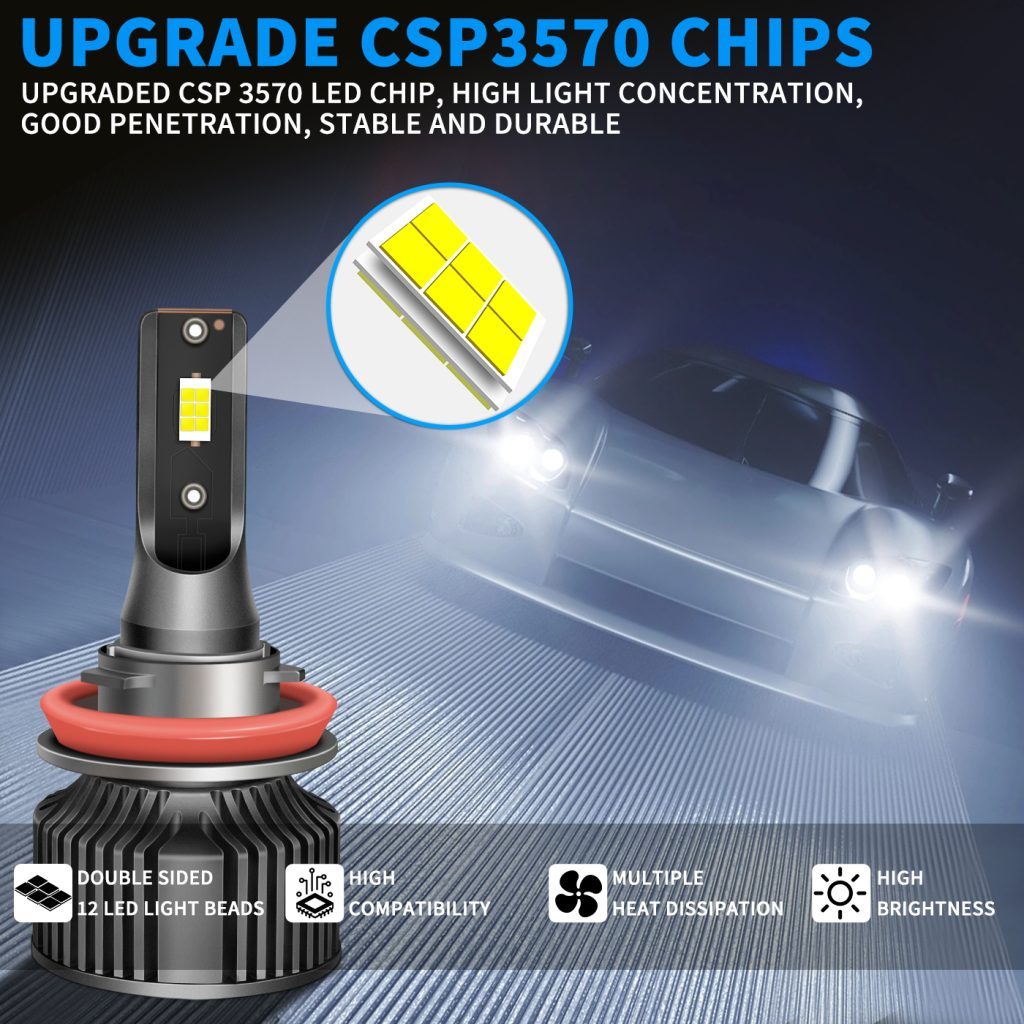
Xenon and LED each have their strengths in lens‑equipped headlights. Xenon typically delivers higher brightness, especially in fog and rain, where its penetration is stronger – but it takes a few seconds to reach full output. LEDs light up instantly and consume about 40% less energy than xenon, making them better suited to stop‑and‑go city driving.
Colour temperature also differs noticeably: xenon tends toward cool white (around 4300K), while LEDs offer a broader adjustable range (3000K‑6000K), accommodating different preferences and conditions.
The LED‑with‑lens upgrade often delivers more striking results – high brightness, wide colour‑temperature options, and instant start‑up, combined with a lens to produce a concentrated, even beam that significantly improves night‑driving safety and visibility. However, LED upgrades are generally more expensive, largely due to the quality difference in both chips and lenses.
The xenon‑with‑lens combination is more budget‑friendly. While not as bright as LEDs, its colour temperature is closer to natural light, offering a more comfortable visual experience, and its lifespan is respectable. With a lens, it also focuses and spreads light effectively. However, xenon takes longer to reach full brightness and may suffer lumen depreciation under heavy use.
- Lifespan and maintenance comparison
Durability: LEDs average over 30,000 hours – three times longer than xenon
Stability: xenon lamps depreciate over time – brightness may drop 30% after 2 years
Maintenance: LEDs use modular designs for easier replacement; xenon requires full disassembly and involves high‑voltage components, making servicing more involved
- Use‑case recommendations
Long‑distance driving: xenon delivers consistent illumination with strong high‑beam penetration
City commuting: LEDs respond instantly and save energy – ideal for frequent stop‑and‑go
Installation difficulty: LEDs are typically plug‑and‑play; xenon needs a ballast and more complex fitting
Budget: entry‑level xenon kits cost less upfront, but LEDs are more economical over the long term
- Final selection advice
Owners should weigh their specific needs:
If you drive frequently at night, LED + lens is the better choice – offering brighter, longer‑range illumination
If you’re on a tighter budget or have modest performance requirements, xenon + lens is a cost‑effective alternative