Evaluating the quality of an LED headlight requires a multi‑dimensional assessment. Choosing the right LED headlight not only improves night‑driving safety but also enhances the overall driving experience. This guide covers appearance, colour temperature, cooling, LED chips, brand reputation, and real‑world testing.
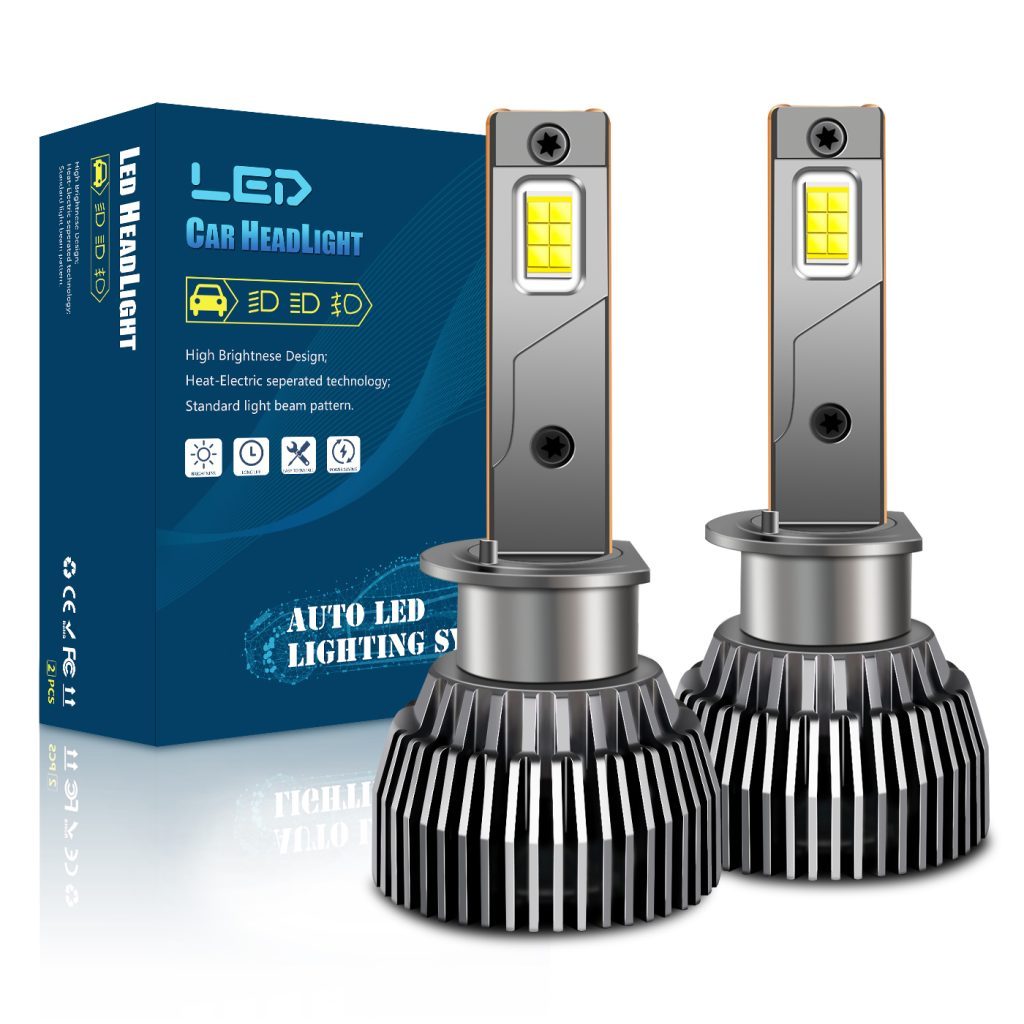
1. Appearance & Safety – Visible Quality
Components should fit tightly with no gaps or looseness. Plastic parts must be flame‑retardant (look for UL certification marks), and the circuit should include protective fuses to prevent short circuits and fires. Poor‑quality products often show rough edges, large seams, and thin materials.
2. Colour Temperature – Visual Comfort & Penetration Balance
Colour temperature is a key indicator. The 4300K‑6000K range balances brightness and penetration:
| Range | Characteristics |
|---|---|
| 4300K‑5000K | Warm white – strong fog/rain penetration, comfortable vision |
| 5000K‑6000K | Natural white – high road‑sign recognition |
| Above 6000K | Bluish – poor fog/rain penetration, may affect inspections |
The 5500K‑6000K range is recommended for balanced night visibility and wet‑weather performance.
3. Cooling Performance – The Key to Longevity
LEDs generate significant heat during operation. Poor cooling accelerates lumen depreciation and shortens lifespan. How to evaluate:
- Cooling structure: Active cooling (fans) outperforms passive cooling (braided copper). Quality units typically use “aluminium heatsink + silent fan” designs.
- Touch test: After 5 minutes of operation, touch the housing. If it warms up slowly and you can hold your hand on it comfortably, cooling is adequate. If it’s too hot to touch, cooling is inadequate.
- Fan noise: Fan noise should be low and steady, with no unusual rattling.
4. LED Chips – Brightness & Reliability
Chip quality directly affects light output. Since consumers can’t easily judge chip quality directly:
- Chip size: 45mil chips are generally more reliable than 30mil – they offer higher efficiency and lower heat generation.
- Luminous efficacy: Higher‑efficiency chips produce less heat for the same brightness.
- Visual check: Observe brightness, flicker, beam uniformity, and colour consistency.
- Ask the manufacturer: Enquire about chip brands (e.g., Cree, Osram, Lumileds are reputable) and specifications.
5. Brand & Vehicle Compatibility – Peace of Mind
- Brand reputation: Established brands (e.g., Osram, Philips) typically offer better quality and after‑sales support. Extremely cheap products often use overstated specs or substandard materials.
- Vehicle fitment: Choose LEDs that match your vehicle’s socket type (H4, H7, H11, etc.) and have sufficient installation space to ensure proper cooling.
6. Real‑World Testing – The Ultimate Check
After purchase, test in a dark environment:
- Brightness: Check low‑beam spread and high‑beam range
- Beam pattern: On a wall, check for a sharp, horizontal cut‑off with no upward scatter
- Flicker: Look for any visible pulsation
- Colour: Ensure the light appears within the expected colour range – not overly blue or yellow
7. Summary – Five Key Points to Remember
- Appearance: Solid build, flame‑retardant materials, protective fuses
- Colour temperature: 4300K‑6000K, ideally 5500K‑6000K
- Cooling: Active cooling with aluminium structure – temperature rise should be moderate after 5 minutes
- Chips: Reputable brand chips, 45mil+ preferred
- Brand: Choose trusted brands – avoid the cheapest options
Good lighting not only illuminates the road ahead – it gives you confidence on every journey. Use these tips to find a genuinely high‑quality LED headlight.