The short answer is yes, but with conditions. Installing LED bulbs in xenon projector lenses requires careful attention to compatibility, cooling performance, circuit stability, and weather‑related lighting differences. This article breaks down the feasibility, compatibility points, and practical recommendations.
1. Core Conclusion: Possible, But Not a “Just Swap the Bulb” Job
Xenon projector lenses can accommodate LED bulbs, but several factors must be considered. LEDs convert electricity directly into light—offering low power consumption, low glare, and no pollution—but they also have drawbacks: poor heat dissipation, higher cost, and inconsistent product quality. Xenon and LED operate on different principles, and their performance varies across weather conditions.
Key principle: For the best results, it’s advisable to replace the entire bi‑xenon projector assembly along with the bulbs. Swapping only the bulb may not fully deliver LED advantages.
2. Lighting Performance Differences and Selection Advice
Weather adaptability:
- LED: Produces whiter light – clear and sharp on sunny days, but less effective in rain, fog, or overcast conditions compared to xenon.
- Xenon: Penetrates rain and fog more effectively – offers a more comfortable lighting environment with relatively balanced performance across all weather conditions.
Colour temperature recommendation: Choose lights with a colour temperature below 5400K for better overall illumination.
High‑beam use: Xenon is not recommended for high beams due to slow start‑up – LEDs reach full brightness instantly, making them better suited for high‑beam applications requiring rapid high‑intensity illumination.
3. Bulb‑to‑Lens Compatibility Issues
Xenon lamps are high‑intensity discharge (HID) units – typically self‑contained, though some vehicles use bi‑xenon setups. LEDs, by contrast, consist of multiple compact, high‑brightness chips arranged in specific patterns (e.g., light strips or large surface areas).
Core issues:
- Xenon projector optics are optimised for the light‑emitting point of xenon bulbs – LED bulbs have different light‑emitting points and beam distributions.
- Simply swapping the bulb may cause beam scatter and mismatched light patterns – failing to deliver LED performance.
Therefore: For optimal results, replace the entire bi‑xenon projector assembly together with the bulbs.
4. Lens Type Compatibility Overview
| Lens Type | Can Install LED Bulbs? | Key Considerations |
|---|---|---|
| Xenon projector | Yes – with adaptation | Mismatched light‑emitting points may cause pattern shift/scatter – full assembly replacement recommended |
| Halogen projector | Not recommended | Different focal points – uneven illumination or beam striping – requires full assembly replacement |
| No lens (reflector bowl) | Strongly not recommended | Severe scatter – hazards for oncoming traffic – significant safety risk |
5. Headlight Modification – A Systemic Process
Headlight modification is more than just replacing bulbs – it involves brackets, lenses, ballasts, and other components:
- Lenses are mandatory: When replacing xenon headlights with LEDs, lenses are required. Swapping without lenses causes scatter – “changing bulbs without changing lenses” is non‑compliant.
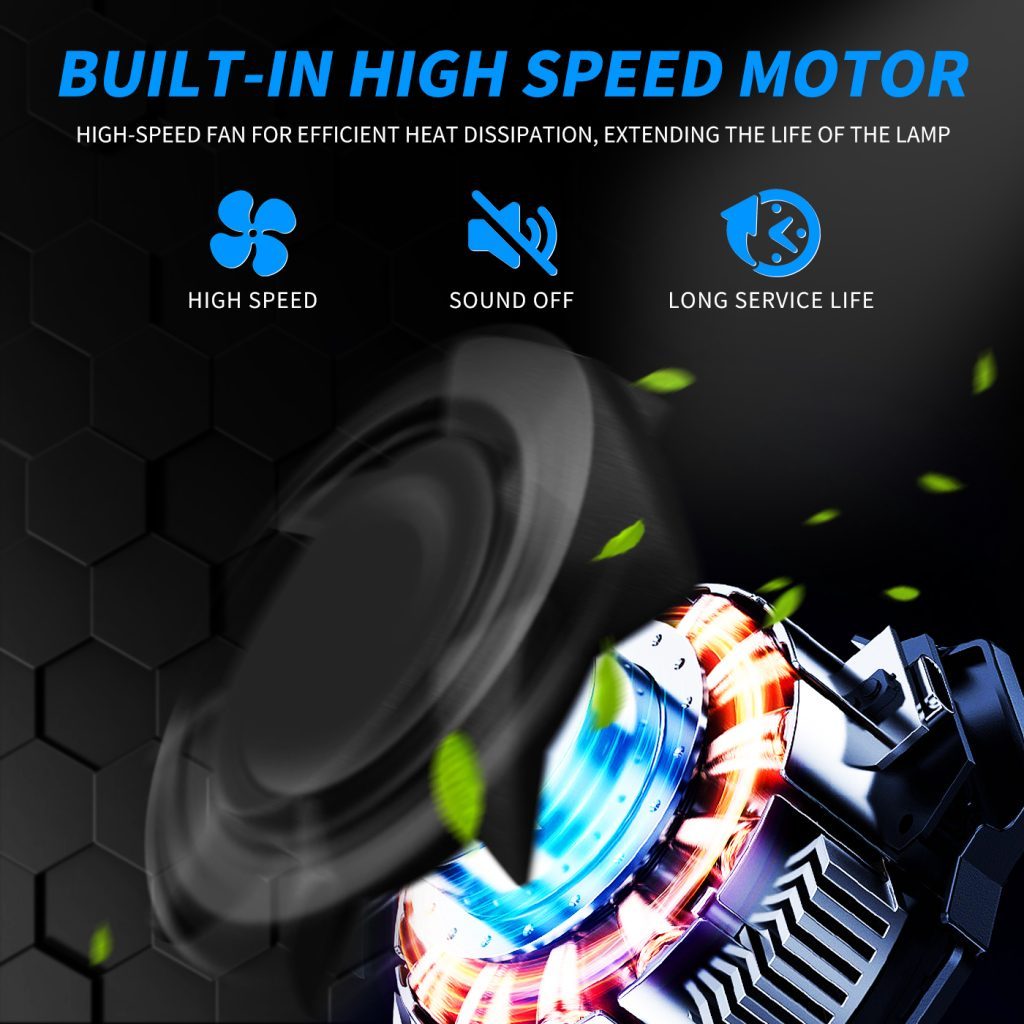
- Heat dissipation: LEDs generate heat – ensure adequate cooling to protect lifespan.
- Circuit stability: Check vehicle circuit and voltage stability – avoid power mismatch faults.
- Inspection compliance: Modified LEDs must meet national standards – otherwise may fail annual inspection.
- Professional installation: Use a professional shop or dealer – roadside shops often cut corners, leading to problems.
6. Can Halogen Projector Lenses Accept LED Bulbs?
Similarly, halogen projector lenses are not recommended for standalone LED bulb swaps:
- Different focal points: Halogen reflectors and lenses are optimised for filament light sources – LED emission points differ, causing uneven illumination or beam striping.
- Heat dissipation: LEDs generate significant heat during operation – inadequate cooling affects lifespan and performance.
- Inspection risks: Non‑compliant modifications may fail annual inspections.
Correct approach: Replace the entire LED headlight assembly, not just the bulb. Vehicles without lenses are especially discouraged – modifications yield poor results, cause scatter, and pose serious safety hazards.
7. Summary and Practical Recommendations
- Xenon projector lenses can accept LED bulbs – but full bi‑xenon projector assembly replacement is recommended for best results.
- Halogen projector lenses are not recommended for standalone LED bulb swaps – full assembly replacement is required.
- Vehicles without lenses – strongly discouraged – scatter is severe and dangerous.
- Choose quality products: Select reliable brands with good cooling – check vehicle circuit and voltage stability.
- Professional installation: Always use a reputable shop – ensuring safety, compliance, and optimal performance.