Many drivers pursue brighter and farther-reaching headlights for safer night driving. However, with countless LED headlight options on the market with huge differences in price and performance, it is easy to make the wrong choice. In fact, by understanding several core parameters, car owners can quickly select high-quality, safe, and compliant LED headlights with excellent actual road lighting performance.
LED headlights have gradually replaced traditional halogen lamps thanks to lower energy consumption, longer service life, and instant lighting response. The overall performance of an LED headlight depends on its bead quality, driving circuit, and heat dissipation structure. Mastering these key indicators can help you avoid inferior products thatlook bright visually but fail to light up the road effectively.
The most important reference standard for LED headlight upgrades is lumen value. The suitable brightness range for most vehicles is 3000 to 6000 lumens, determined comprehensively by vehicle model, daily driving scenarios, and local traffic lighting regulations. Higher lumens do not always mean better lighting. Excessively high brightness causes severe light scattering and glare, interfering with oncoming vehicles and endangering night driving safety.
Ideal Lumen Range for Different Driving Scenarios
Different road conditions require matched brightness levels to balance safety, visibility, and compliance.
3000–4000 Lumens (Urban Commuting)
This range delivers uniform, soft, and non-glare lighting, perfectly suitable for well-lit urban roads. It meets mainstream international lighting regulations and will not disturb pedestrians or oncoming traffic. For standard low-beam use, 4000 lumens or below is the safest and most compliant choice.
4000–5000 Lumens (Balanced All-Weather Option)
This is the most versatile brightness level for most drivers. It improves long-distance visibility on highways while maintaining acceptable light penetration for rainy and foggy weather, achieving a perfect balance between daily commute and long-distance travel.
5000–6000 Lumens (Long-Distance & Off-Road Use)
High-lumen brightness is ideal for rural roads, mountain roads, and off-road environments with no street lights. It greatly extends night vision and obstacle detection distance. Note that many countries and regions restrict the maximum legal brightness to 6000 lumens, so over-limit upgrades may fail inspection. High-lumen bulbs are recommended to be used with professional lens systems to concentrate light and eliminate glare.
Key Parameters That Determine Headlight Performance
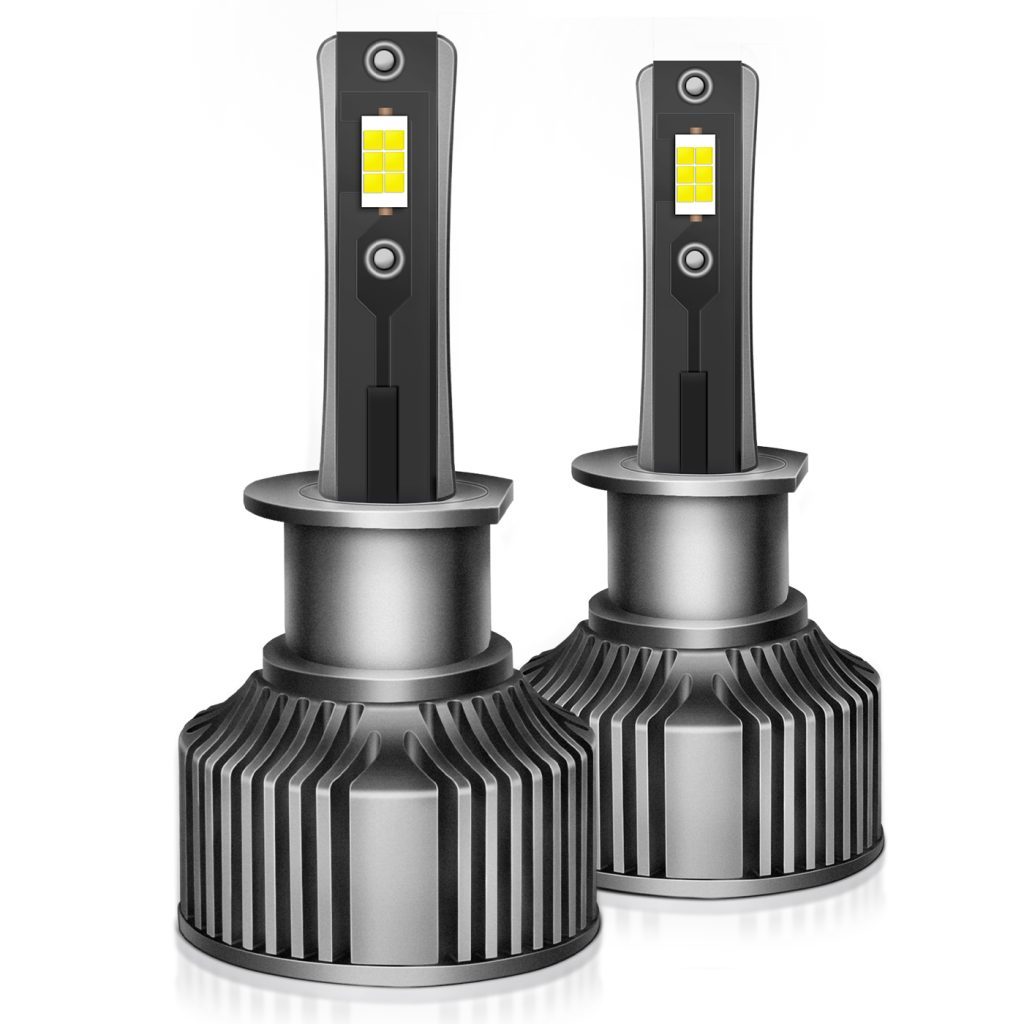
- Color Temperature (Kelvin / K)
Color temperature directly affects light color, visual comfort, and all-weather penetration performance. The recommended range for vehicle use is 4300K–6000K.
- 3000K (Warm Yellow Light): Outstanding penetration in rain, fog, and haze, ideal for bad weather areas, but slightly dim in visual brightness.
- 4300K–5000K (Natural White Light): The most balanced option, close to natural daylight, offering clear vision and stable all-weather performance.
- 6000K (Cool White Light): Provides the brightest visual effect for clear nights. However, higher color temperature contains more blue light, which reflects severely on rainy roads and water surfaces, resulting in decreased penetration in bad weather.
- Beam Type & Brightness Matching
Low beams and high beams require different lumen standards. Low beams must focus on anti-glare performance and are recommended to be controlled within 4000 lumens. High beams focus on long-distance irradiation and can be appropriately upgraded to 5000 lumens or higher for better long-range visibility. - Original Vehicle Circuit Compatibility
When upgrading LED headlights, power matching is essential. Excessively high power and ultra-high lumen bulbs may exceed the load of the original vehicle circuit, causing overheating, circuit damage, or dashboard error codes. Always select LED bulbs that match the stock power parameters to ensure stable and safe operation.
Official Regulation & Heat Dissipation Requirements - Compliance with Lighting Standards
Global automotive lighting regulations have clear brightness limits. The EU ECE standard stipulates that low-beam brightness shall not exceed 4100 lumens. China’s GB4785 vehicle lighting standard mandates strict anti-glare certification to ensure safe and standardized light-type distribution. - Heat Dissipation Performance
Heat management is the core factor affecting LED lifespan and brightness stability. LED chips generate continuous heat during operation. Poor heat dissipation leads to rapid luminous decay, brightness attenuation, and even bulb burnout.
Current mainstream heat dissipation solutions include passive heat dissipation (aluminum heat sink) and active heat dissipation (built-in cooling fan). High-brightness LED bulbs above 4000 lumens must be equipped with efficient active heat dissipation structures to maintain long-term stable brightness and service life.
Final Summary
For daily road use, 3000–5000 lumens and 4300K–5000K are the most scientific and practical configurations. For frequent highway and rural road driving, 5000–6000 lumens with lens optimization is acceptable within legal limits. Always balance brightness, color temperature, heat dissipation, and vehicle compatibility to obtain the safest and most comfortable night driving vision.