- Basic upgrade approach
Under the same conditions, you can either replace just the bulbs or upgrade both the lenses and bulbs together. Xenon generally outperforms LEDs across most metrics. LEDs excel in fast start‑up, energy efficiency, and safety – but they suffer from high‑beam scatter and fall short of xenon in brightness. For low‑beam use, however, LEDs are a solid choice.
- Xenon start‑up delay – what’s real and what’s not
Whether xenon shows noticeable delay depends on the installer’s skill. When the light comes on, it appears blue at first, then shifts to white within one to two seconds. Flashing isn’t affected because that involves the lens shield, not the bulb – and most retrofits use bi‑xenon projectors. To compensate for poor rainy‑weather penetration, it’s wise to keep halogen bulbs for the high‑beam assist.
- Halogen’s overlooked value
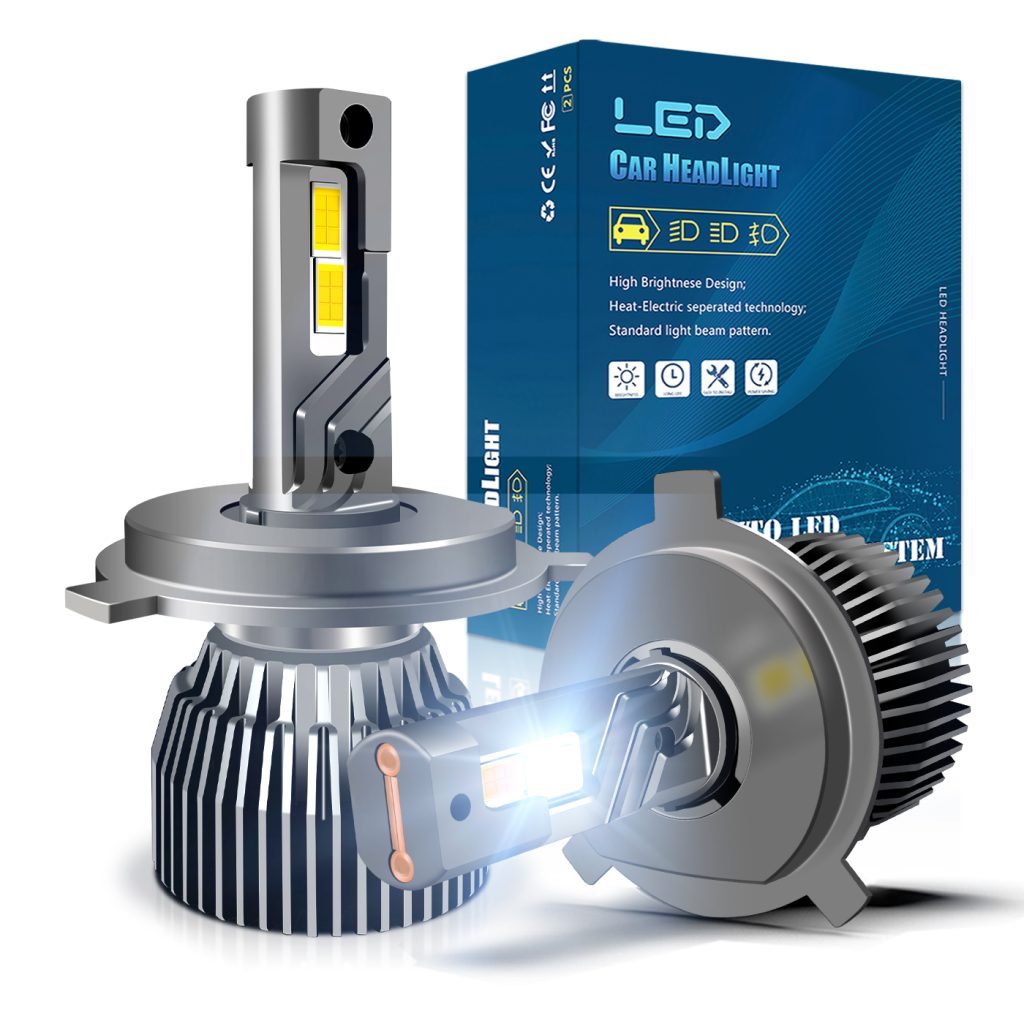
Halogen bulbs are cheap, penetrate fog well, and don’t dazzle – making them ideal for wet or misty conditions. Halogen is a thermal light source – heat radiates away with the light. LEDs are a cold source – heat doesn’t fully radiate with light, so they need additional cooling; without it, thermal degradation occurs. Also, if any LED component fails (e.g., the cooling fan), the whole unit often needs replacing – a costly repair.
- How bi‑xenon projectors work
Modern xenon setups use bi‑xenon projectors, which switch between high and low beams via an electromagnetic shield – dropping or raising a cut‑off plate. The xenon bulb stays on continuously – there is no “extended” start‑up once it’s running. The so‑called “delay” only refers to the initial warm‑up when the headlights are first turned on.
- Weather adaptability – LEDs vs xenon
In dense fog, LEDs let you see clearly up to about 40 km/h – beyond that, visibility drops. Halogens won’t let you see clearly at high speeds in fog either. Bi‑xenon projectors are currently the most common setup – they have a brief initial warm‑up but no delay on subsequent switching. A colour temperature around 5000K is optimal; anything higher reduces visibility in rain, so 5000K‑5500K is widely recommended.
- Recommended upgrade combination
If your car’s low‑beam already has projector lenses, the best approach is to replace them with a pair of bi‑xenon projectors and wire them correctly. With this setup, when you engage high beam, both pairs of headlights come on together.
LEDs give very high brightness, making the near field crystal clear; the projector high beam, once aimed, throws light much further with lower colour temperature and better penetration – illuminating distant objects clearly. For the low beam, the projector’s lower colour temperature ensures clear visibility even in rain, snow, or fog. After installation, it looks factory‑original.
Bottom line: using xenon with lenses for low beam and LEDs for high beam – this combination is highly practical.