There is no absolute winner between factory halogen bulbs and LED headlights. Stock halogen lights excel in stability, low replacement cost and superior penetration in rain and fog. LED lights deliver higher brightness, ultra-long service life and instant lighting response. However, improper LED retrofits may lead to failed vehicle inspections and illegal glare that endangers other road users. Your daily driving scenarios and practical demands determine the best option.
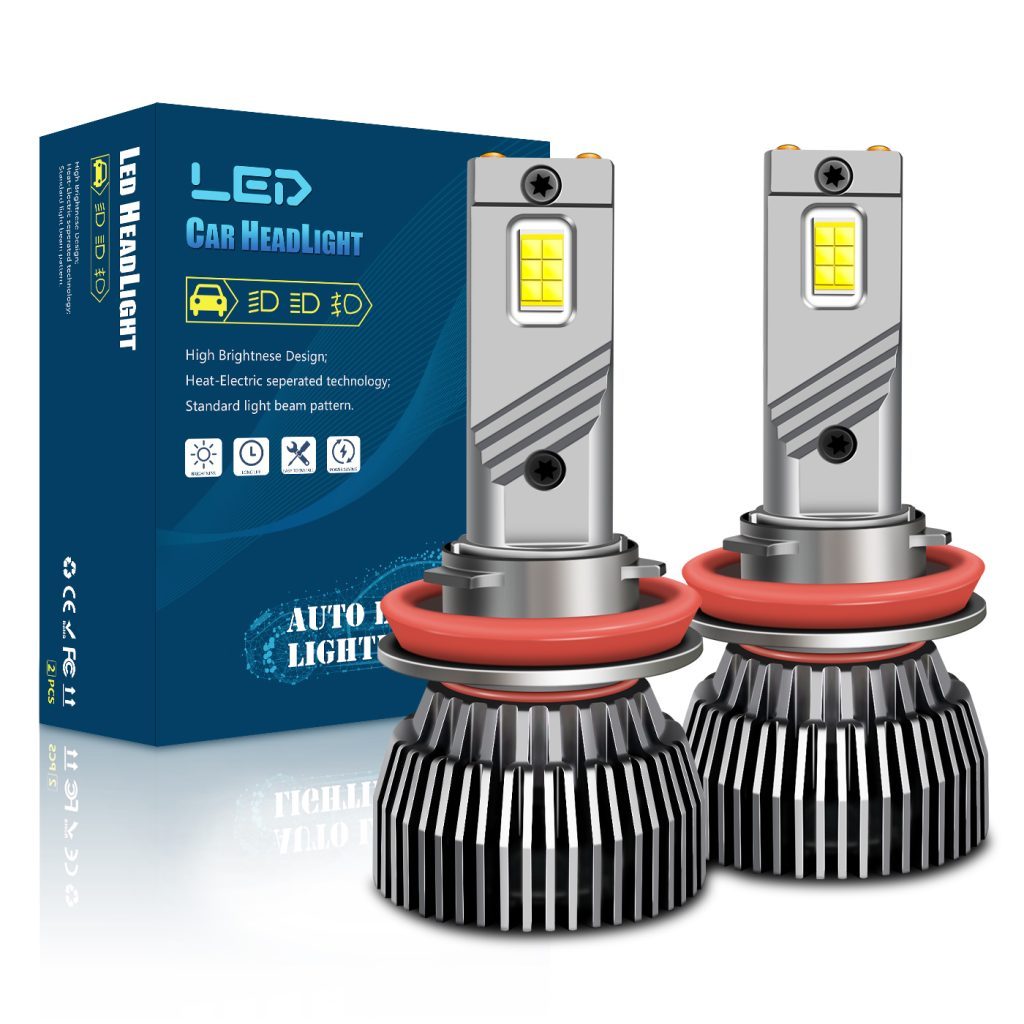
1. Recommendations Based on Different Driving Scenarios
Urban commuting with occasional night driving
Original halogen bulbs are fully sufficient. They are cheap and easy to replace. Warm yellow light offers better penetration in rainy and foggy weather, making them a steady choice especially for regions with frequent rainfall in the south.
Frequent highway trips and long-distance night driving
LED lights bring obvious advantages. They are 3–5 times brighter than halogen lamps. High beams can illuminate roads 200–300 meters ahead, enabling drivers to spot obstacles earlier and improve night driving safety.
Cost-effective lighting upgrade
Dual-beam LED projector assemblies, priced between $280–$560, boost brightness by more than three times with a high pass rate for vehicle inspections. This is an ideal solution balancing lighting performance and budget.
2. Three Critical Pitfalls When Upgrading to LED Lights
1. Projector lenses are essential
Direct bare LED bulb replacement causes severe scattered light. Over 90% of such unmodified retrofits fail official inspections. Harsh stray light dazzles oncoming drivers and raises collision risks.
2. Do not exceed legal color temperature limits
The compliant color temperature range is 4300K–6000K. Bluish-white light above 6000K will directly fail inspection, and its penetration drops sharply in rainy and foggy conditions.
3. Brightness has a legal upper limit
High-beam output cannot exceed 12,000 lumens. Excessive brightness is classified as excessive glare and will not pass official testing.
3. Full Performance Comparison
Brightness & Power Consumption
表格
| Parameter | Halogen Lights | LED Lights |
|---|---|---|
| Brightness | Approx. 1000 lumens | 3000–6000 lumens |
| Rated Power | Approx. 55W | Approx. 20W |
| Lighting Principle | Tungsten filament heated to incandescence | Direct light emission via semiconductor chips |
| Color Temperature | Around 2700K (warm yellow light) | 4300K–6000K (cool white light) |
LED bulbs only consume roughly 20W to achieve far stronger illumination than halogen lamps, using only one-third of the energy. This reduces fuel consumption and fits perfectly with the energy-saving requirements of new energy vehicles.
Service Life & Reliability
Halogen Lights: Simple structure requiring no extra driver or cooling parts. Low replacement cost and wide compatibility, yet short lifespan of only 500–1000 hours.
LED Lights: Require constant-current drivers and heat dissipation structures, with a theoretical lifespan exceeding 50,000 hours. The overall long-run cost is lower, ideal for drivers who travel frequently over long distances.
Performance in Rain & Fog
The warm yellow light of halogen lights features stronger penetration in humid, foggy weather and avoids visual interference caused by light scattering on water vapor. Poorly optimized LED setups without professional lenses may produce distracting glare under bad weather conditions.
Visual Comfort
LED light beams are more concentrated with cool white light close to natural daylight. They greatly improve recognition of road edges, traffic markings and obstacles. For long-distance driving and mountain roads, LED lighting effectively reduces visual fatigue.
4. Final Summary & Advice
- If you regularly drive in foggy or rainy areas: Halogen lights remain a reliable option with strong penetration and low running costs.
- If you pursue sharp visibility, energy efficiency and modern lighting performance: LED headlights are the superior upgrade solution.
If you decide to upgrade to LED: Always install matching projector lenses, keep color temperature within 4300K–6000K, ensure brightness complies with legal limits, and arrange professional installation at qualified workshops.
Ultimately, your driving environment and real demands should guide your choice of light source.