On a stormy night, the worst thing isn’t traffic jams—it’s realising that your newly installed 4,500‑lumen headlights are about as effective as a fogged‑up lamp. A broken‑down truck ahead only becomes visible at the last second. Why does the claimed brightness seem to “shrink” in the rain? It’s time to look behind the numbers.
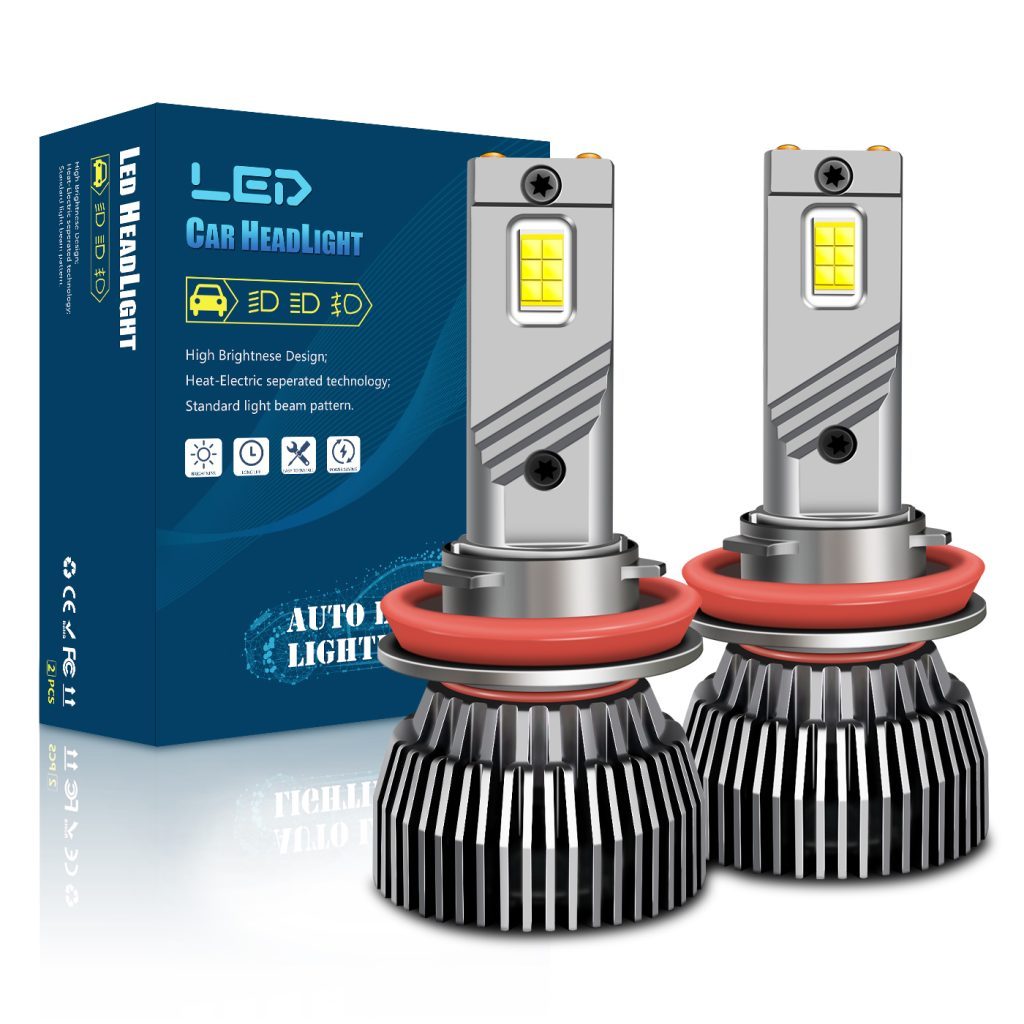
- The Truth About Lumens: Lab Data ≠ Real‑World Performance
Lumens measure luminous flux—the higher the number, the more light emitted. At 4,500 lumens, these lights far exceed national requirements (low beam ≥1,050 lm, high beam ≥1,450 lm) and sit comfortably above the recommended levels for city driving (2,500‑4,000 lm) and highway/mountain driving (4,000 lm+). So on paper, 4,500 lumens is definitely bright.
However, in heavy rain, the same light output can be severely compromised. Rainwater weakens light in three ways:
Tiny raindrops (0.5‑5 mm) scatter over 40% of direct light;
A wet road surface reflects and absorbs about 35% of light;
Suspended moisture in the air selectively absorbs certain wavelengths.
It’s like shining a torch into a swimming pool—the rated brightness is one thing, but what you actually see is quite another.
- Five Factors That Determine Whether 4,500 Lumens Are “Enough”
Colour Temperature Mismatch: High‑colour‑temperature white light (e.g., >6000K) has poor penetration in fog and rain. For wet conditions, warm white or natural white (4300K‑5500K) is far more effective.
Beam Pattern and Lens: Without a proper lens, LED light scatters, wasting brightness and reducing road coverage. High lumens don’t help if the beam pattern is poor.
Lumen Overstatement: Some manufacturers exaggerate lumen ratings. Independent tests have shown that several popular LED headlights deliver only 48‑53% of their claimed output.
Dirty Lenses: A 0.1‑mm film of mud on the headlight lens can cut light output by up to 1,800 lumens—like wearing sunglasses at night.
Incorrect Aiming: If the low‑beam is aimed too high, light is wasted upwards rather than on the road. Tilting it down by just one degree can add 3‑5 metres of usable illumination in heavy rain.
- How to Make 4,500 Lumens Truly Effective
Layered Lighting: Use low beams (3,000‑4,500 lm) for up‑close details within 30 metres; front fog lamps (2,000‑2,500 lm) for near‑ground coverage at 15‑20 metres; and rear fog lamps for visibility beyond 200 metres.
Dynamic Adjustment: Some premium models now feature rain‑sensing systems that automatically redistribute light output, focusing more on the near field during downpours.
Keep Lenses Clean: Regularly clean the headlight surface, especially after rain—it’s far more effective than simply chasing higher lumen numbers.
Choose Reputable Brands: Look for genuine steady‑state lumen ratings and avoid cheap, over‑hyped products.
- Conclusion
4,500 lumens is inherently bright enough, but whether it feels bright depends on colour temperature, beam quality, product authenticity, lens cleanliness, and proper aiming. In extreme rain, even the most powerful headlights will lose range—so using fog lamps, slowing down, and staying alert are the ultimate safety measures. When choosing headlights, don’t just look at lumen figures—consider the full optical system, including spectrum, optics, and thermal design.