Every driver expects brighter, farther-reaching headlights for safer night driving. However, when facing countless LED headlight products on the market with huge gaps in price and performance, most car owners feel confused. In fact, choosing high-quality LED headlights is not difficult. You only need to master several core technical parameters to quickly screen reliable products and avoid inferior options. This guide breaks down the key knowledge of LED headlights, helping you make professional and accurate choices during product selection.
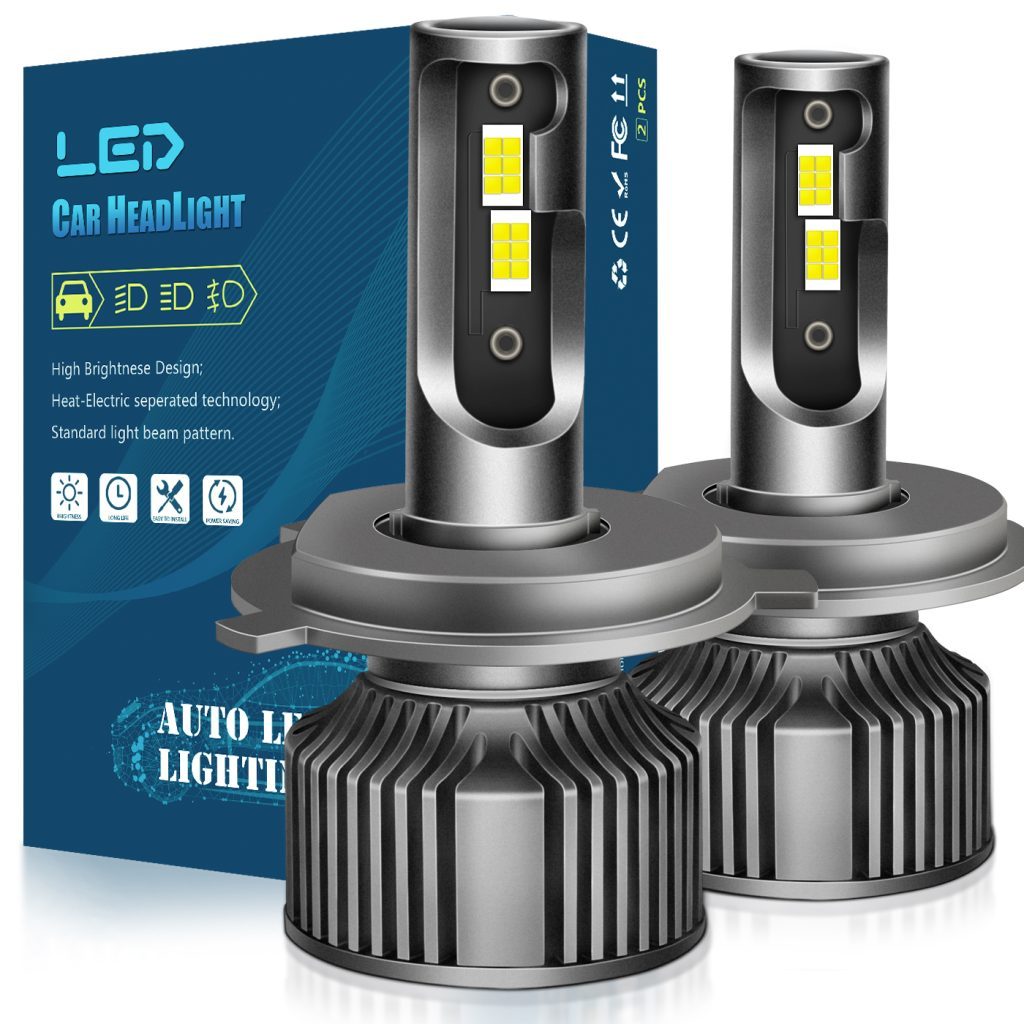
LED headlights have become the mainstream upgrade option for modern vehicles due to their outstanding advantages over traditional halogen lamps, including lower energy consumption, longer service life, and instant zero-delay lighting. The actual performance of an LED headlight is determined by four core components: LED bead quality, heat dissipation structure, driving circuit, and optical matching design. Understanding these indicators can effectively avoid low-quality products that look bright visually but fail to illuminate the road practically.
- Lumen Value — Real Road Brightness
Lumen is the most intuitive parameter for measuring headlight brightness. A higher lumen value means clearer road illumination and a wider lighting range. Nevertheless, higher lumens do not always equal better lighting. Excessively high brightness will cause light scattering and severe glare, interfering with oncoming vehicles and pedestrians, which poses safety risks and fails traffic inspection.
Most mainstream LED headlights on the market range from 3000 to 6000 lumens. For daily urban commuting, around 4000 lumens is completely sufficient, offering uniform and compliant lighting. For drivers who often travel on highways or unlit rural roads, appropriately higher lumen products are acceptable, yet they must be used with a professional lens to concentrate the beam and eliminate glare. - Color Temperature — All-Weather Adaptability
Color temperature (unit: Kelvin/K) determines the light color of the headlight and directly affects visual comfort and all-weather penetration performance. Different color temperatures suit different driving scenarios:
3000K (Warm Yellow Light): Features strong light penetration, performing best in rainy, foggy, and hazy weather, ideal for areas with frequent bad weather.
4300K–5000K (Natural White Light): The most balanced and universal option. Close to natural daylight, it ensures clear night vision while maintaining excellent penetration in bad weather, perfectly suitable for most daily driving scenarios.
6000K+ (Cool Blue-White Light): Delivers an ultra-bright visual effect on clear nights. However, excessive blue light causes serious reflection on wet roads and water accumulation, greatly weakening penetration and interfering with the driver’s vision in rainy weather.
For daily vehicle use,4300K to 5000K is the most recommended color temperature range. - Heat Dissipation Performance — Long-Term Stability & Lifespan
Heat dissipation is the core factor that determines the service life and brightness stability of LED headlights. LED beads generate a large amount of heat during continuous operation. Poor heat dissipation will lead to rapid luminous decay, continuous brightness reduction, and even permanent burnout of lamp beads.
The mainstream heat dissipation designs on the market are divided into two types:
Passive Heat Dissipation (Aluminum Heat Sink): Relies on high-density aluminum fins for heat conduction. The larger the contact area and the denser the fins, the higher the heat dissipation efficiency, with stable performance and no noise.
Active Heat Dissipation (Built-in Cooling Fan): Adopts fan forced heat dissipation, featuring faster heat dissipation and stronger cooling capacity, suitable for high-brightness and high-power LED bulbs. When selecting fan-cooled products, pay attention to fan quality to avoid abnormal noise and short service life.
Simply touching the lamp body to feel the material texture and workmanship is an effective way to judge its heat dissipation quality. - LED Bead & Driving Circuit — Overall Reliability
High-quality lamp beads are the foundation of stable lighting. Well-known brands such as Osram and Philips provide superior light efficiency, pure light color, and stronger anti-decay ability compared with ordinary generic beads.
The driving circuit determines the anti-interference ability and overall service life of the headlight. A high-quality driver can resist vehicle voltage fluctuations, avoid light flickering and error codes, and ensure long-term stable operation. Neat circuit welding and standardized internal structure are intuitive signs of refined manufacturing technology. - Optical Matching & Beam Pattern Compliance
Many car owners only focus on whether the LED bulb can be installed, ignoring the matching with the original car’s light bowl and lens. The original halogen light reflection bowl is designed for traditional light sources. Direct replacement with mismatched LED bulbs will cause scattered beam patterns, resulting in ineffective road lighting, stray light, and illegal glare, which may lead to traffic penalties and inspection failure.
Before upgrading headlights, confirm the matching degree between the bulb and the vehicle’s optical structure. For models with poor compatibility, it is recommended to choose a dedicated LED headlight assembly with a professional lens. This solution effectively improves brightness, concentrates the beam, ensures standard light cutoff lines, and fully complies with traffic lighting regulations.