It is technically feasible to swap original halogen bulbs for LED bulbs. Many car owners carry out this upgrade to boost nighttime brightness. Below is a practical analysis of advantages and unavoidable drawbacks based on real retrofit experience.
Advantages of Replacing Halogen With LED Bulbs
Higher brightness. LED delivers far stronger illumination than dim yellow halogen light, improving visibility on unlit roads.
Simple plug-and-play installation. Most models such as H7, H1, H4 can be directly fitted after removing the original bulb.
Energy saving. Standard halogen bulbs are 55W, while mainstream LED bulbs only consume 25–35W, reducing load on the vehicle electrical system.
Longer service life. Quality LED products usually come with multi-year warranty, far outlasting halogen bulbs which burn out frequently.
Instant full brightness without warm-up delay, unlike xenon HID lights.
Inherent Disadvantages & Common Problems
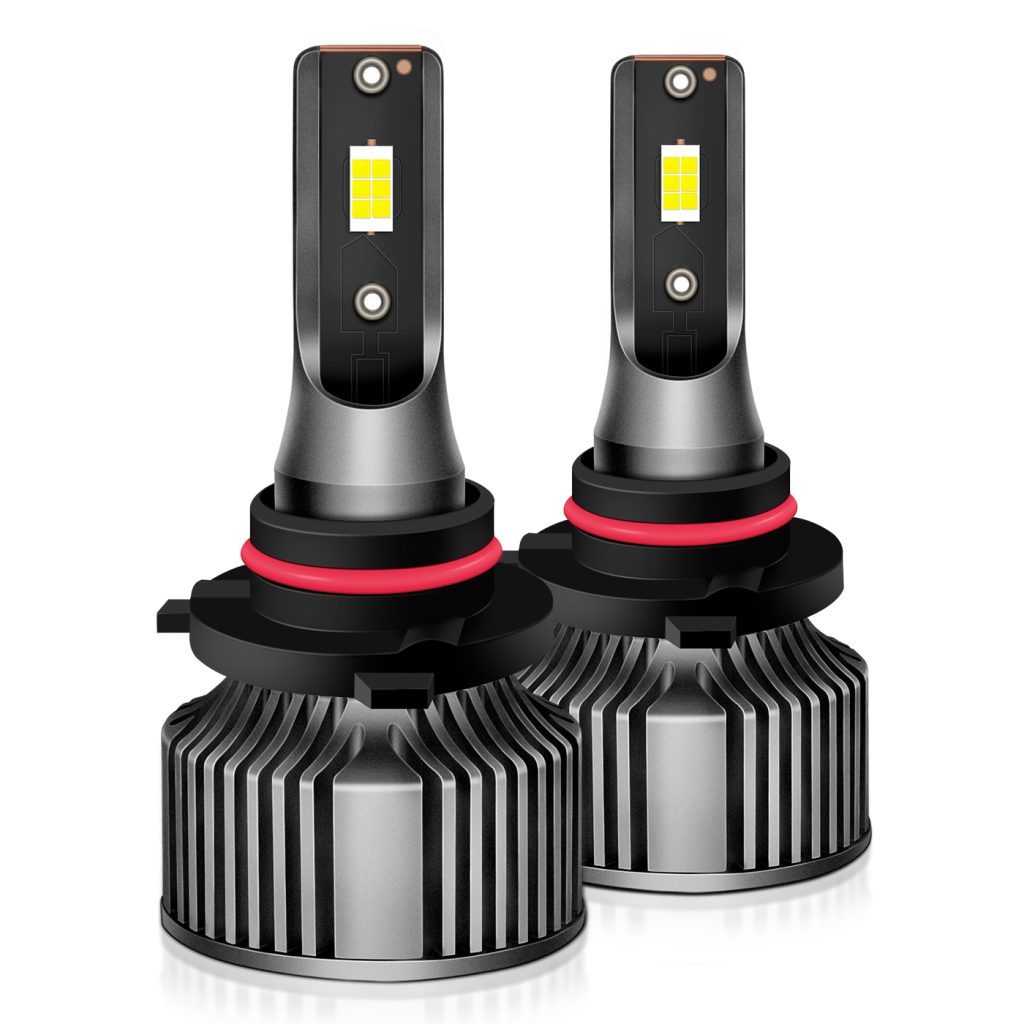
- Severe scattered light for vehicles with reflector housings (No factory lens)
Original halogen reflector bowls are designed around the focal point of tungsten filaments. Early generations of LED chips failed to match this light-emitting position. Even newer improved LED bulbs still struggle to form a neat low-beam cutoff line on reflector setups.
Result: Bright inside the vehicle, yet poor effective road illumination, and strong glare disturbing oncoming drivers. Vehicles equipped with factory projector lenses suffer this problem much less. - Heat dissipation risks
Early LED bulbs relied purely on passive copper belt heat sinks. If squeezed by the dust cover, heat cannot escape, leading to fast luminous decay or bulb burnout.
Most modern LED bulbs adopt built-in cooling fans. Potential new issues:
Slight fan humming noise during operation;
Fans may fail after long-term use, triggering overheating damage to LED chips. - Electrical compatibility issues
Many modern CANBUS vehicles detect lamp current. Low-power LED bulbs cause:
Dashboard lamp failure warning alerts;
Light flickering when driving.
Solution: Select LED bulbs with built-in CANBUS decoders; some models require external capacitors or load resistors. - Limited rain & fog penetration
Most aftermarket LED bulbs adopt 5000K–6000K cool white light. Compared with warm yellow halogen light, cool white light reflects off water droplets in fog and heavy rain, shortening visible distance. - Compliance & annual inspection risks
Scattered light and unclear cutoff lines easily lead to inspection failure. In addition, if local regulations prohibit simple bulb modification without official certification, you may face traffic penalties.
Practical Suggestion
✅ If your vehicle has factory projector halogen headlights:
You can choose upgraded 1:1 filament-positioned LED bulbs with built-in decoders. Remember to test the beam pattern against a wall and adjust light height after installation.
❌ If your vehicle only has reflector halogen bowls without lenses:
Simple LED bulb replacement is not recommended. Severe scattering cannot be eliminated. For safe and legal improvement, upgrading to bi-LED projector kits is the better solution.