Automotive Lighting Design and Optimization Based on LED Technology
With the rapid advancement of technology, automobiles have become an essential part of modern life. As a critical component of vehicle safety and comfort, headlight design and optimization play a vital role in ensuring driving safety and enhancing the driving experience.
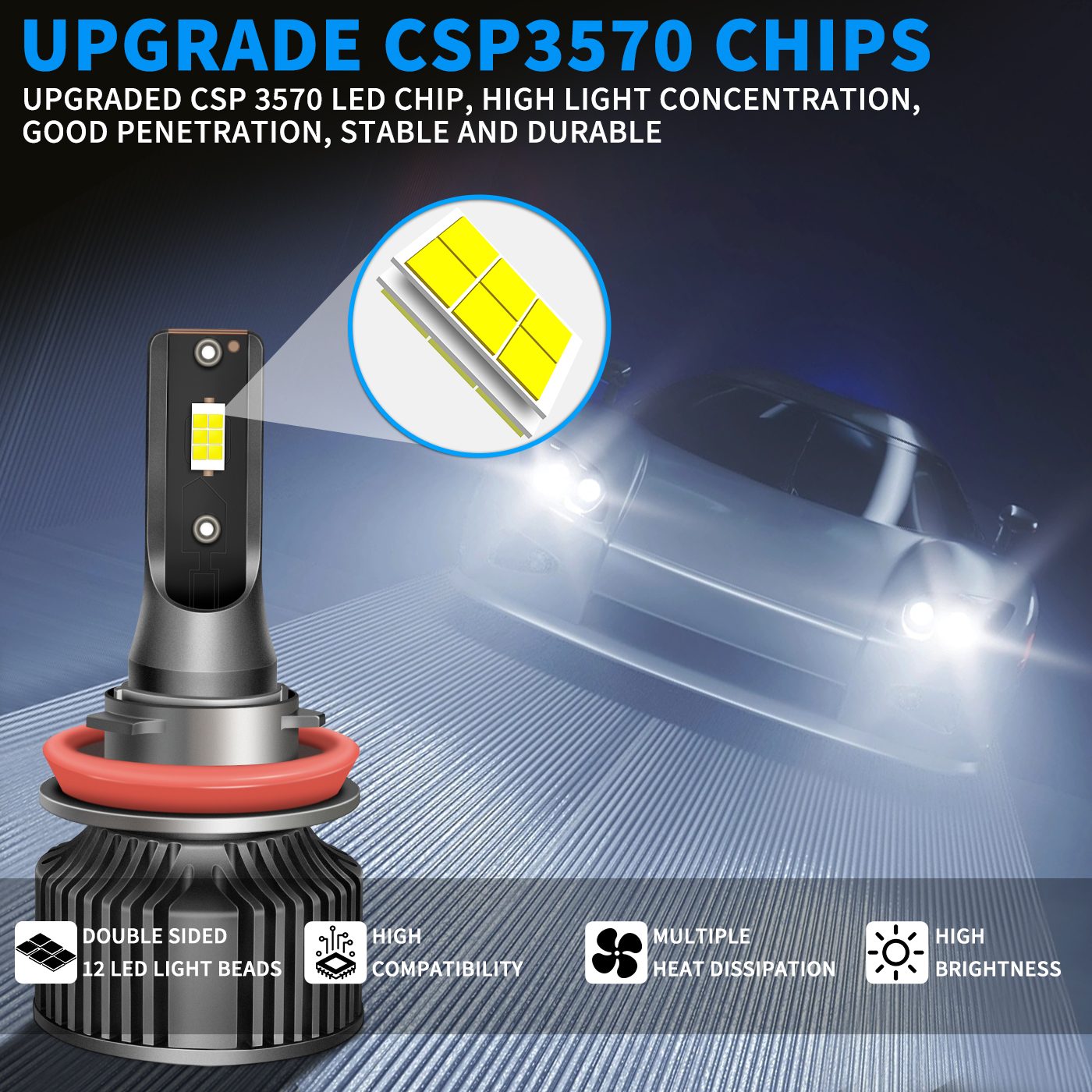
In recent years, LED-based automotive headlights have gradually replaced traditional halogen and xenon lamps, becoming the industry standard. The continued design and optimization of LED lighting systems will further drive the automotive industry toward intelligence and sustainability, providing drivers with better visibility and road safety. This article explores key considerations in the design and optimization of LED-based automotive headlights.
✅ Advantages of LED Headlight Design
1. Energy Efficiency & Environmental Friendliness
Compared to halogen and xenon lamps, LED light sources offer significantly higher energy efficiency and lower power consumption—one of their most notable advantages. LEDs generate light through electroluminescence in semiconductor chips, rather than heating a filament.
LEDs achieve energy conversion efficiency of over 80%, far exceeding the 20% efficiency of traditional lamps. This means that at the same brightness level, LED headlights consume much less energy, reducing overall vehicle fuel consumption and environmental impact—aligning with sustainable development goals.
2. Long Lifespan
The lifespan of automotive LEDs far exceeds that of traditional headlights, reaching tens of thousands of hours or more. Typically, LED chips last over 20,000 hours, with high-quality products exceeding 50,000 hours. In contrast, conventional headlights usually last only a few thousand hours. This extended lifespan reduces maintenance frequency and costs, improving overall reliability and stability.
3. Rich Color Options
LEDs can produce a wide range of colors by adjusting current and optical design, improving visibility and road safety. Traditional headlights typically offer only a single color (usually yellow or white), while LEDs can deliver various color temperatures and effects. By adjusting current and using specific materials and optical designs, LEDs can produce spectra closer to natural light, enhancing road recognition and visual comfort for drivers.
📐 Design Principles for LED Headlights
LED headlight design must meet specific requirements for brightness, color temperature, and color rendering to ensure optimal performance across different driving conditions.
1. Brightness Requirements
Headlight brightness is a critical safety metric. Regulations require specific brightness levels for different lighting functions. High beams must provide sufficient illumination for nighttime or complex road conditions, ensuring drivers can clearly see the road ahead, obstacles, and other vehicles. Low beams are designed to minimize glare for oncoming traffic while providing adequate illumination.
2. Color Temperature Requirements
Color temperature, measured in Kelvin (K), affects visual perception and comfort.
- Lower color temperatures (~3000–4000K) produce warm yellow light, similar to halogen lamps. This provides good contrast and comfort, making details easier to distinguish—ideal for urban driving.
- Higher color temperatures (5000–6000K or above) produce cool white light, closer to natural daylight. This offers higher brightness and clarity, making it suitable for highways and high-speed driving.
3. Color Rendering Requirements
Accurate color rendering is essential for road safety. Drivers must be able to correctly identify pedestrians, traffic signs, and obstacles. Good color rendering requires precise optical control of the LED chip, reflector design, and optical system optimization to achieve accurate and natural color reproduction.
⚙️ Key Design Considerations
1. Thermal Management
LEDs generate heat during operation. Excessive temperatures can degrade performance or cause failure. Proper thermal design—using heat sinks, thermal pads, or fans—ensures efficient heat dissipation. Optimizing PCB layout and selecting high-thermal-conductivity materials also improves heat transfer.
2. Circuit Design
The LED driver circuit must provide stable power and overcurrent protection. A well-designed driver ensures consistent current output, preventing fluctuations that could affect brightness or lifespan. Additionally, circuits must be waterproof, dustproof, and vibration-resistant to withstand harsh road conditions.
3. Optical Design
Optical design directly affects lighting performance and visibility. Factors such as bulb shape, reflector design, and light focusing must be carefully optimized. Reflector geometry must be designed to maximize light distribution and uniformity, while specific applications (high beam, low beam, turn signals) require tailored focusing solutions.
🚀 Optimization Strategies
1. Improving Brightness
- Use high-luminosity LED chips with high luminous efficacy.
- Optimize reflector and lens shapes to focus light more precisely.
- Reduce optical losses through improved light transmission and reduced scattering.
- Ensure proper thermal management to maintain stable performance at higher brightness levels.
2. Reducing Energy Consumption
- Improve circuit design using efficient power management technologies.
- Optimize current regulation and power control with intelligent drivers.
- Implement smart control systems using ambient light sensors to adjust brightness dynamically.
- Consider the energy efficiency of the entire lighting system, including thermal and optical components.
3. Enhancing Heat Dissipation
- Use materials with high thermal conductivity (e.g., alloys, copper-based materials, ceramic substrates).
- Increase heat sink surface area for better heat transfer.
- Use cooling fans or heat pipes to accelerate heat dissipation.
- Integrate temperature sensors and smart control systems to monitor and adjust LED output based on real-time temperature data.
4. Improving Optical Performance
- Use advanced optical design software for precise simulation and analysis.
- Optimize lamp housing shapes and reflector surface textures for uniform light distribution.
- Select and optimize lens structures to improve light focusing and refraction.
- Reduce light loss and stray light using reflective coatings, anti-reflective films, and anti-glare treatments.
🔮 Future Outlook
1. Intelligent & Adaptive Lighting
With advances in AI and sensor technology, future LED headlights will achieve higher levels of intelligence. LEDs will automatically adjust lighting modes, brightness, and beam angles based on environmental and driving conditions.
2. High-Resolution & Multi-Functional Displays
Future LED headlights may integrate high-resolution displays capable of showing navigation info, vehicle status, and other driving data. LED matrix arrays can display icons, animations, and visual effects at high refresh rates, enhancing safety and interactivity.
3. Laser Lighting Technology
Laser technology offers high brightness, purity, and long lifespan. It may find applications in automotive lighting, providing longer-range illumination and more precise beam control, further improving nighttime visibility and safety.
4. Flexible & Customizable Designs
Flexible LED technology will enable more diverse lamp shapes and line designs, allowing for greater personalization. Variable color temperature and dimmable features will let drivers customize their lighting experience.
5. Environmental Sustainability
Future LED designs will continue to emphasize energy efficiency and sustainability. By optimizing circuit design and thermal systems, LEDs will further reduce energy consumption and extend lifespan, aligning with global sustainability goals.
💎 Conclusion
The future of automotive LED lighting lies in smarter, more multi-functional, and more personalized solutions. Leveraging AI, sensors, and advanced display technologies, LED headlights will provide safer, more comfortable, and more customized driving experiences—while remaining environmentally sustainable and energy-efficient.