What’s the worst thing about night driving? Ask any experienced driver, and nine out of ten will say – not enough light! Especially on unlit country roads, those factory halogen lamps feel like “holding a candle to find your keys” – everything ahead is a blur. Take my friend Xiao Li last week: driving home at night, he nearly hit a tricycle that pulled out at a bend – all because his headlights were too dim to see clearly. The next day he rushed to the garage wanting an upgrade, only to get dizzy staring at the bewildering array of xenon and LED options. Which one should he choose? Let’s break it down.
1. Brightness – which is brighter?
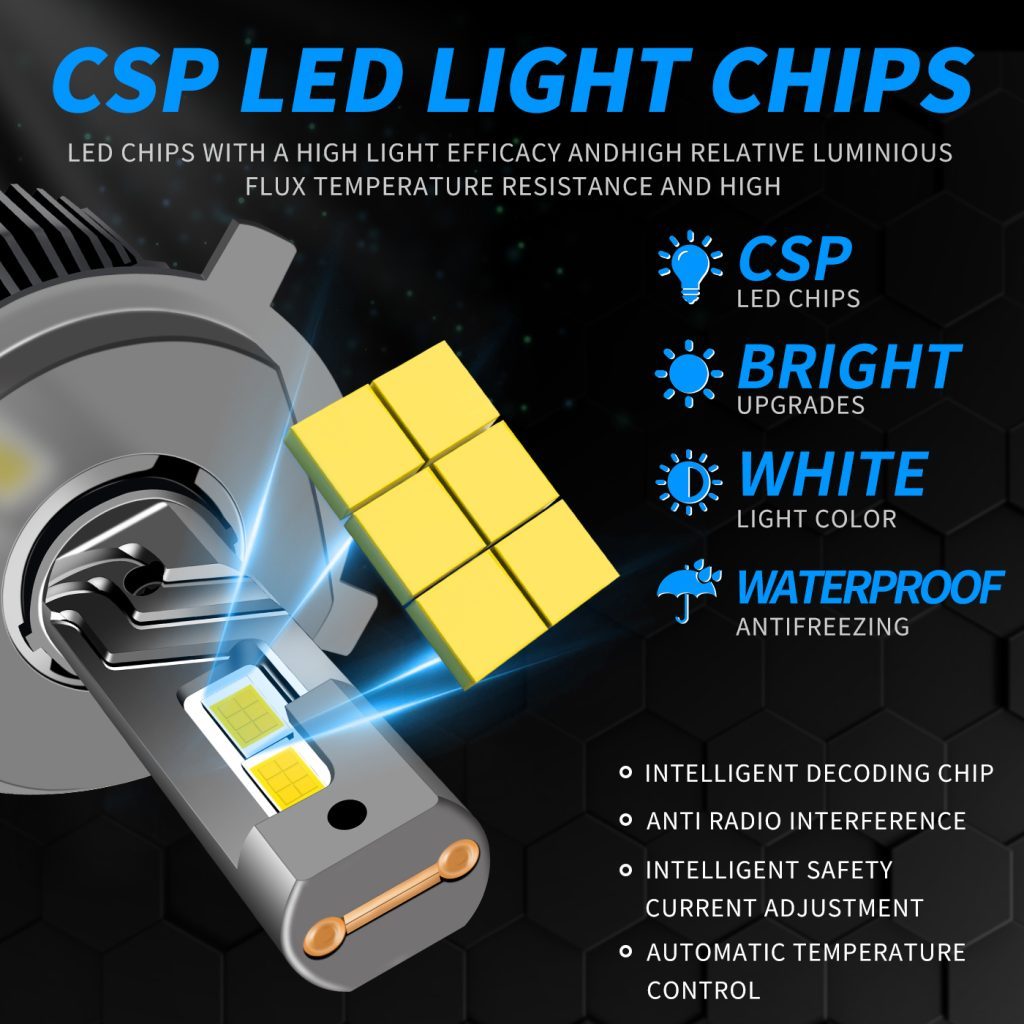
Xenon lamps were once the premium choice – they discharge light through high‑voltage gas, giving a much whiter beam than halogen, roughly three times brighter. But some LEDs can be even more glaring – because LEDs emit from a point source, the light is sharp and concentrated, almost like being flashed by a laser pointer.
However, brightness alone doesn’t guarantee usability. Xenon’s cool‑white light penetrates poorly in rain or fog – it can actually make things harder to see. LEDs, by comparison, produce a more focused beam that, with a proper lens, creates a clear fan‑shaped spread – widening the illuminated area by up to two metres, enough to spot small animals darting out from the roadside.
2. Lifespan and reliability – which lasts longer?
Xenon lamps average about 2,000 hours – at two hours of nightly use, that’s less than three years. LEDs last over 20,000 hours – equivalent to 833 days of continuous light. Garage mechanics confirm: xenon buyers are back within two years; LED buyers haven’t returned in five.
But LEDs aren’t trouble‑free. One owner in northeast China found his LED chips cracked at -20°C – LEDs are temperature‑sensitive and can fail in extreme cold, whereas xenon lamps perform more reliably in freezing conditions. Northern drivers should prioritise cold‑weather performance, not just lifespan numbers.
3. Installation and response – which is more convenient?
Xenon retrofits require a ballast – complex wiring that adds several hundred yuan to the installation cost. Worse, there’s a start‑up delay – you wait about a second after flipping the switch before the light comes on, which can be stressful in an emergency. LEDs light up instantly and are a direct plug‑and‑play replacement for factory bulbs.