Three critical technical parameters need to be checked when purchasing LED car headlights: lumen value determines basic brightness, color temperature controls light tone, and luminous efficacy reflects energy-to-light conversion ratio. Only with proper matching of these three indicators can you get optimal lighting performance.
1. Lumen Value – The Core Indicator of Brightness
Lumen (lm) is the standard unit for measuring luminous brightness. The practical usable range falls between 3000 and 6000 lumens:
- Urban road driving: 3000–4000 lm
- Highway & rural road driving: 5000–6000 lm
Important reminder: Always check steady-state lumen rather than transient peak lumen to avoid misleading exaggerated labeling.
National standard luminous flux limits:
- Low beams: 1050–1450 lumens
- High beams: 1450–1750 lumens
2. Color Temperature – Impacts Light Tone & Visual Comfort
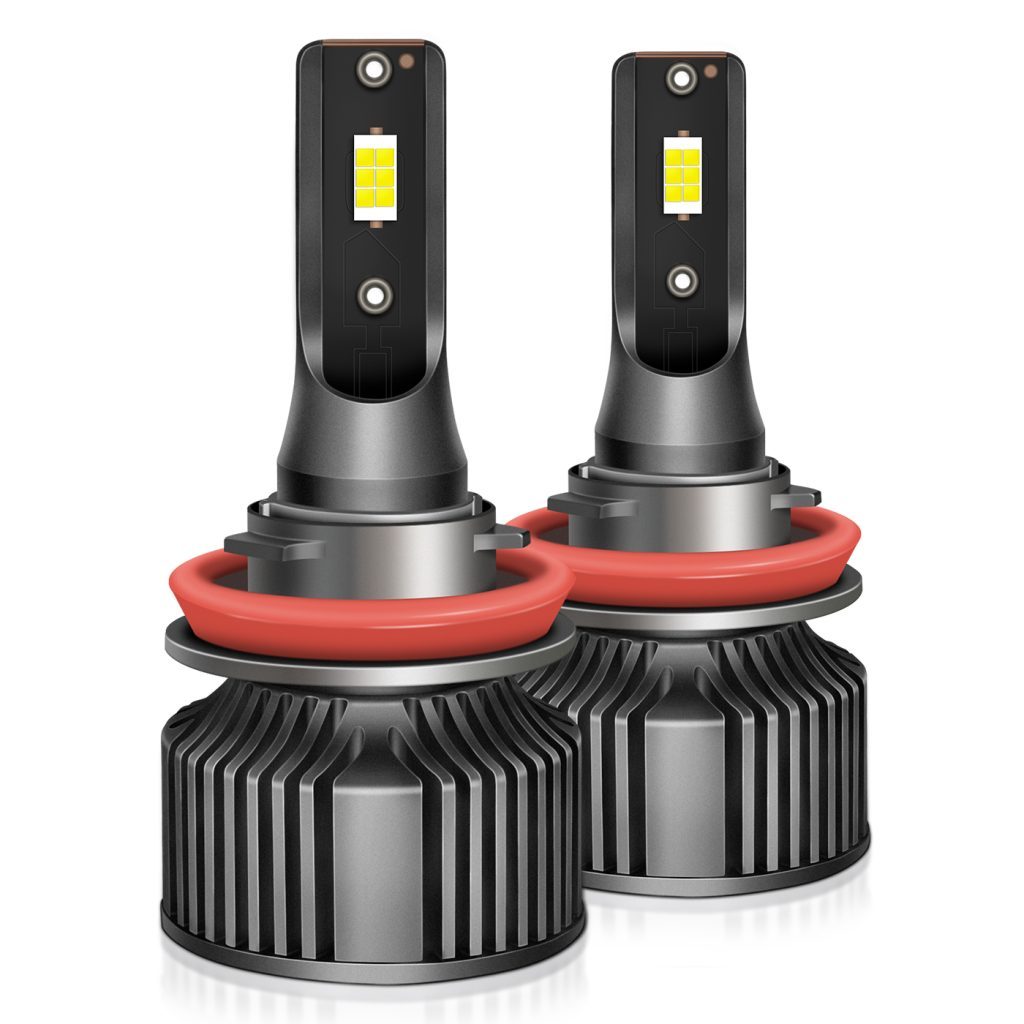
Color temperature from 4300K to 6000K delivers the most balanced performance:
表格
| Color Temperature Range | Light Feature | Applicable Scenarios |
|---|---|---|
| 3000–4000K | Warm yellow light | Strong penetration in rain and fog |
| 5000–6000K | Natural pure white light | Clear road surface recognition |
Note: Light with color temperature above 6000K contains excessive blue light that scatters easily, which may fail vehicle inspection. The 5500K–6000K range is highly recommended, balancing clear night vision and safety in rainy/foggy weather. Do not confuse color temperature with brightness, as they are two separate specifications.
3. Luminous Efficacy – Ratio of Brightness to Power Consumption
Luminous efficacy (lm/W) is a core technical metric of LED lighting:
- Mass-market standard products: 90–130 lm/W
- High-end premium LED solutions: Up to 270 lm/W
This value is affected by LED chip performance, driver power loss and lens light transmittance. High-efficacy bulbs produce brighter light under identical power draw, which greatly benefits electric vehicle cruising range.
4. Light Source Category & Beam Pattern Requirements
The beam angle and shape define the performance of automotive headlights. Qualified LED headlamps must feature a sharp light-dark cutoff line; scattered beam patterns will compromise driving safety. Asymmetric left-right beam design delivers superior road illumination.
5. Final Buying Summary
Take all factors into consideration when picking LED headlights:
- Brightness (Lumen): 3000–4000 lm for city driving; 5000–6000 lm for highways and country roads
- Color Temperature (Kelvin): 5500K–6000K balances visibility and bad-weather penetration
- Luminous Efficacy: Higher is better, minimum standard above 90 lm/W
- Beam Pattern: Clear light-dark cutoff line with asymmetric left-right light distribution