- Market positioning: mid‑to‑high end with strong value
LED headlights have moved from being an exclusive feature on luxury cars to a mainstream standard on family vehicles. Thanks to their energy efficiency, high brightness, and long lifespan, they now hold the largest share of the mid‑to‑high‑end lighting market. Compared with traditional halogens, LEDs offer clear advantages in both output and power consumption – making them a solid choice for drivers who value performance, quality, and lower long‑term running costs. While aftermarket LED upgrades are still pricier than halogen replacements, the overall cost‑effectiveness of LEDs now easily outpaces xenon (HID) systems, which involve more complex hardware and higher maintenance.
- Key performance highlights
Brightness: typically outperforms halogens, giving a clearer, wider field of view at night.
Energy efficiency: consumes roughly one‑third to one‑tenth of what a halogen uses, helping reduce the vehicle’s overall electrical load.
Service life: rated for tens of thousands of hours – far beyond halogen or xenon – cutting down on replacement frequency and service costs.
Response time: lights up in microseconds, offering quicker reactions in emergency situations and improving overall safety.
- Suitable driving scenarios
LED headlights perform well across a range of conditions – city streets, highways, and unlit rural roads all benefit from their stable output. Their fast response and precise beam control also make them effective in rain, fog, and corners, especially when paired with intelligent beam‑shaping systems.
- How the bi‑xenon (bi‑LED) lens works
The high‑beam/low‑beam switching in LED headlights relies on a bi‑xenon (or bi‑LED) lens assembly. An electromagnetic actuator moves a shield plate:
Low‑beam mode: the shield rises, cutting off the upper portion of the beam to create a sharp cut‑off line that prevents glare.
High‑beam mode: the shield drops, releasing the full light output for long‑distance illumination.
Switching speed: takes about 0.2 seconds – roughly 5 times faster than a conventional halogen setup.
- Intelligent light‑shaping technologies
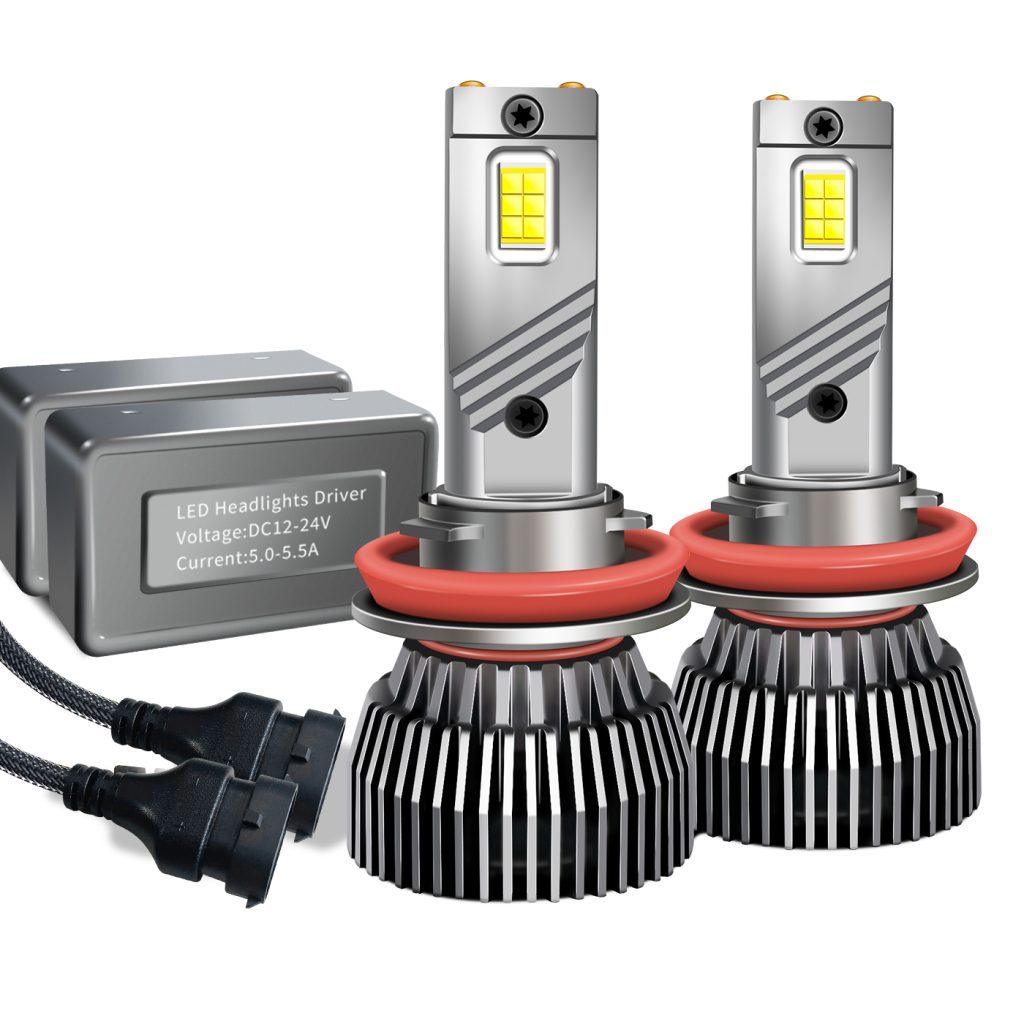
Modern LED headlights have evolved into three main smart configurations:
Matrix‑type zoning: uses 30–100 individually controlled LED chips, automatically dimming or switching off the segments aimed at oncoming traffic while keeping the sides fully lit.
Optimised reflector bowls: specially textured reflectors can spread the low beam across up to six lanes of road width.
Dynamic cornering compensation: the beam follows the steering wheel angle, swivelling up to 15° to illuminate blind spots inside a bend.
- Thermal management and lifespan balance
Cooling design directly affects the stability and longevity of high‑power LEDs:
Copper‑base heat conduction: drops the chip temperature from around 150°C down to 80°C, slowing lumen degradation.
Turbine‑style airflow channels: increase airspeed by roughly 40% for faster heat dissipation.
Step‑wise power adjustment: automatically reduces brightness by 10% during prolonged high‑beam use to protect the chips and extend life.