As automotive lighting technology continues to evolve, xenon (HID) and LED headlights have become key topics for car owners. Xenon has dominated the market for years with its high brightness and mature technology, while LEDs have emerged as the new contender with energy efficiency and rapid response. Faced with these two technological paths, how should owners choose? This article compares them across brightness, energy consumption, lifespan, start‑up speed, use‑case scenarios, and more – backed by real‑world cases and industry data – to provide a comprehensive decision‑making reference.
- Brightness and illumination: xenon excels at high‑beam range; LEDs offer more even low‑beam spread
Xenon’s brightness advantage is most evident in high‑beam scenarios. A typical 35W xenon lamp delivers 3200‑3600 lumens and a range of over 100 metres – on unlit mountain roads or highways, it helps detect obstacles well in advance. However, xenon’s beam focus depends on proper lens design; without lenses, the light scatters easily, causing glare for oncoming drivers.
LED brightness shines more in low‑beam scenarios. A 20‑40W LED array can output 2000‑4000 lumens with more even light distribution, reducing blind spots. For example, one mainstream LED unit uses a multi‑chip array to cast low‑beam light across four full lanes – ideal for complex urban roads. But LEDs have weaker high‑beam penetration – in fog or rain, their 6000K blue‑white light scatters against water droplets, actually reducing visibility.
- Energy consumption and heat: LEDs are more efficient; xenon runs hot
Energy use is a key differentiator. LEDs achieve near‑100% electro‑optical conversion efficiency – a 20W LED delivers the same illumination as a 60W halogen, reducing the vehicle’s electrical load over time. Xenon lamps are 50% more efficient than halogen, but their 35W draw still exceeds LEDs, and their 23,000‑volt start‑up surge places higher demands on the vehicle’s electrical system.
Heat is another concern. LEDs operate at just 50‑70°C, and their epoxy‑encapsulated construction makes them highly shock‑resistant – suitable for off‑road or rough roads. Xenon lamps, by contrast, generate 300‑400°C through arc discharge, requiring UV‑resistant glass housings and cooling fans. Poor heat dissipation can yellow the housing, age the lens, or even create safety hazards.
- Start‑up speed and lifespan: LEDs light instantly; xenon needs warm‑up
Start‑up delay is xenon’s Achilles’ heel – from switch‑on to full brightness takes 2‑4 seconds. On highways during overtaking or emergency manoeuvres, this delay can affect safety. Some manufacturers adopt a hybrid setup – xenon low beam with halogen high beam – precisely to compensate for this weakness.
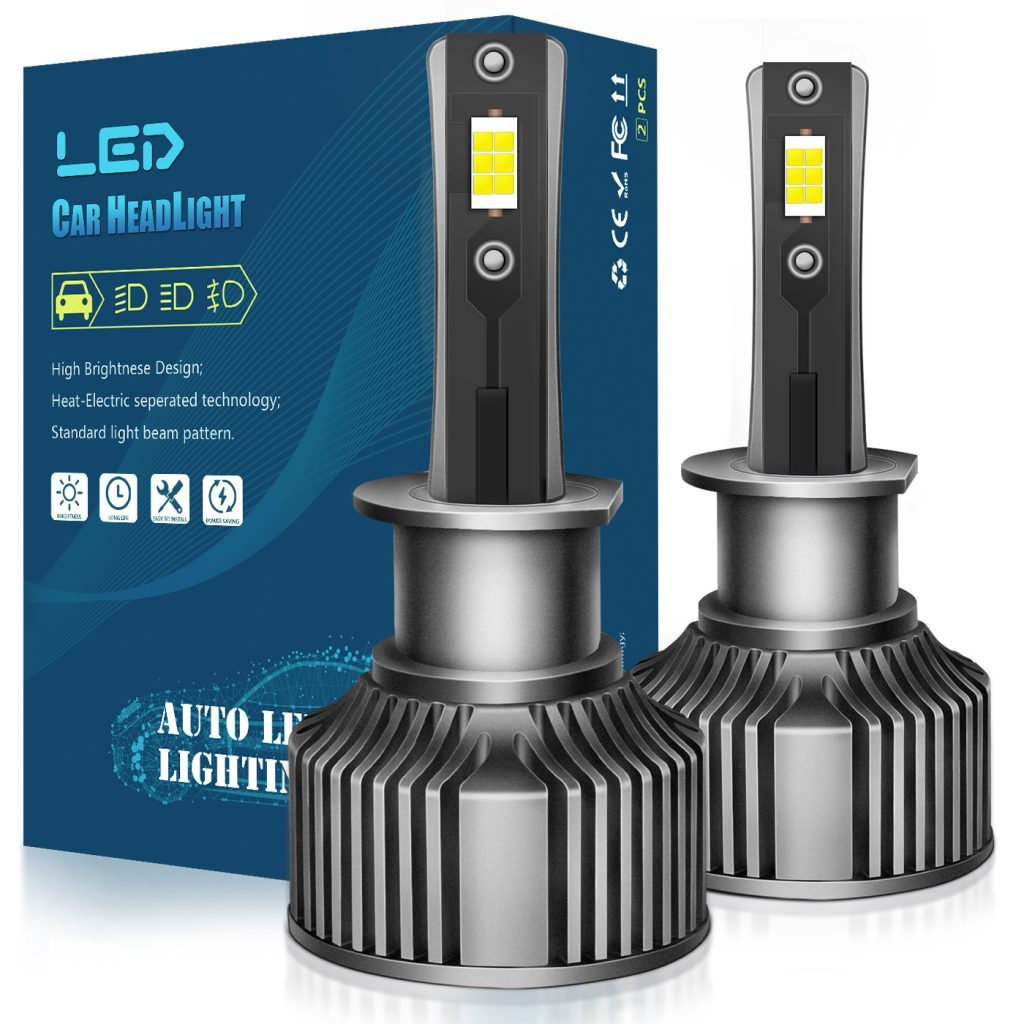
On lifespan, LEDs dominate with a theoretical 60,000‑100,000 hours. One owner reported that after 8 years of driving, his factory LEDs still retained 90% of initial brightness. Xenon lamps last around 3,000 hours, requiring bulb replacement every 2‑3 years – at significant cost.
- Use‑case scenarios: LEDs suit city driving; xenon suits long‑haul journeys
Each technology has its ideal users. For daily city commuting, LEDs’ instant response and even spread significantly improve driving comfort – a ride‑hailing driver reported fewer complaints from oncoming traffic when frequently switching between high and low beams.
For frequent long‑distance or road‑trip drivers, xenon’s high‑beam range and brightness are clear advantages – on unlit highways in western China, xenon can spot animals or obstacles over 200 metres away. However, in fog or rain, switch to fog lights or low‑beam to avoid blue‑white glare that reduces visibility.
- Cost and maintenance: LEDs cost more upfront; xenon costs more over time
Price is a key factor. LED headlight assemblies typically cost 2,000‑5,000 CNY, while xenon kits run 800‑1,500 CNY. But LEDs have lower long‑term costs – one owner found that over 5 years, his LEDs needed just one driver‑module replacement, while xenon required 3 bulb changes and 1 lens replacement – a higher total.
On maintenance convenience, LEDs use modular designs – owners can replace chips or drivers themselves. Xenon requires professional equipment to adjust ballast parameters, and bulbs must be handled without touching the glass – fingerprints can cause cracking.
- Future trends: LEDs are gaining ground; xenon still serves niche needs
As technology advances, LED costs continue to fall, and they’re becoming more intelligent – some models now link LED arrays with ADAS to automatically adjust beam angle and brightness. Xenon, constrained by start‑up delay and heat issues, is losing market share year on year – but still has a place in heavy trucks and custom builds.
For most owners, if your budget allows and you value long‑term stability, LEDs are the more balanced choice. If you drive mainly in remote areas and are price‑sensitive, xenon still provides reliable lighting. The final decision should factor in your driving habits, vehicle configuration, and retrofit budget.