When choosing LED headlights, wattage and lumen output must be considered alongside several other factors. Generally, LED headlight power ranges from 30 to 40 watts, while daytime running lights are under 10 watts. However, this is not a fixed rule – it also depends on your vehicle’s original lighting power and your personal brightness preferences.
- Luminous efficacy and brightness
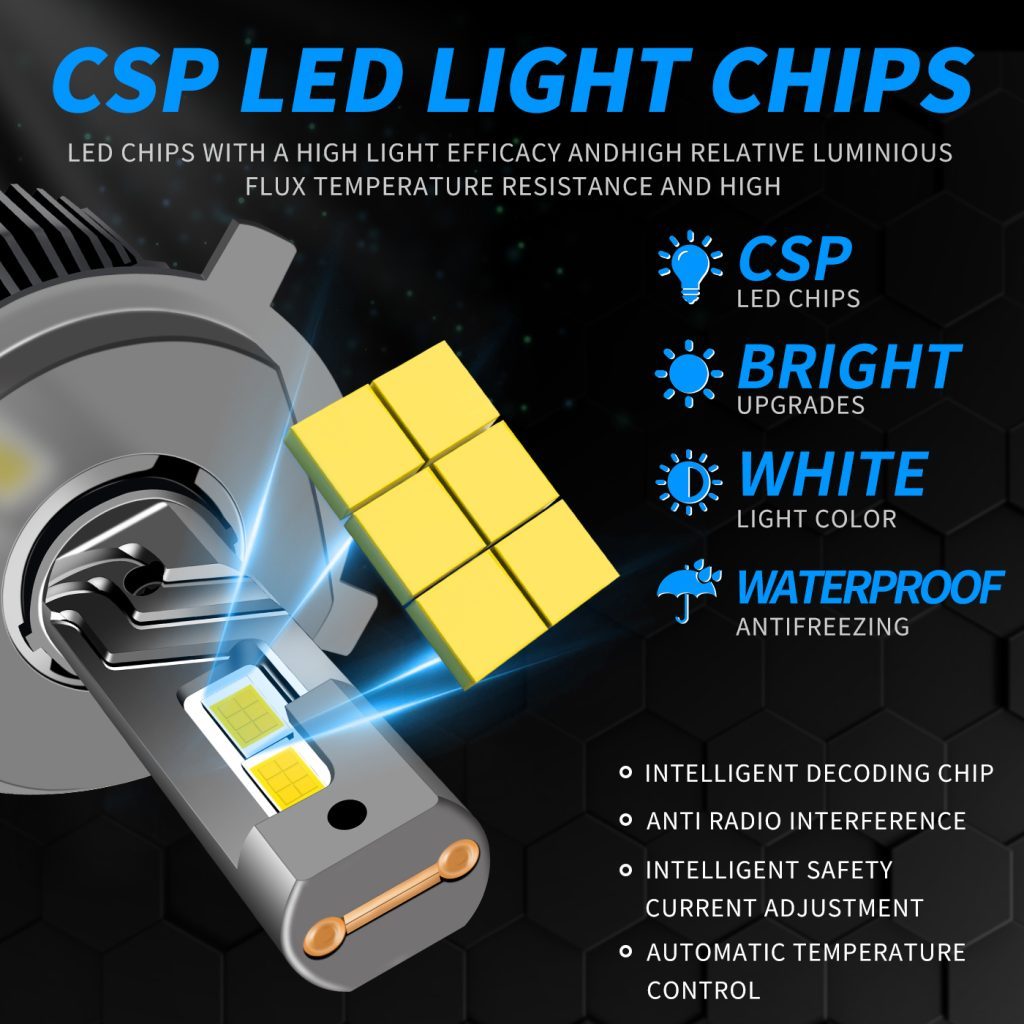
Automotive LEDs typically deliver around 91 lumens per watt, with 80‑100 lumens per watt considered an optimal range. Compared with traditional halogens, LEDs have a clear efficiency advantage – at the same wattage, an LED is significantly brighter than a halogen. So when upgrading, you don’t need to choose a higher‑wattage LED bulb; one with the same or even slightly lower power than the original will usually suffice.
- Higher wattage isn’t always better
Higher wattage means more power draw and higher operating temperatures. Without adequate cooling, LED lifespan suffers. As a rule of thumb, LED chip temperature should be kept below 85°C to ensure a lifespan of over 30,000 hours. Additionally, vehicle wiring has a rated current capacity – if LED wattage is too high, it can overload the wiring, causing heat buildup or even melted cables.
- Power differences across vehicle segments
Compact cars typically run LEDs around 30 watts, while mid‑range or premium models may push higher – some up to 50 watts – to achieve broader coverage and greater range. This difference comes down to performance targets: premium cars frequently use multi‑module LED arrays that consume more power in exchange for extended beam range and brightness.
- The efficiency advantage of LEDs
The real strength of LED headlights is their high efficacy – they produce far more light per watt than halogens, using only about one‑third the energy. Their lower current draw and reduced heat output are also kinder to the vehicle’s electrical system, lowering the load and cutting the risk of circuit faults.
- What to watch when buying or upgrading
As a rule of thumb, 22‑35 watts is a sensible reference for family‑car LEDs. If you’re unsure about a specific model’s specification, check the official equipment list or ask your dealer. When retrofitting, always choose a bulb with a wattage close to the original – going too high may overload the wiring and cause problems.
Choosing the right LED headlight power involves balancing your vehicle’s needs, your driving environment, and safety considerations. The right wattage gives you good light, reasonable energy consumption, and reliable operation – helping owners make smarter decisions for maintenance and upgrades.