Among numerous auto parts, headlights play a vital role. They are not only critical for night‑driving safety, but also affect vehicle appearance and overall performance. What factors should you take into account when selecting car headlights?
1. Choose the right headlight source
The mainstream headlight sources on the market are halogen, HID xenon and LED headlights, each with distinct performance for different driving scenarios.
| Headlight Type | Brightness | Lifespan | Start‑up Speed | Power Consumption | Price |
|---|---|---|---|---|---|
| Halogen | Low | Short | Fast | High | Low |
| Xenon(HID) | High | Medium‑long | Slow | Moderate | Medium |
| LED | High | Long | Fast | Low | Relatively High |
- Halogen Headlights: Mature‑technology, cost‑effective, great penetration in rain and fog. Drawbacks include limited brightness, high heat generation and short service life. Suitable for budget‑conscious drivers who often drive in foggy or rainy conditions.
- Xenon (HID) Headlights: Excellent brightness and longer service life than halogen lamps. Disadvantages are delayed ignition and requirement for matched ballasts. Decoding may be needed for some car models after modification.
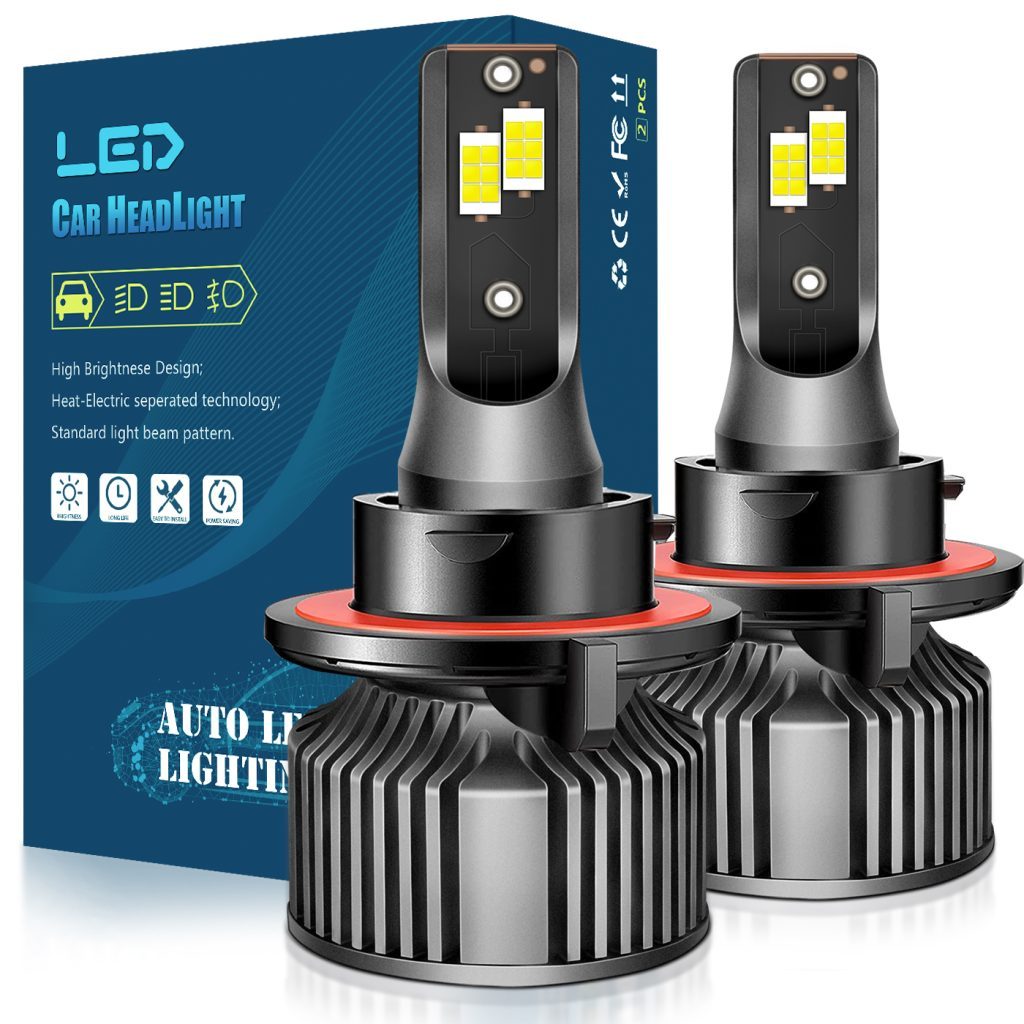
- LED Headlights: Instant illumination, low power consumption, long service life and flexible styling. Require reliable heat dissipation and cost more for premium units. For reflector‑based stock lamps, pay attention to beam pattern to avoid dazzling oncoming traffic.
2. Select suitable color temperature
Color temperature, measured in Kelvin(K), determines light color and directly affects road lighting performance in bad weather.
- 3000‑4500K (Yellow light): Strong penetration in rain and fog, ideal for mountain roads and bad‑weather driving.
- 4500‑6000K (Pure white light): Balanced brightness close to natural daylight. Best all‑round choice for most daily‑use vehicles.
- Above 6000K (Cool blue light): Stylish‑looking yet poor penetration in rain and fog. Not recommended for regular daily driving.
Note: Higher color temperature does not mean brighter light. Excessively high color temperature reduces safety in poor weather.
3. Check brand quality & certification
Stick to well‑known branded products. Reliable manufacturers apply strict standards on chips, heat dissipation, optical design and quality inspection, offering stable performance and valid warranty.
Verify compliance with local automotive lighting standards. Avoid unbranded low‑grade products, which may cause rapid light decay, overheating and flickering risks.
4. Confirm vehicle compatibility
Compatibility is essential for replacement or retrofit.
- Confirm original bulb base model (H1/H4/H7/H11/9005/9006 etc.) to guarantee correct installation and proper sealing of dust covers.
- Distinguish between stock lens‑type headlights and reflector‑type headlights. Use lens‑specific LED bulbs for factory lens systems. For reflector lamps, focus on beam pattern to prevent glare.
- Many European vehicles have onboard bulb monitoring systems. Choose CANBUS‑decoded LED bulbs to avoid dashboard error codes.
- Ensure sufficient space for heat dissipation. For compact lamp cavities, pick short‑body LED bulbs to prevent fan blockage and premature chip failure.
5. Balance budget and cost‑performance
Higher price does not always equal better performance. Make trade‑offs based on your budget, original hardware and real‑world driving conditions.
- Tight budget: Upgrade to high‑quality halogen bulbs.
- Need improved night visibility: Pick qualified LED headlights.
- For stock reflector lamps pursuing better beam performance: Upgrade full lens assembly rather than only changing bulbs.
Reminder: Follow local regulations for headlight modification. Over‑bright unauthorized lighting may fail vehicle inspection and endanger oncoming drivers.