- Basic conclusion: yes, but with careful consideration
Yes, you can replace xenon headlights with LEDs. Automotive lighting has evolved from halogen to xenon to LED. LEDs offer stable, low‑voltage, cold‑light technology with instant full brightness. However, direct replacement may cause beam scatter – a lens is highly recommended for proper focus. Also, LEDs have weaker fog/rain penetration than xenon – consider your local climate before upgrading.
- Physical feasibility of direct replacement
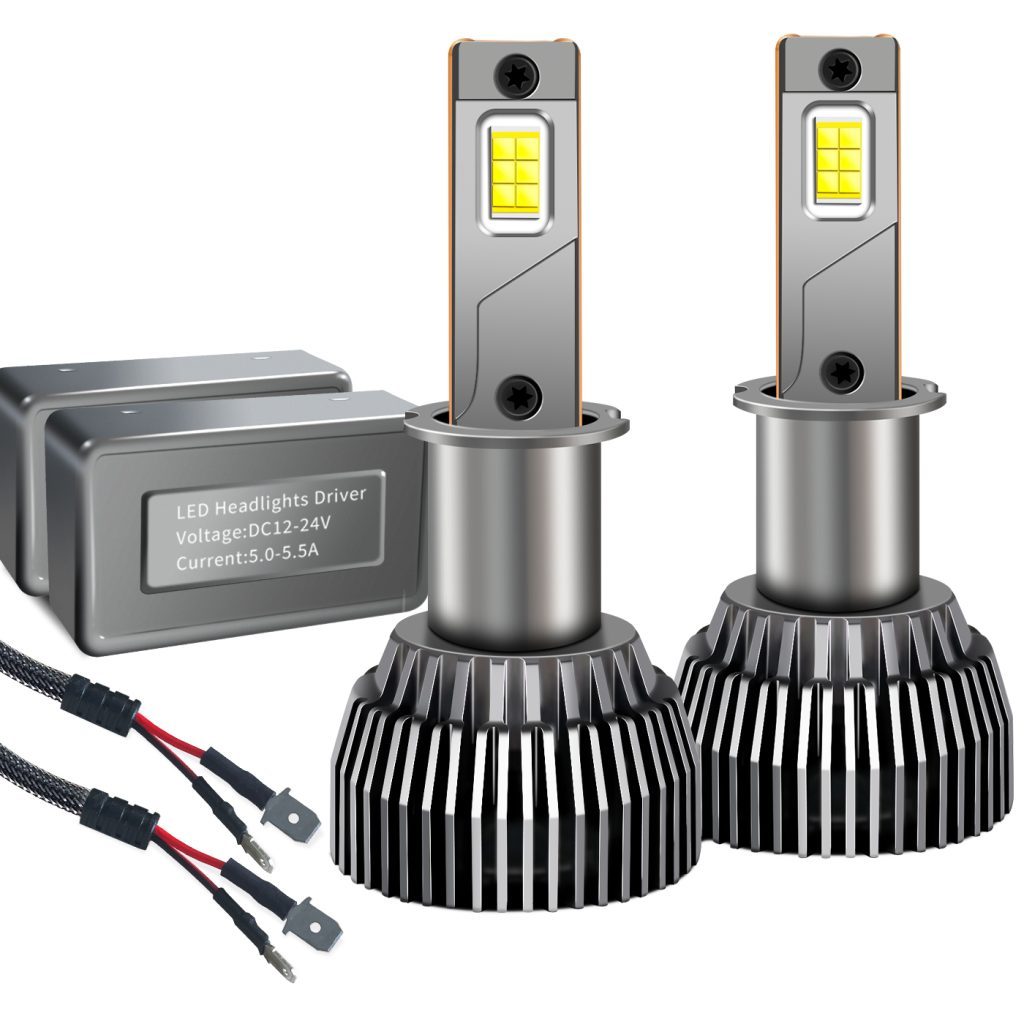
Xenon and LED bulbs may look similar, but their internal structures differ significantly:
Base compatibility: 90% of xenon lamps use D‑series sockets, while LEDs are mostly H‑series – adapters may be needed
Power difference: xenon needs a ballast to step up to 20,000V; LEDs run on 12V DC
Cooling requirement: LEDs reach 80°C core temperature – additional fans are essential
- Potential risks of direct replacement
Forcing a mismatch can trigger vehicle warning systems:
Error codes: 90% of vehicle BCMs detect current anomalies and illuminate fault lights
Beam scatter: xenon reflectors don’t match LED light‑emitting points, causing scattered light
Circuit overload: original wiring may not handle LED driver surge currents
Beam scatter: due to different operating principles and optical designs, direct LED replacement often causes scattered light – reducing illumination quality and distracting other drivers. Adding a lens is the best solution to focus the beam properly.
Other issues: improper installation can lead to moisture ingress and fogging in rainy or misty conditions, compromising safety.
- Weather adaptability
LEDs are bright and responsive but have weaker fog/rain penetration. Xenon performs more consistently in rain, fog, and clear conditions alike, with a more comfortable beam and good overall spread. If you live in an area with frequent wet weather, weigh this carefully before upgrading.
- Professional upgrade recommendations
A three‑step strategy for a perfect upgrade:
Compatibility check: use OBD equipment to read the vehicle’s lighting system protocol
Component upgrade: replace with a dedicated decoder + lens assembly (costs about 3x a standard LED bulb)
Optical calibration: have beam angle adjusted professionally using a light‑aiming tool
Headlight modification is more than just swapping bulbs – it involves brackets, lenses, ballasts, and other components. If you decide to proceed, choose a professional shop to ensure quality and safety.
- LED advantages – environmental and energy benefits
LEDs offer low glare, no radiation, low operating voltage, ultra‑low power consumption, and are environmentally friendly – mercury‑free and recyclable. They are vibration‑resistant, long‑lasting, and stable across a wide temperature range (-30°C to +50°C).
- Summary
While direct xenon‑to‑LED replacement is possible, consider all factors – lighting performance, weather adaptability, and technical installation details. If you decide to upgrade, professional installation is strongly recommended to ensure both quality and safety, making every drive brighter and safer.