There is no absolute winner between LED and factory halogen headlights. The real‑world outcome depends on the headlight assembly’s optical design, product quality, and your typical driving environment. Factory‑tuned LED headlights generally outperform halogens – but blindly swapping in LED bulbs without proper optics creates glare and safety hazards.
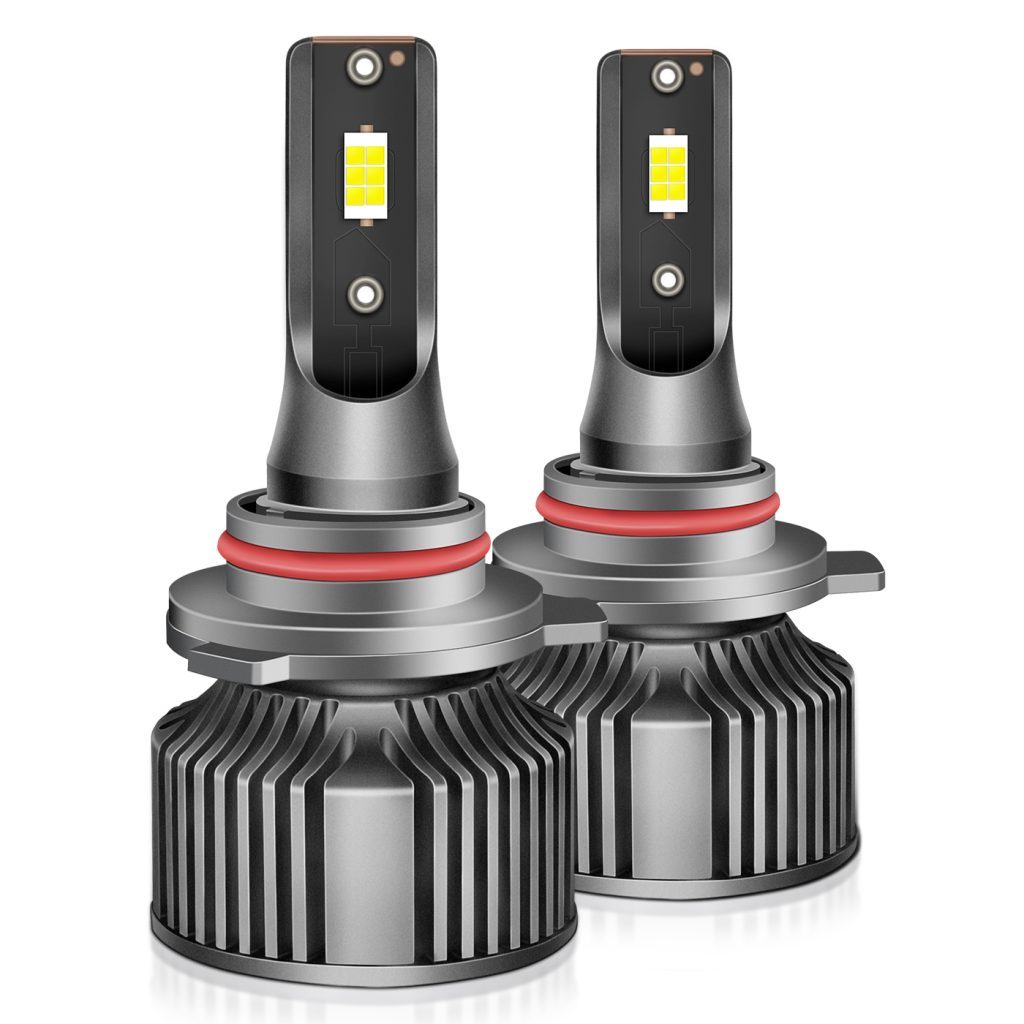
- How to Tell If Your Vehicle Is Suitable for an LED Upgrade
Check if your headlights have projector lenses
Factory reflector bowls are designed for halogen light sources. Without a lens, direct LED bulb replacement causes severe beam scatter – road illumination improves little, and oncoming drivers are dazzled. Vehicles with reflector‑bowl headlights (no lens) are not recommended for bare LED bulb swaps.
Distinguish factory LEDs from aftermarket retrofits
Factory‑fitted LEDs are optically matched to the vehicle – with cooling, beam pattern, and focus all tuned for the specific model. Aftermarket replacement bulbs rarely achieve the same optical performance as factory assemblies.
Check annual inspection requirements
LED retrofits must meet regulations: colour temperature should stay within 6000‑6500K, low‑beam output must be at least 1,050 lumens, and the beam pattern must be clean with no glare. Many bare LED bulb swaps fail inspection due to poor beam cut‑off.
- When to Keep Factory Halogens Instead
Fog/rain‑prone regions
Halogen’s ~3000K warm‑yellow light scatters less in fog/rain – delivering about 30% better penetration than white LEDs. For frequent rain or fog, halogens offer a clear safety advantage.
Budget‑conscious, mainly city commuting
Halogen bulbs are cheap, widely available, and easy to diagnose and replace. For daily urban driving – with simplicity and low cost as priorities – halogens are a smart choice.
Reflector‑bowl halogen headlights (no lens)
Direct LED swaps scatter light and cause severe glare. In this case, stick with factory halogens or upgrade to high‑output halogen bulbs as an interim solution.
- Core Advantages of LED Headlights
LEDs have become the mainstream choice for new vehicles – with four key advantages over halogens:
High efficiency, low energy: superior electro‑optical conversion – lower power consumption – reducing electrical system load
Long lifespan: 30,000‑50,000 hours – covering most of the vehicle’s service life
Higher brightness: far brighter than halogens at the same power – longer range – improving safety on highways and national roads at night
Instant response: full brightness immediately – no warm‑up delay – light close to natural daylight – better visual comfort
- Safe LED Upgrade Options
Option 1 – Sufficient budget: replace with OEM‑spec LED headlight assemblies
Fully optically tuned – brightness, cooling, and beam pattern all matched to the vehicle – the safest, most effective approach.
Option 2 – Moderate budget: retrofit with bi‑LED projector kits
Must include bi‑LED lenses to focus light; choose products with proper cooling fans to reduce long‑term depreciation; avoid cheap, optically unengineered bare LED bulbs.
Option 3 – Simple swap: only for vehicles with factory projector lenses
Choose vehicle‑specific LED bulbs – verify decoder compatibility to avoid error codes or flickering; have installation done by a professional shop.
- Summary
Factory LEDs offer superior overall performance – but that doesn’t mean every vehicle is suitable for LED retrofits. Vehicles with projector lenses can be sensibly upgraded; reflector‑bowl vehicles without lenses are not recommended for direct bulb swaps. In fog/rain‑prone areas, keep low‑colour‑temperature light sources or factory halogen fog lamps as backup – and always comply with local regulations.