There is no universal answer to whether you should upgrade your factory headlights to LED. The final choice depends on your daily driving scenarios and budget. You need to strike a balance between improved visibility and compliance risks.
If you frequently drive at night or on highways with sufficient budget, upgrading to compliant LED projector assemblies or bi-LED kits will greatly boost driving safety. However, if you mostly commute in urban areas, have a tight budget, or live in regions with frequent rain and fog, keeping the original halogen headlights remains a rational option.
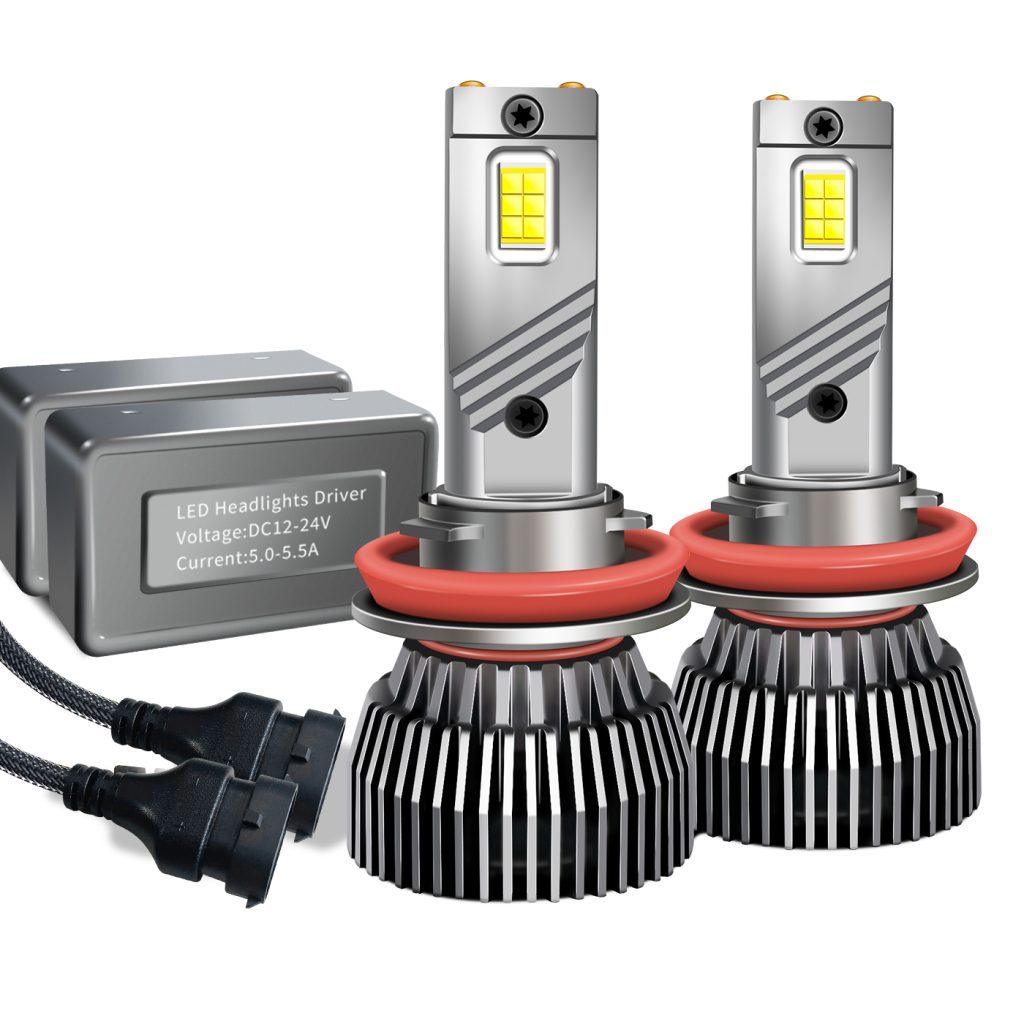
- When Upgrading to LED Is Worthwhile
✅ Recommended Upgrade Scenarios
Frequent night driving & highway trips
LED lights are 2–3 times brighter than halogen lamps and offer broader illumination. The visible distance extends an extra 20–30 meters, giving you more time to detect road obstacles and avoid hazards.
Adequate budget for long-term use
Quality LED headlight assemblies have a service life of 50,000–100,000 hours, usually lasting the entire service life of the vehicle. In the long run, they are more cost-effective than repeatedly replacing halogen bulbs.
Owners of new energy vehicles
LED power consumption is only one-third of halogen lights, helping reduce power drain and extend driving range.
❌ Not Recommended Upgrade Scenarios
Mainly urban commuting with street lighting
Factory halogen lights are fully adequate. They are low-cost and easy to replace when damaged. If your budget is under $70, halogen bulbs are the practical choice.
Regions with heavy rain, fog and haze
Warm yellow halogen light delivers superior penetration in bad weather. High-color-temperature LED (especially above 6000K) drastically reduces visibility in fog.
Older vehicles with sensitive electrical systems
Many vintage cars trigger lamp fault warnings after switching to LED, requiring additional CANBUS decoders, which raises costs and potential circuit risks. - How to Complete a Legal Upgrade to Pass Vehicle Inspection
Control color temperature strictly
Choose warm white light ≤6000K, ideally 5000–5500K. Cool bluish-white light above 6000K fails inspection in most regions and suffers terrible fog penetration.
Avoid excessive brightness
Minimum luminous intensity standard:
Low beam ≥15,000 cd
High beam ≥18,000 cd
Brightness should not exceed 1.2 times the original factory specification. Over-bright lights cause scattered beams and glare for oncoming traffic.
Calibrate beam angle precisely
Low beams must form a sharp, asymmetric cutoff line (lower on the left, slightly higher on the right for right-hand traffic). Use laser positioning tools to adjust the beam height after modification to avoid inspection failure. - Critical Pitfalls for Headlight Upgrades
Preferred color temperature range: 4300K–6000K; penetration drops sharply above 6000K
Choose professional workshops for installation to guarantee proper headlight sealing and prevent internal fogging and water ingress
Keep all original halogen lamp components. You can restore factory lights temporarily for inspection to lower compliance risks - Simple Self-Check: When Should You Consider an Upgrade?
Plan an LED upgrade if you meet any two of the following conditions:
Insufficient illumination
Cannot spot obstacles 50 meters ahead on unlit roads; pavement appears dim on rainy country roads and mountain routes, making it hard to detect pedestrians and two-wheelers.
Severe light scattering
Oncoming drivers frequently flash high beams to warn you; headlights look bright to you but poorly illuminate the road surface; low beams have no distinct cutoff line.
Aging lamp assembly & brightness decay
Headlight lens yellowing, fogging or water condensation; obvious brightness drop after 3+ years of use; uneven brightness between left and right headlights.
Frequent night travel
Regular highway, suburban and rural road trips; ride-hailing or long-distance commuting with heavy night driving. - Frequently Asked Questions
Q1: If my car already has factory LED headlights, do I still need to upgrade?
A: It depends on the optical structure. Low-spec reflector-type factory LED headlights usually have weak road illumination and limited beam range, which are worth upgrading. No modification is necessary if your vehicle is equipped with high-quality factory projector LED headlights working normally.