Judging the quality of automotive LED lights requires multi-dimensional testing. Automotive LED lighting covers exterior & interior light sources: high/low beam headlights, fog lights, tail lights, brake lights, turn signals, DRLs, instrument lights, license plate lamps, interior dome lights, position lights and backlighting.
Compared with halogen and HID sources, LEDs differ drastically in physical size, luminous flux, spectrum and spatial light intensity distribution. Traditional testing standards cannot be directly copied for LED evaluation. This guide systematically introduces mainstream inspection methods from four dimensions: visual appearance, optical parameters, electrical characteristics and thermal performance.
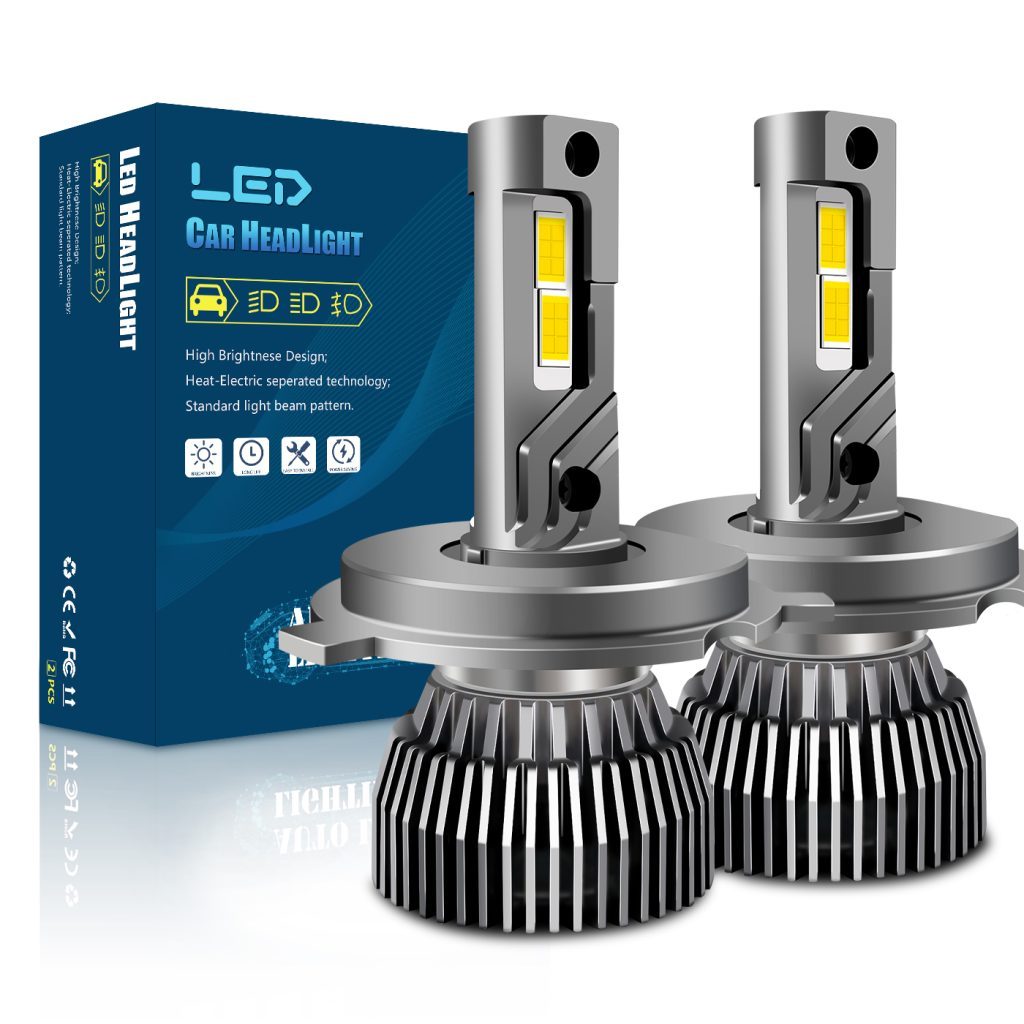
- Visual & Basic Inspection — Visible Quality Clues
Assembly tightness: Firm bonding between lamp base, plastic housing and main body. Upper & lower housing shall not separate under high-temperature conditions.
Flame-retardant material: Outer plastic components, driver frames and PCBs must adopt high-temperature flame-resistant materials.
Circuit safety protection: Built-in fuse components to cut off power automatically under overload conditions. - Optical Parameter Testing — Scientific Evaluation of Brightness
2.1 Luminous Intensity Measurement
Luminous intensity describes radiant light output within a specific solid angle. Since LED light is highly directional, the inverse square law cannot be applied at short distances. CIE 127 defines two measurement modes: Condition A (far-field) and Condition B (near-field). Condition B is widely adopted for standard testing.
2.2 Luminous Flux & Luminous Efficacy
Luminous flux is the total visible light emitted by the light source. Two mainstream measurement approaches:
Integrating sphere method: Light up standard reference lamp and DUT sequentially and record detector readings. Simple operation, yet vulnerable to color temperature deviation, leading to moderate measuring error.
Spectroradiometric method: A monochromator measures spectral energy distribution from 380 nm to 780 nm for reference lamp and test sample under identical setup.
Luminous efficacy = luminous flux / input power, normally measured under constant-current driving.
2.3 Spectral Characteristic Testing
Includes spectral power distribution, chromaticity coordinates, correlated color temperature (CCT), color rendering index (Ra):
Spectral power distribution: Describes radiation power at each wavelength.
Chromaticity coordinates: Numerically expresses light color on chromaticity diagram.
CCT: Temperature of a black-body radiator producing matching light color. 4300K–6000K is the optimal range for automotive headlights.
Color Rendering Index (Ra): Ability to accurately reproduce object colors; calculated average value of eight standard test color samples.
2.4 Luminous Intensity Distribution Test
Light intensity varies with spatial angle, plotted as closed isocandela curves. Automated goniophotometers are used due to massive sampling points.
2.5 Temperature Influence on Optical Properties
Operating temperature shifts LED emission spectrum and chromatic coordinates; continuous thermal variation changes overall optical performance.
2.6 Surface Luminance Measurement
Luminance means luminous intensity per unit projected area in a given direction. Measured via surface luminance meter or sighting luminance meter, consisting of sighting optical path and measuring optical path. - Electrical Parameter Measurement — Fundamental Performance Benchmark
Key electrical indicators: forward voltage, reverse voltage, reverse leakage current. Two measuring configurations:
Forward voltage: Apply rated forward current and record voltage drop. Use ammeter external connection for higher precision (low forward resistance during conduction).
Reverse current: Apply specified reverse voltage and read current value. Use ammeter internal connection (extremely high reverse resistance). - Thermal Performance Testing — The Decisive Factor for Service Life
Thermal characteristics greatly affect LED optical and electrical behaviour. Two core indicators:
Thermal resistance: Temperature difference across thermal flow path divided by dissipated power (PN junction to housing surface).
Junction temperature (Tj): Temperature of the LED PN junction.
Common testing methods:
Infrared thermography
Spectral shift method
Electrical test method (industry mainstream): Utilizes linear correlation between PN junction forward voltage drop and temperature; calculate junction temperature by measuring voltage difference under different ambient temperatures.
Light-heat resistance scanning method - Comprehensive Selection & Testing Recommendations
CCT: 4300K–6000K balances brightness and rain/fog penetration.
Heat dissipation: Active cooling with silent fans delivers superior efficiency. After lighting for 5 minutes, qualified units show moderate housing temperature rise.
LED chips: 45mil chips offer higher reliability than 30mil variants; higher luminous efficacy reduces heat generation.
Brand: Reputable manufacturers guarantee consistent quality and after-sales service.
Certification: Valid industry certifications ensure stable operation under complex environmental conditions.
LEDs feature robust mechanical structure with strong vibration resistance, rated lifespan up to 50,000 hours and stable light output during long-term operation. Systematic multi-aspect testing enables car owners and buyers to objectively distinguish high-quality automotive LED headlights from inferior alternatives.