For most daily‑driven family vehicles, LED headlights stand out as the preferred option thanks to well‑balanced overall performance. LEDs show great advantages in energy efficiency, service life, instant‑on response and installation compatibility, cutting long‑term maintenance costs. Still, xenon HID keeps unique strengths on maximum brightness, long‑range high‑beam output and certain fog‑rain conditions. Your final pick should match your real‑world driving scenarios.
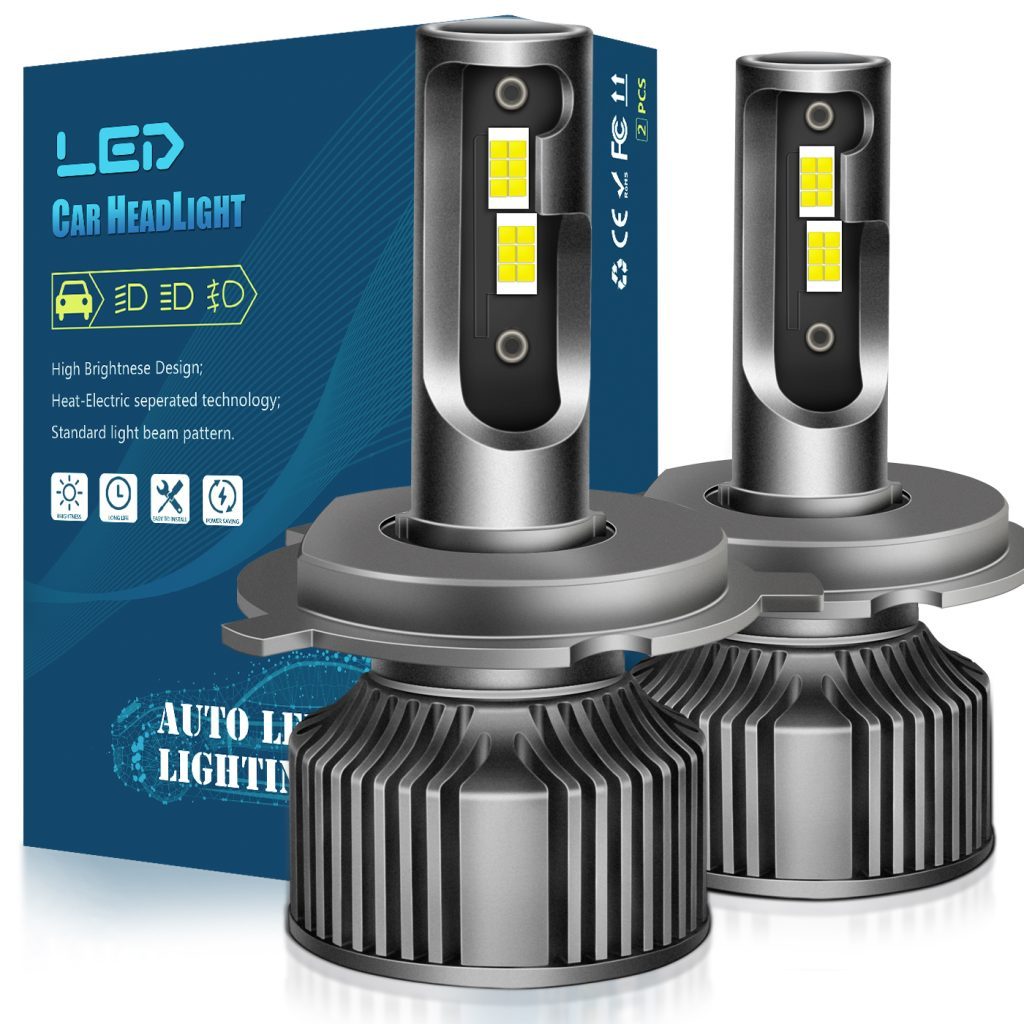
- Energy Consumption & Service Life
LED delivers far higher electric‑to‑light efficiency. Its total‑system power draw is roughly half of xenon HID, bringing lighter load for vehicle wiring and battery, which makes retrofitting safe even for older cars.
High‑quality LED headlights reach tens of thousands of working hours in theory. Proper‑operated LED units can serve through most of a vehicle’s whole service cycle with almost no bulb replacement needed.
A complete xenon HID system consists of bulbs and high‑voltage ballasts. Electrode erosion limits real‑world lifespan around 3000‑5000 hours. Visible light decay usually appears after 2‑3 years of usage. Ballast failure is also common, bringing higher long‑term repair expenses. - Installation & Compatibility
LED features simple structure with no extra high‑voltage ballast required. Most aftermarket LED bulbs support plug‑and‑play swap. Compact physical size fits most original headlamp housings. As long as you select CAN‑BUS‑ready units with reliable cooling, local workshops can finish installation quickly with lower error risk.
Xenon HID retrofit demands ballasts and projector lenses are mandatory. Bare xenon bulbs inside reflector housings produce severe glare. Multiple components plus high‑voltage wiring raise requirements for installation craftsmanship. Higher parts and labor cost are expected; vibration on rough roads increases failure probability. - Lighting Performance & Real‑world Driving
LED achieves full brightness within milliseconds. When passing tunnels, flashing for oncoming traffic or facing sudden road hazards, instant illumination gives other road users more reaction time. LED light spectrum is close to natural daylight with good color rendering, easing eye fatigue during long‑night driving. Its output fully satisfies urban commuting, national‑road and regular‑highway driving.
Xenon HID provides higher peak luminous flux and longer high‑beam throw, performing excellently on unlit rural roads and off‑road trips. Nevertheless, xenon needs 3‑5 seconds warm‑up to hit full brightness; cold weather will extend such delay, so frequent high‑beam flashing is not recommended.
Note: 4300K xenon offers better fog‑rain penetration than cool‑temperature LED. If you often drive through misty mountain areas, choose low‑color‑temperature light sources or keep original halogen fog lamps as auxiliary lighting. - Scenario‑Based Buying Guide
✅ Choose LED first: Daily family commute, city driving, frequent highway travel, low‑maintenance expectation, simple retrofit for old vehicles.
✅ Choose full‑set projector‑type Xenon HID: Frequent night driving on unlit mountain / off‑road routes, demand for extreme high‑beam range, acceptable higher retrofit & maintenance cost.
Summary: For the vast majority of private car owners, LED brings better overall compatibility with balanced power consumption, long service life, instant response and easy installation. It has become the mainstream lighting upgrade solution. No light source is perfect. Complete projector‑equipped xenon kits remain competitive for remote dark‑area driving. Whichever you choose, ensure well‑defined beam pattern without glare and comply with local inspection regulations.