Headlights directly determine safety during night driving. With the popularization of LED lighting, many car owners plan to upgrade their lamps, yet most people are confused: should they upgrade low beams or high beams first? The decision cannot rely solely on brightness. You need to consider driving scenarios, original headlight housing structure, lens compatibility and local traffic regulations.
1. Core Parameter Comparison Between LED & Halogen
LED has three obvious advantages over traditional halogen lights:
Energy conversion efficiency reaches up to 80%, while halogen only hits 10%~20%;
LED turns on to full brightness within milliseconds without warm-up delay;
Premium LED lasts over 50,000 working hours, 5~10 times longer than halogen bulbs.
Practical illumination data:
Legal LED high beam with projector covers 150–200 meters on dark open roads;
Standard LED low beam delivers effective illumination for 30–50 meters, suitable for urban driving.
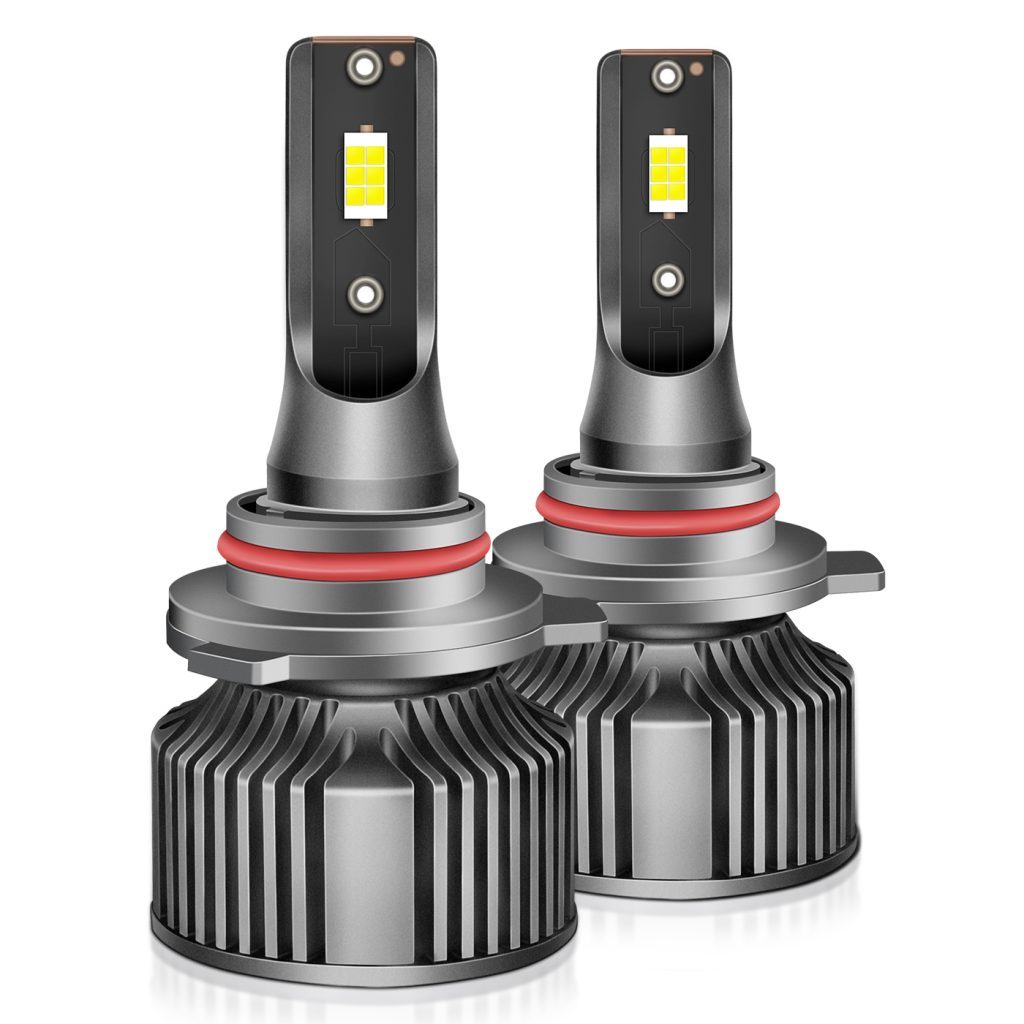
⚠️ Critical Warning
Directly installing LED bulbs into original halogen reflector housings causes mismatched focal points. Mass stray light shoots upward and creates severe glare. Low beams run constantly during daily driving. Scattered low beam light continuously blinds oncoming traffic, bringing greater safety risks than defective high beams.
Simple bulb swap without projector rarely meets official photometric standards and will likely fail vehicle inspection.
2. Recommended Solutions for Different Driving Scenarios
Scenario 1: Daily city commuting with street lights
First choice: Upgrade low beam (MUST use projector)
Low beams are used almost all the time for city driving.
Street lighting provides basic visibility. Projector LED low beams deliver even road illumination with sharp cutoff lines, balancing clear vision and avoiding glare for oncoming drivers. High beams are rarely used in cities, so upgrading low beams offers the best value.
Scenario 2: Frequent highway / rural night driving without streetlights
Priority: Low beam LED projector; upgrade high beam only with extra budget
When speed exceeds 80km/h, drivers need sufficient sight distance to respond to road hazards. Low beams supply fundamental road lighting; high beams can be activated on empty roads to extend vision range.
Common misunderstanding: Do not only upgrade high beams. Weak low beam lighting creates blind spots close to the vehicle, no matter how bright your high beam is.
Scenario 3: Mountain roads with numerous curves and slopes
Upgrade low beam first; install full set low+high beam if budget allows
Continuous bends require clear visibility of road shoulders. Projector LED low beams offer wider horizontal coverage. High beams provide extended long-distance vision on straight uphill and downhill sections.
3. How Original Headlight Structure Limits LED Upgrade
- Factory OEM LED projector housing Optical design is fully calibrated at factory. You can directly replace LED bulbs for both low and high beam with stable beam pattern.
- Original halogen reflector housing (NO built-in projector)Do NOT simply plug LED bulbs directly! Halogen reflectors are engineered for tungsten filament position. LED chips sit at slightly different spots, creating scattered light, blurry cutoff and heavy glare. Effective illumination drops 20%~30%. The proper upgrade method: install dedicated bi-LED projector assembly. LED matched projectors improve lighting performance by roughly 40%, compared with bare LED bulb installation.
- Original halogen projector Standard halogen projectors cannot perfectly match LED light source. For optimal effect, replace with LED-specific optical lenses.
4. How to Judge Qualified LED Projectors
If any of these issues appear after installing LED, your lens is incompatible and needs replacement:
- Scattered light spots, unclear light-dark cutoff line
- Constant glare complaints from oncoming drivers
- Over-bright nearby road surface yet insufficient long-distance range
Standards for premium LED projectors:
✅ Sharp clean cutoff line on low beam to block upward stray light
✅ Concentrated focal point for high beam, no long-distance light scattering
✅ Photometric performance complies with GB 4599 or UN R149 automotive lighting standards
Traffic data shows: vehicles fitted with certified projector LED kits have 35% lower risk of night accidents compared with cars using bare LED bulbs without projectors.
5. Universal Upgrade Tips
- Heat dissipation matters most High temperature is the main cause of LED lumen depreciation. Reliable units adopt large aluminum heat sinks plus silent cooling fans, keeping chip temperature under 80°C. Cheap products cut thermal structures and lose brightness rapidly.
- Reasonable color temperature selection Recommended range: 4300K ~ 5500K. 5000K light resembles natural daylight and reduces eye strain. Avoid cool white light over 6000K. In rain and fog, strong light reflection creates a white wall effect and weakens penetration.
- Avoid low-cost uncertified LED bulbs Cheap aftermarket LED often lack EMC anti-interference design, triggering dashboard error codes and radio signal interference. Continuous high temperature may also damage wiring harnesses.
- Professional installation & light adjustment LED placement and beam height directly affect light pattern. Technicians must calibrate beam angle after installation to prevent upward glare.
6. Scenario Selection Summary Table
| Driving Habits | Recommended Upgrade Plan | Core Reason |
|---|---|---|
| City driving only, rare night trips | Upgrade low beam with projector first | Low beam used daily; even lighting with controlled glare |
| Frequent highway & rural night travel | Low beam LED projector first; full low+high beam if budget allows | Low beam guarantees basic road vision; high beam extends long-distance sight |
| Foggy, rainy mountain mixed routes | 4300K warm white LED low beam, keep stock halogen high beam | Balance brightness and bad-weather light penetration |
| Long-term vehicle ownership, one-time renovation | Upgrade low beam & high beam with complete projector kits | All-road performance, no secondary modification needed |
Final Takeaway
For most private vehicles, upgrade low beam first. Low beams provide essential lighting for 90% driving conditions. High beams act only as auxiliary lighting and are used far less frequently.
One non-negotiable rule: if your original lamp is halogen reflector housing, never install LED bulbs without a projector. Only with proper projectors can you boost visibility, comply with inspection standards and eliminate dangerous glare.