As automotive lighting technology advances, xenon (HID) and LED headlights have progressively replaced traditional halogen bulbs. Yet for many owners, choosing between xenon and LED for a headlight upgrade remains a difficult decision. This article compares them across multiple dimensions – operating principles, brightness, beam uniformity, colour temperature, lifespan, energy consumption, and cost – to help you make an informed choice.
1. Operating principles
Xenon (high‑intensity discharge) lamps fill a quartz tube with xenon and other inert gases. An electrical discharge excites the gas atoms, producing ultraviolet light that in turn excites phosphor to emit visible light. They offer high efficiency, high brightness, and a colour temperature close to daylight – giving drivers a near‑daytime field of view.
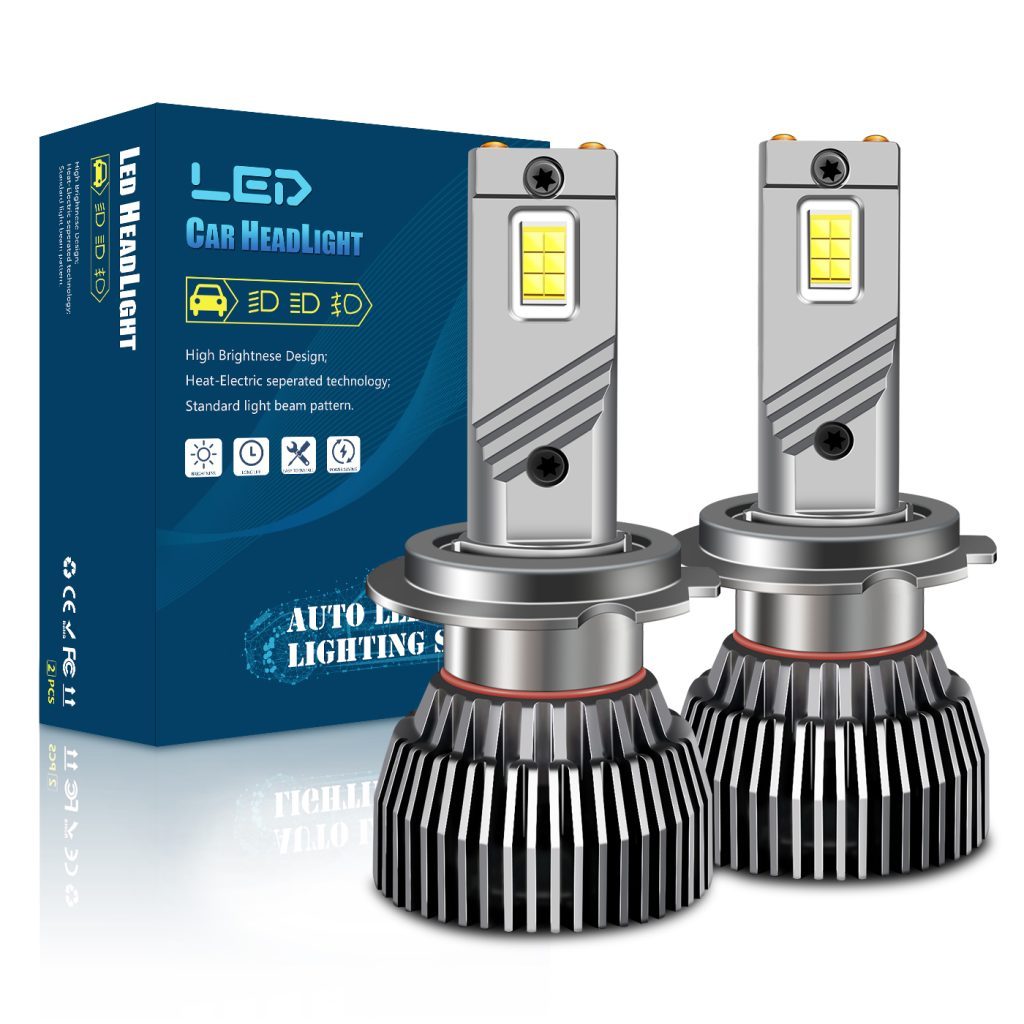
LEDs (light‑emitting diodes) are solid‑state semiconductor devices that emit light when electrons recombine with holes. They offer extremely high efficiency, fast response, excellent durability, and adjustable colour temperature via current control and phosphor selection.
2. Brightness performance
LEDs generally have higher luminous efficiency – so at the same power, they often outshine xenon. However, xenon’s higher colour temperature gives it better penetration in fog and rain, with a longer effective range. This means LEDs may appear brighter on clear nights, while xenon holds the advantage for long‑range illumination in adverse weather.
3. Beam uniformity
Xenon produces a relatively even beam pattern, giving a well‑distributed lit area that helps drivers read the road clearly. LEDs have a smaller light‑emitting point, which can produce a more granular beam pattern. However, as technology advances, high‑quality LED units now achieve beam uniformity comparable to xenon.
4. Colour temperature and visual experience
Xenon’s higher colour temperature (close to daylight) gives drivers a more natural daytime‑like view, reducing eye strain. LEDs offer adjustable colour temperature – from high‑temperature white to lower‑temperature yellow – to suit different driver preferences and weather conditions.
5. Lifespan and durability
LEDs typically outlast xenon – they have no filaments or electrodes to wear out, and they handle voltage and current fluctuations well, operating reliably in harsh electrical environments. Xenon lamps do last longer than halogen, but electrode erosion over time shortens their effective life.
6. Energy consumption and environmental impact
LEDs consume less energy than xenon due to their higher efficiency, saving on long‑term running costs. They also produce less pollution during manufacture and use, making them the more environmentally friendly option.
7. Price and retrofit costs
LEDs generally cost more than xenon due to higher manufacturing and raw material costs. However, the gap is narrowing with technological progress and market competition. Retrofit costs vary by vehicle model and installation method, as bulb bases and mounting differ between the two types.
8. Summary and selection guide
| Metric | Xenon (HID) | LED |
|---|---|---|
| Brightness | Strong in fog/rain, long range | Higher efficiency at same power |
| Beam uniformity | Relatively even | Premium units match xenon |
| Colour temp | Daylight‑like, reduces fatigue | Adjustable (white/yellow) |
| Lifespan | Long, but electrode wear limits it | Longer – no wear parts |
| Energy use | Higher | Lower – energy‑saving |
| Cost | Lower | Higher, but gap shrinking |
Recommendation: choose xenon if you prioritise higher brightness and longer range (especially in rain/fog); choose LED if you value durability, environmental friendliness, and lower long‑term running costs. Weigh your actual driving needs against your budget.