Many drivers complain that factory halogen lights are too dim and lack confidence during night driving, yet struggle to decide between xenon and LED for upgrades. Some claim xenon lights are overly dazzling, while others say LEDs fade significantly after two years. In truth, neither technology is universally superior. The right choice depends on whether it matches your driving scenarios. This practical guide breaks down core differences to help you pick headlights that deliver clear vision and reliable performance for night travel.
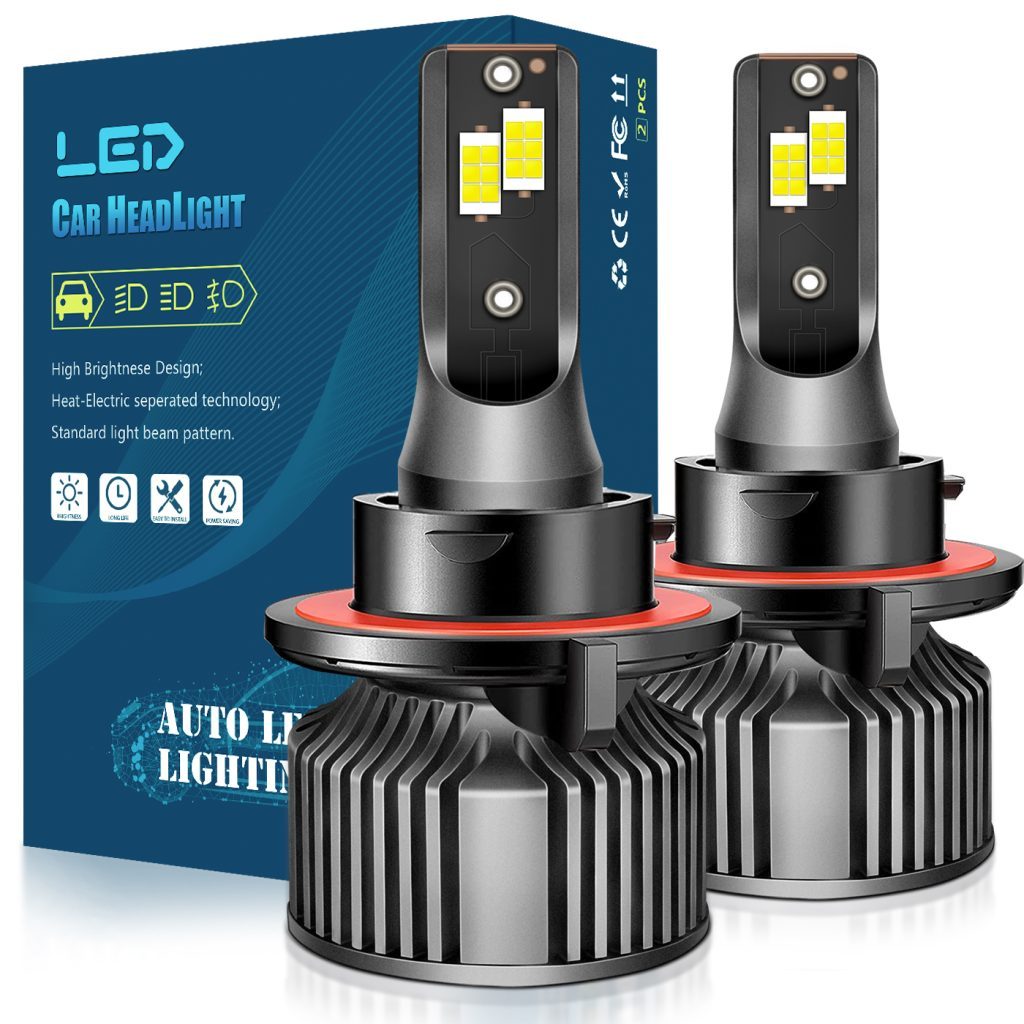
- Brightness & Illumination Performance: Xenon Excels at Long-Range High Beam; LED Provides More Even Near-Road Lighting
Xenon HID lights demonstrate obvious advantages for long-distance high-beam use. A standard 35W xenon bulb produces 3,200–3,600 lumens, with an effective beam throw exceeding 100 meters. On unlit mountain roads and remote highways, it helps identify road obstacles well in advance. However, xenon relies heavily on projector lenses to concentrate light. Without proper lenses, light scatters widely and creates severe glare for oncoming drivers.
LED headlights perform best for low-beam urban conditions. 20–40W LED assemblies deliver 2,000–4,000 lumens with evenly distributed light that reduces blind zones. High-quality LED arrays widen low-beam coverage to span four traffic lanes, ideal for complex city road conditions.
The downside: LEDs have weaker long-distance penetration. Cool white light around 6000K easily reflects off water droplets in fog or heavy rain, lowering forward visibility. - Energy Consumption & Heat Dissipation: LED Saves Power; Xenon Generates Intense Heat
Energy efficiency creates a clear performance gap. LEDs achieve near-perfect electro-optic conversion efficiency. A 20W LED delivers equivalent brightness to a 60W halogen lamp, lowering continuous load on vehicle electrical systems.
Though xenon lights consume 50% less power than halogens, the standard 35W power rating is still higher than most LEDs. Moreover, xenon requires an instantaneous 23,000V high-voltage surge for ignition, demanding stable vehicle wiring.
Heat management is another critical factor.
LEDs operate at only 50–70°C. Solid epoxy packaging offers excellent vibration resistance, suitable for bumpy off-road routes.
Xenon lights reach 300–400°C via electric arc discharge. They require UV-resistant quartz capsules and reliable heat dissipation. Poor cooling accelerates yellowing lamp covers, lens aging and introduces potential safety risks. - Startup Response & Service Life: LED Lights Up Instantly; Xenon Needs Warm-Up
Warm-up delay is the inherent weakness of xenon HIDs. It takes 2–4 seconds to reach full brightness after switching on. This lag can compromise safety during highway overtaking or emergency avoidance. Many automakers adopt a hybrid setup: xenon low beam paired with halogen high beam to offset this limitation.
LEDs dominate longevity, with a theoretical lifespan of 60,000–100,000 hours. Many drivers report factory LED headlights still retain 90% original brightness after eight years of driving.
Xenon bulbs last roughly 3,000 hours, requiring replacement every 2–3 years with relatively high part costs. - Suitable Driving Scenarios: LED for City Commuting, Xenon for Long-Distance Night Travel
Each light source matches distinct driving habits.
If you mainly drive on urban roads with streetlights, LED’s instant activation and uniform road illumination greatly improve comfort. Ride-hailing drivers frequently switching high/low beams receive far fewer complaints from oncoming traffic when using LEDs.
For regular long-distance highway travel and road trips, xenon’s strong long-distance penetration makes it a solid pick. On dark remote highways, xenon lights detect wildlife and obstacles up to 200 meters ahead. Remember to switch to low beams or fog lights in rain and fog; cool white light causes reflection and blurry vision under bad weather. - Upfront Cost & Ongoing Maintenance: Higher Initial LED Investment, Frequent Xenon Replacements
Price heavily influences purchasing decisions.
Complete LED headlight assemblies generally cost 2,000–5,000 RMB, while xenon HID kits range only 800–1,500 RMB.
Nevertheless, LEDs deliver better long-term value. Over a five-year cycle, many owners only need to replace one LED driver module. By contrast, xenon systems often require three bulb replacements plus one lens overhaul, pushing total cumulative expenses higher.
For maintenance convenience: LED modular design allows individual replacement of chips or drivers. Xenon servicing requires professional equipment to calibrate ballasts. Never touch the xenon quartz capsule with bare fingers; oil residue on glass may cause bulb rupture. - Industry Trend: Gradual LED Popularization, Niche Demand Remains for Xenon
As technology advances, LED prices keep falling and support intelligent interactive lighting. Many modern vehicles link LED assemblies with ADAS, automatically adjusting beam angle and brightness.
Constrained by warm-up delay and extreme heat, xenon’s market share continues declining. It still retains stable demand for heavy trucks and customized vehicle modifications.
Final Selection Guidance for Ordinary Drivers
Choose LED: Sufficient budget, prioritize long-term stability, daily urban commuting, frequent beam switching
Choose Xenon: Regular night drives on remote unlit highways, cost-sensitive buyers pursuing powerful long-range illumination
Your decision should combine driving habits, factory vehicle configuration and upgrade budget. The competition between xenon and LED represents the transition from mature gas-discharge lighting to semiconductor lighting technology. As LED performance improves and costs drop further, market penetration will keep rising.