Headlight brightness isn’t constant over time. Even though LEDs are rated for long lifespans, their actual light output depends heavily on heat management, driver current stability, and packaging quality. Continuous operation at high temperatures causes gradual lumen depreciation – industry data shows that poorly cooled LED units can lose over 30% of their brightness within just 12 months.
A truly reliable retrofit LED isn’t about the initial lumen number – it’s about:
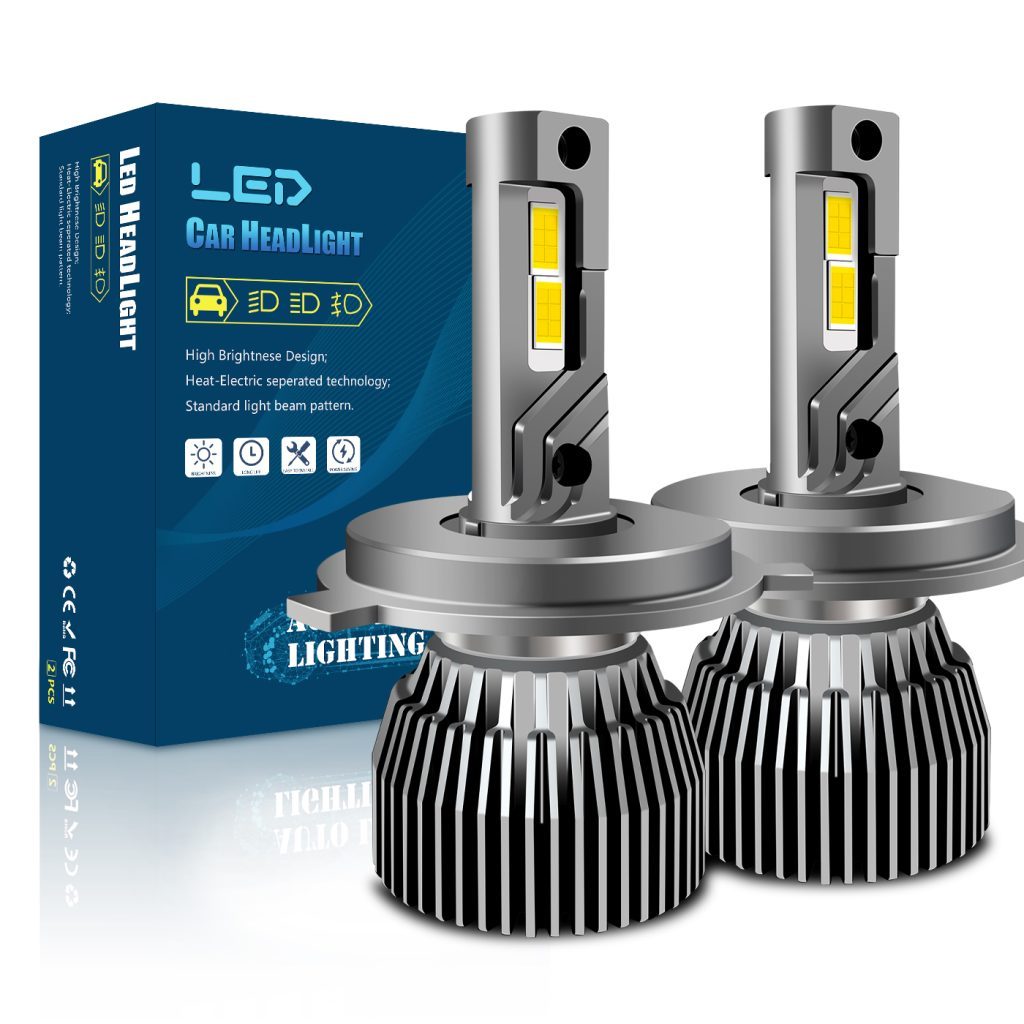
Solid thermal management – can the heat be drawn away from the chips quickly?
Short, efficient thermal paths between chip and substrate – lower thermal resistance means longer life
A stable constant‑current driver that resists voltage fluctuations – unstable current is a fast track to accelerated degradation
These factors together determine whether the high beam can steadily cover 120 metres ahead at night, whether the low‑beam cut‑off is sharp and glare‑free, and whether fog‑penetration remains effective over time.
Real‑world case: Jiulong Aifei LED headlight upgrade
After swapping to LEDs designed for the 2014‑2018 Jiulong Aifei, night driving felt noticeably different. The low beam spread wide and even – kerb reflectors were easy to spot at a glance. The high beam instantly opened up the view – no flicker, no out‑of‑focus beam. In rain or fog, the front fog lights gave a warm, concentrated yellow light – not harsh, but enough to clearly outline the wet road surface.
The lamp body features an aluminium fin + fan dual‑cooling system; even after touching the housing a few times, the temperature rise was minimal. Plug‑and‑play H4/H7 connectors meant no cutting into the original wiring – just install and they lit up. After three months of use, every night before heading out, a glance at the headlights gives a real sense of confidence.
LED headlight advantages at a glance
Illumination: low beam covers 30‑40 metres clearly, high beam reaches over 100 metres – reducing blind spots and helping drivers spot signs, pedestrians, and obstacles earlier.
Efficiency: uses roughly one‑third the power of halogens – reduces electrical load, slightly improves fuel efficiency in petrol cars, and extends range in EVs.
Durability: rated for 50,000‑100,000 hours – far beyond a typical car’s service life. Combined with aluminium heatsinks and silicone sealing, they handle extreme heat, cold, humidity, and dust reliably.
Response speed: lights up in microseconds – instant high‑beam switching, cornering alerts, and hazard warnings give the driver crucial extra reaction time.
Design flexibility: compact size and flexible layout; colour temperature close to natural daylight, reducing eye fatigue. With intelligent beam‑shaping systems, the light adjusts to speed, steering angle, and weather conditions automatically.