The proper lumen figure of LED headlights depends on multiple factors. Generally speaking, 3400 to 5400 lumens works well for low beams, while 3400 to 5900 lumens is ideal for high beams. Higher lumens do not equal better lighting. Excessively bright lights create harsh glare and bring potential safety hazards. Besides, lumen output is closely linked to wattage, and higher wattage imposes stricter requirements on heat dissipation. You should also take the original factory lamp power, driving environments and personal brightness preferences into account to pick LED headlights with suitable lumens.
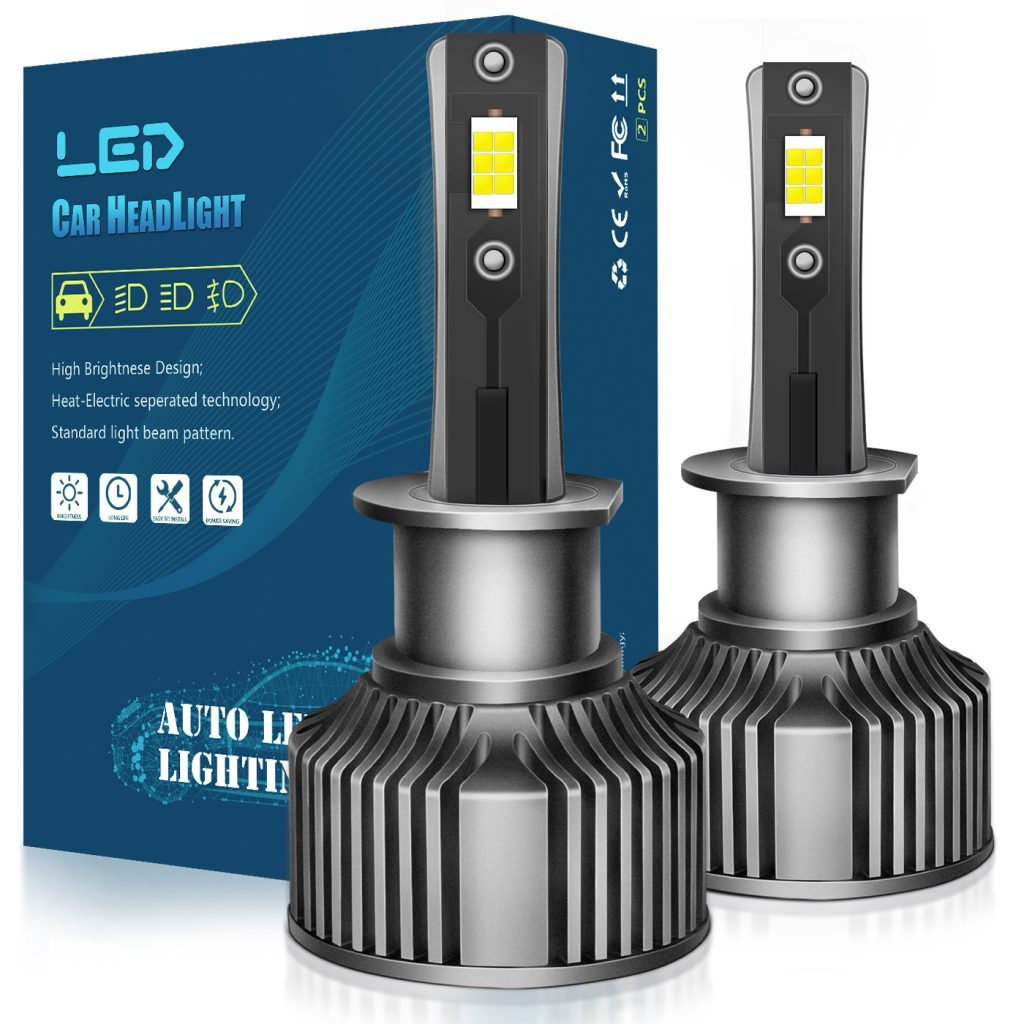
Matching lumen values vary based on the original stock lamp type. If your car comes with factory halogen low beams, around 1000 lumens is a proper upgrade; roughly 1200 lumens fits halogen high beams. For vehicles equipped with stock xenon HID lights, low beams should be above 2000 lumens, and high beams also perform well at about 1200 lumens. Different baseline brightness of original lamps requires matched lumen levels for safe, stable replacement and lighting upgrades.
Driving environment is another critical factor. If you mostly drive on urban roads with complete street lighting, LED headlights do not need high lumen ratings. 3000 to 5000 lumens is sufficient to deliver basic visibility without dazzling other drivers and pedestrians. On the contrary, if you frequently travel on dim rural roads or mountain lanes with poor lighting, LED headlights with higher lumens are recommended.
Multiple factors need to be weighed when choosing the wattage and lumen of LED headlights.
Normally, automotive LED headlight bulbs range from 30W to 40W, while daytime running lights are under 10W. This is not a rigid standard and can be adjusted according to factory lamp power and personal brightness demands. The luminous efficiency of automotive LED lights averages 91 lumens per watt, with a reasonable range of 80 to 100 lumens per watt.
LED headlights hold a clear advantage in luminous efficiency over traditional halogen lamps. An LED bulb produces far brighter light than a halogen bulb with the same wattage. Therefore, there is no need to choose high-wattage LED bulbs for replacement. LED lights with the same or slightly lower wattage than the original factory bulbs can fully meet daily lighting needs.
Still, higher wattage is not always better. Higher power generates more operating heat. Without reliable heat dissipation structures, the service life of LED lamps will be severely shortened. To guarantee a service life over 30,000 hours, the operating temperature of LED chips should be kept below 85°C. In addition, vehicle wiring has a rated power limit. Over-wattage LED headlights will overload wires, cause circuit overheating and even burn out harnesses.
Vehicle headlight systems fall into two categories: two-lamp system and four-lamp system. For four-lamp layouts, the outer lamps serve as combined low and high beams, while inner lamps are dedicated single high beams. High beam bulbs usually range from 35W to 60W with lumen output of 3400–5900. Low beam bulbs run 35W to 55W at 3400–5400 lumens. Most automakers adopt 35W as the standard headlight power, and certain models use 55W high beams.