Short Conclusion
Under standard correct upgrade conditions, LED bulbs will not damage factory wiring — they actually reduce the electrical load and protect the harness. However, risks exist under specific improper conditions, which we break down objectively below.
1. Power & Current Difference: Less Heat, Lighter Burden on Wiring
Factory halogen bulbs are typically rated 55W. Calculated under standard 12V vehicle voltage:
55W ÷ 12V ≈ 4.6A operating current
Mainstream qualified replacement LED bulbs run at 25W–40W. Take a common 35W LED as an example:
35W ÷ 12V ≈ 2.9A operating current
The current drops by roughly 37%. Per Joule’s Law \(Q=I^2Rt\), heat generated in wiring is proportional to the square of current. A 37% current reduction cuts wiring heat output by around 60%. Slower heat accumulation greatly slows insulation aging of harnesses.
Many drivers worry about huge LED startup inrush current, yet this peak only lasts dozens of milliseconds — far too brief to create sustained temperature rise or damage wiring.
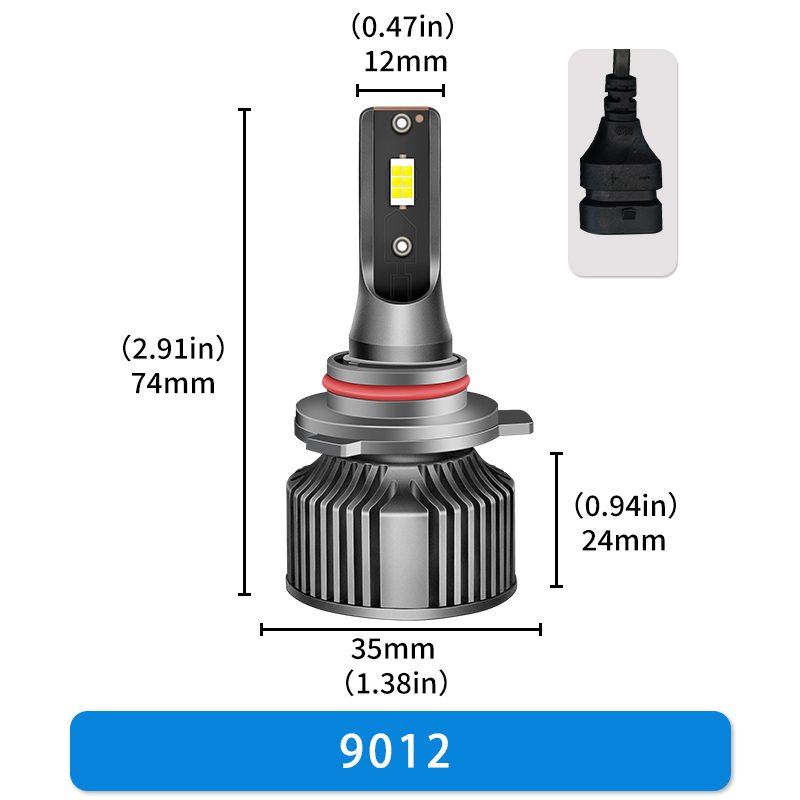
2. Lower Operating Temperature Protects Sockets & Wiring
Halogen bulbs run extremely hot at 200°C–300°C during operation. Long-term high heat continuously bakes bulb sockets, plugs and nearby wiring, making plastic components brittle and accelerating insulation cracking.
LED bulbs operate at only 50°C–70°C, roughly one-quarter of halogen temperature. Lower heat prevents yellowing, embrittlement and burning of lamp bases, and avoids constant thermal stress on adjacent wiring — creating better long-term protection for the vehicle’s electrical parts.
3. Four High-Risk Scenarios That May Harm Wiring
While standard LED upgrades are safe, these four situations introduce hidden circuit hazards:
- Aging wiring on vehicles over 15 years old Original harness insulation has turned brittle and cracked. Even minor disassembly may worsen damage. Inspect wiring integrity thoroughly before replacing bulbs on vintage cars.
- No-name LED bulbs with false power labeling Many cheap bulbs marked 50W actually draw 70W–80W or more. True high-power LEDs overload factory wiring, which is a product quality issue rather than an inherent flaw of LED technology. Stick to certified reputable brands with accurate rated power.
- Non-standard wiring modification during installation Cutting factory wires, loose twisted splices, or poor insulation tape wrapping raise short-circuit risks. Stick to plug-and-play non-destructive installation with no wiring alterations.
- Ultra-high-wattage LED bulbs (80W/100W) Excessive sustained current far exceeds the original circuit’s designed load, leading to overheating, melted insulation and blown fuses.
4. How CANBUS Decoders Work: No Extra Circuit Load
Most LED replacements integrate built-in CANBUS decoders (load resistors) to mimic halogen resistance values and eliminate dashboard fault codes or flickering.
Decoders only simulate halogen current signals for the vehicle’s BCM, and their power consumption is fully included in the total rated power designed by legitimate manufacturers. A standard 35W LED with decoder runs at a total of 38W–42W, still far below the 55W halogen rating, so the wiring remains under reduced load.
5. Risk Judgment Reference Table
表格
| Situation | Wiring Risk Level | Explanation |
|---|---|---|
| Reputable brand LED, true power 30W–40W, plug-and-play installation | ✅ Safe | Lower current & heat reduce wiring fatigue |
| Vehicles aged over 15 years with cracked/brittle wiring insulation | ⚠️ Caution | Inspect harness condition fully before upgrade |
| Generic falsely labeled LED with actual power far above nominal rating | ❌ Dangerous | Severe circuit overload, overheating risk |
| Installation requires cutting, splicing or rewiring factory harness | ❌ Dangerous | Poor insulation creates short-circuit hazards |
Full Summary
Switching halogen bulbs to qualified LED headlights does not damage wiring — it lessens electrical load, cuts operating current and lowers working temperature, all of which extend the service life of factory wiring.
The only real hazards stem from three avoidable factors:
- Inferior unbranded LED bulbs with exaggerated power labels
- Severely degraded original wiring on old vehicles
- Improper installation involving wire cutting or splicing
Practical Operation Advice
- Choose certified branded LEDs with true rated power of 30W–40W
- Select plug-and-play models with matching OEM connectors, no wire modification required
- Inspect harness insulation condition before upgrading vintage vehicles
- After installation, turn headlights on for 10 minutes and touch wiring gently: slight warmth is normal; hot surfaces indicate hidden overload that needs troubleshooting
With genuine products and standardized non-destructive fitting, LED upgrades reduce wear on your car’s wiring system instead of damaging it.