There is no absolute winner between LED and xenon headlights – the right choice depends on your driving needs and budget. This article compares the two light sources across technical characteristics, running costs, use‑case suitability, and buying considerations – helping car owners make an informed decision.
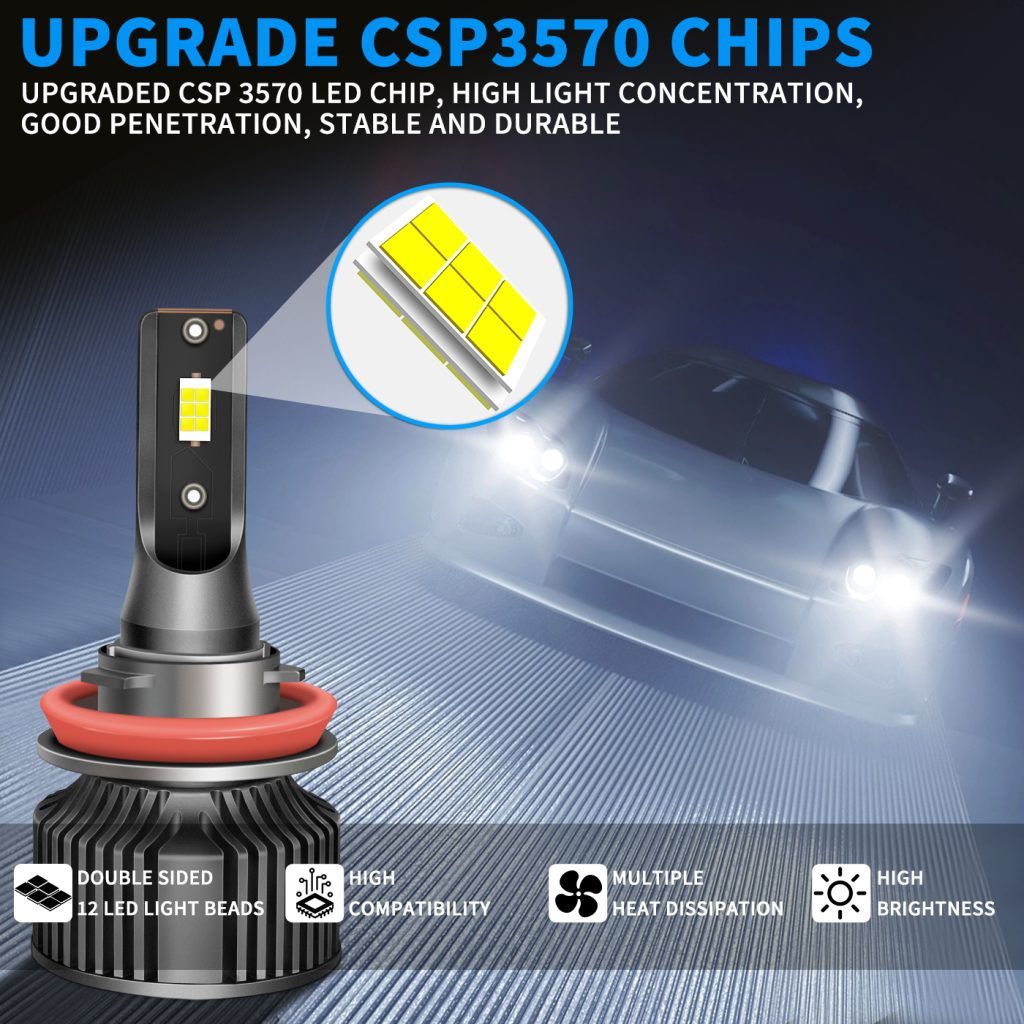
1. Technical Comparison
| Metric | LED | Xenon (HID) |
|---|---|---|
| Lifespan | ~50,000 hours – premium up to 100,000 hrs | ~3,000 hours – noticeable depreciation over time |
| Energy efficiency | Low – minimal electrical load | Higher – generates significant heat |
| Response speed | Instant‑on, no delay | Start‑up delay |
| Colour temp | Wide range (3500K‑6500K) | Daylight‑like (~4300K) – comfortable |
| Fog/rain penetration | Good at lower colour temps | Warm white penetrates well |
| Market adoption | 81.3% of Chinese passenger car fitments (2024) | Declining annually |
| Intelligence | Matrix, adaptive, and smart functions available | Limited intelligence potential |
2. LED Headlights – The Mainstream Choice
LEDs have become the market leader with lifespans exceeding 50,000 hours, lower energy consumption, and a dominant 81.3% fitment rate in China’s 2024 passenger car market. Their evolution toward intelligent lighting – matrix LEDs, adaptive high beams – is expanding their capabilities.
Buying and installation tips:
- Colour temperature: Choose 3500K‑6000K. 4300K warm white penetrates fog/rain better; 6000K cool white offers a wider field of view.
- Brand recommendations: Philips X‑treme Vision and Osram Night Breaker series – stable beam patterns and excellent cooling.
- Socket type: Confirm compatibility (H7, H11, 9012, etc.) before purchase.
- Decoder function: Ensure intelligent decoding to avoid dashboard error codes.
- Cooling design: Built‑in fans or copper‑braid heatsinks are critical – preventing premature lumen depreciation.
3. Xenon Headlights – Comfort and Long‑Range Performance
Xenon excels in light penetration and visual comfort. Its colour temperature is close to natural daylight – reducing eye fatigue during long night drives. Its high luminous flux delivers strong high‑beam range – ideal for suburban or unlit roads.
Caveats: High heat output demands good thermal resilience; brightness degrades over time; and start‑up is delayed.
4. Laser Headlights – Cutting‑Edge, High‑Cost
Laser headlights represent the current pinnacle of automotive lighting – several times brighter than LEDs, with far superior range, excellent efficacy, and even road coverage.
Best for: Premium vehicles or drivers who demand ultimate night‑driving safety. Important notes:
- Extremely high lens‑focusing precision required – poor‑quality units scatter light
- Choose only reputable, certified products
- Ensure a clean beam cut‑off to avoid safety hazards
5. The Enduring Value of High‑Performance Halogen
Despite LED dominance, high‑output halogens remain irreplaceable in certain conditions. Dual‑coated halogen bulbs (e.g., Osram Fog Breaker, ~3900K yellow‑white) offer exceptional penetration in heavy rain, dense fog, or dust – with minimal glare.
Practical setup: Use LEDs for main headlights and high‑penetration halogens for fog lamps – an all‑weather safety combination. Installation is plug‑and‑play with no wiring changes – and cost is minimal.
6. Summary and Selection Guide
| Driving Scenario | Recommended Choice | Reason |
|---|---|---|
| Daily city commuting | LED | Long life, low energy, high intelligence |
| Frequent night/suburban/unlit roads | Xenon | Strong high‑beam penetration and comfort |
| Ultimate lighting performance | Laser | Peak brightness and range – but costly |
| Frequent fog/rain | Low‑colour‑temp LED + halogen fog lamps | Best of both – efficiency and penetration |
Automotive lighting continues to evolve – hybrid solutions combining the strengths of both technologies are already emerging. The final choice should be based on your actual driving environment, budget, and personal preferences.