- Xenon HID Headlights
Theoretical rated lifespan: 2,000 – 3,000 hours
Real usage performance:
Normal urban mixed driving: roughly 2 ~ 3 years
Frequent long-distance night driving: around 1 ~ 2 years
Key notes:
The bulb itself is the main consumable part; the ballast normally lasts much longer (5–8 years). When brightness gradually fades, you only need to replace the xenon bulb instead of the whole set.
Warm-up, frequent on/off switching accelerates electrode ablation inside the quartz capsule and speeds up light decay.
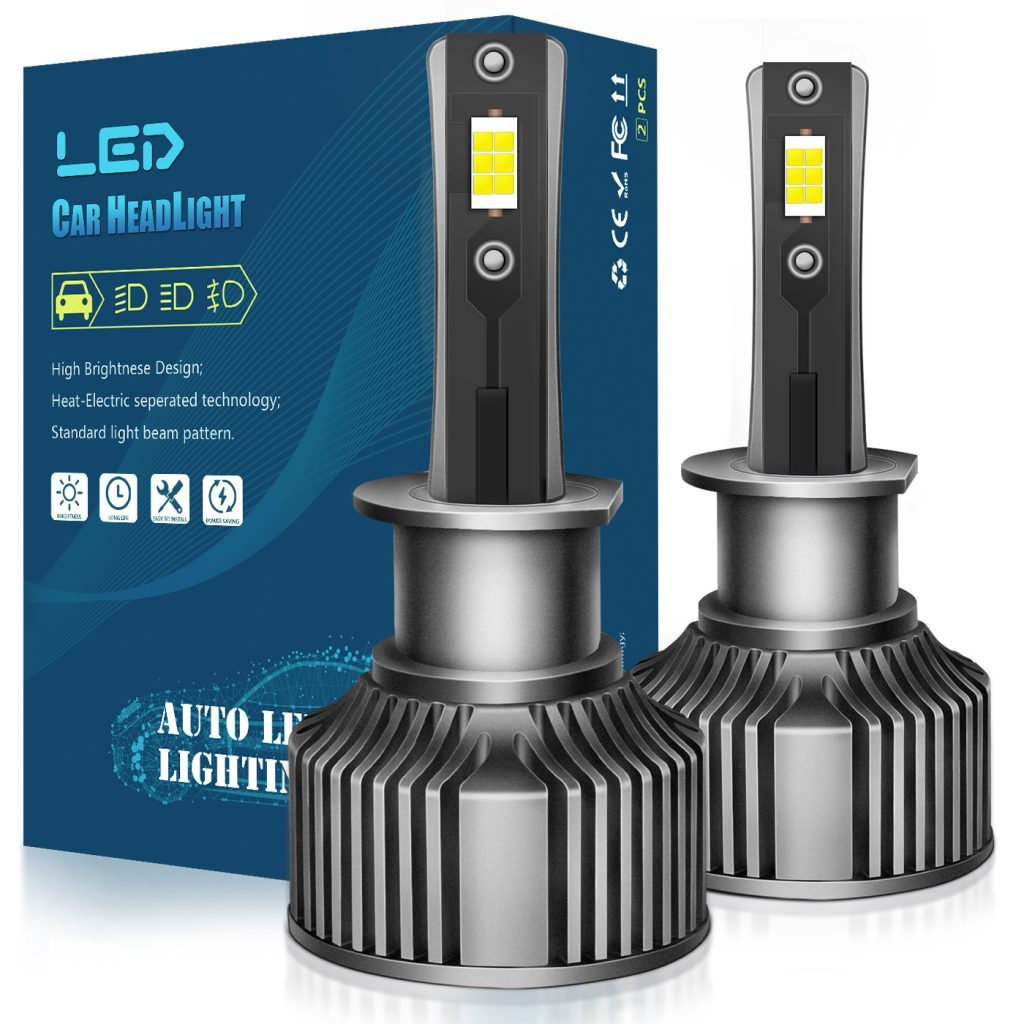
Operating temperature reaches 300–400°C; poor ventilation inside the lamp housing will shorten service life further. - LED Headlights
Theoretical rated lifespan: 20,000 – 100,000 hours
Real usage performance:
High-quality LED with proper heat dissipation: 5 ~ 10 years, often lasting the whole vehicle service cycle
Inferior cheap LED without effective cooling: only 6 months ~ 2 years due to severe thermal luminous decay
Key notes:
LED chip lifespan heavily depends on heat dissipation. Heat is the biggest killer of LED. Products with aluminum housing + copper heat pipe + cooling fan maintain stable brightness long-term. Sealed plastic low-cost LEDs decay rapidly.
The constant-current driver is a vulnerable component. Even if the chip survives, a failed driver will cause flickering or complete lamp failure.
LED has no filament, solid-state structure, excellent shock resistance.
Comparison Table
表格
Item Xenon (HID) Headlights LED Headlights
Theoretical Lifespan 2,000 – 3,000 hours 20,000 – 100,000 hours
Actual Service Life (Qualified Products) 1–3 years 5–10 years
Main Consumable Component Xenon bulb (electrode erosion) Driver module; chips fail mainly from overheating
Influencing Factor #1 Frequent startup & warm-up abrasion Heat dissipation performance
Light Decay Feature Slowly dims over time Good units keep stable brightness; bad units dim quickly within months
Supplementary Practical Reminders
Do not only look at nominal parameters. A cheap LED marked “50,000 hours” may fail faster than a standard xenon set due to terrible cooling.
Xenon lights will not suddenly burn out; brightness decreases slowly, giving drivers buffer time. Severe overheating LED chips may suddenly stop working.
If you drive night trips frequently every day:
LED (good cooling design) is more economical in the long run, fewer replacements;
Xenon requires periodic bulb replacement.