There is no simple conclusion of “which one is brighter”. The actual performance depends on power grade, optical design, product quality and beam control.
Standard 35W Xenon (HID)
Stable luminous flux: 3,200–3,600 lumens.
After 3–5 seconds warm-up, brightness reaches peak value. With qualified projector lenses, xenon delivers strong long-distance beam throw.
Shortcoming: Light output will gradually decay after long-term use; poor light shaping without lenses leads to severe glare.
Mainstream 25–40W Automotive LED Bulbs
Luminous flux range: 2,800–4,000 lumens.
High-quality LED with good thermal design can match or even exceed standard 35W xenon in total light volume.
Core advantage: Instant full brightness without warm-up; light distribution is more even for low-beam road illumination.
Shortcoming: Low-cost LED suffers severe luminous decay within months due to insufficient heat dissipation, resulting in continuously dropping brightness.
Key Summary
Pure total luminous flux: Standard 35W xenon has slight advantages in stable long-distance output;
Practical road illumination: High-quality LED performs better on urban low-beam conditions with even paving;
Light utilization is more important than raw lumens. Without lenses, both xenon and LED scatter light, and effective brightness on the road drops sharply.
二、Effect of Replacing Halogen Bulbs Directly With LED Bulbs
Upgrading halogen headlights with LED bulbs can achieve obvious brightness improvement only under matched optical conditions. Blind plug-and-play modification carries hidden risks of scattered light, illegal glare and short service life.
✅ Advantages When Properly Matched
Brightness is 2–3 times higher than original halogen lamps. Color temperature 4300K–6000K improves recognition of road markings, pedestrians and obstacles.
Low power consumption (25–35W vs original 55W halogen), reducing load on alternator and battery.
Instant full brightness, no warm-up delay; convenient when passing tunnels or meeting oncoming traffic.
Theoretical service life: 20,000–50,000 hours, far longer than halogen’s 500–1,000 hours, lowering long-term replacement cost.
⚠️ Major Hidden Risks (Most Owners Ignore)
Optical mismatch — the biggest problem
Original halogen reflector bowls or factory lenses are designed for the focal point of tungsten filaments. LED chip luminous position deviates from the original focus.
Result: Severe scattered light, blurred low-beam cutoff line. Your vision looks bright in front of the vehicle, yet the effective road illumination distance shortens, and strong glare disturbs oncoming drivers.
Critical rule: Vehicles with original halogen reflector housings (no built-in lens) are not recommended for simple LED bulb swap. If you want safe upgrade, bi-LED projector modification is the reliable solution.
Heat dissipation determines service life
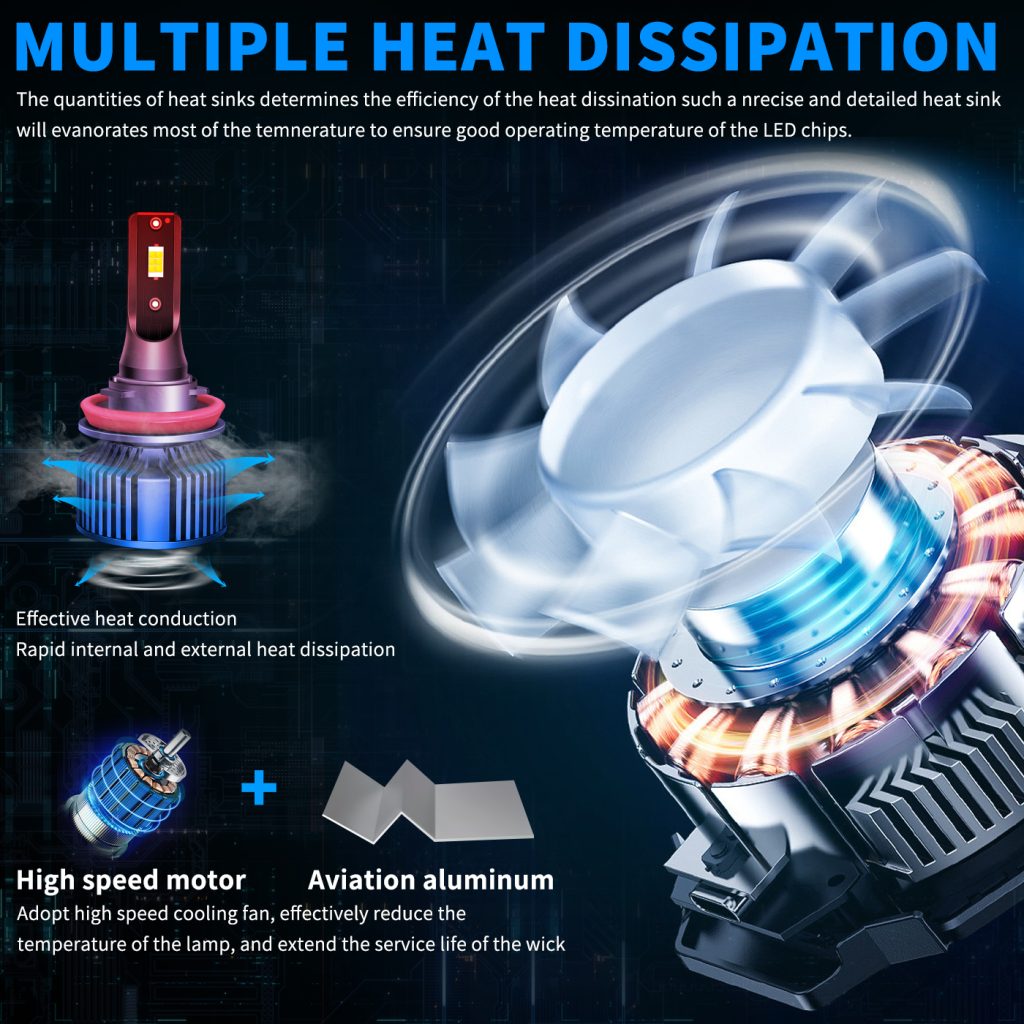
LED chips are sensitive to high temperature. Cheap LED bulbs without aluminum heat sinks or cooling fans trigger irreversible luminous decay rapidly. In severe cases, high temperature melts plastic inside the lamp housing and corrodes reflector coating.
Circuit compatibility & dashboard fault warning
Original halogen draws higher current. Low-power LED may trigger the vehicle’s lamp monitoring system, causing flickering or bulb failure alert. Choose LED with built-in CANBUS decoder for modern vehicles.
Vehicle inspection compliance risk
According to GB 7258 and GB 4599 standards:
Color temperature shall not exceed 6000K; bluish light above 6000K reduces rain/fog penetration and fails inspection;
Low beam must have a clear horizontal cutoff line. Scattered light from bare LED bulb replacement is highly likely to be judged unqualified.
三、Practical Upgrade Solutions & Budget Reference
Cars equipped with factory projector halogen lamps
Feasible: Directly replace with 1:1 filament-positioned LED bulbs (30–40W, 4300K–5500K, built-in decoder). Budget: $40–$150. Remember to adjust beam height after installation and carry out wall light pattern testing.
Cars with original halogen reflector bowls (no lens)
Not recommended for simple LED bulb swap. Preferred plan: Bi-LED projector modification. Budget: $280–$550. Stable light pattern, glare control and high inspection pass rate.
Budget tier overview
$40–$150: Plug-and-play LED bulbs (only suitable for factory projector models)
$280–$550: Bi-LED projector kits (balanced performance & compliance, mainstream choice for reflector vehicles)
$550+: Premium integrated LED headlight assemblies
四、Final Buying & Installation Checklist
Select formal branded LED with reliable heat dissipation (aluminum housing + copper heat pipe + silent fan preferred);
Color temperature range: 4300K–5500K, avoid products above 6000K;
For CANBUS vehicles, confirm built-in decoding function to eliminate fault codes;
After installation, test light pattern against a wall 5–10 meters away. Ensure neat low-beam cutoff without upward stray light;
Keep original halogen bulbs for temporary restoration during annual inspection.