Fitting aftermarket LED headlights will not inherently damage your vehicle hardware, yet improper modification leads to multiple hidden risks, including failed annual vehicle inspection, potential electrical faults and traffic safety hazards.
Many drivers who buy base-trim vehicles choose to upgrade to LED headlights for higher brightness, lower heat output, less power consumption and modern appearance. However, arbitrary headlight modification is not recommended.
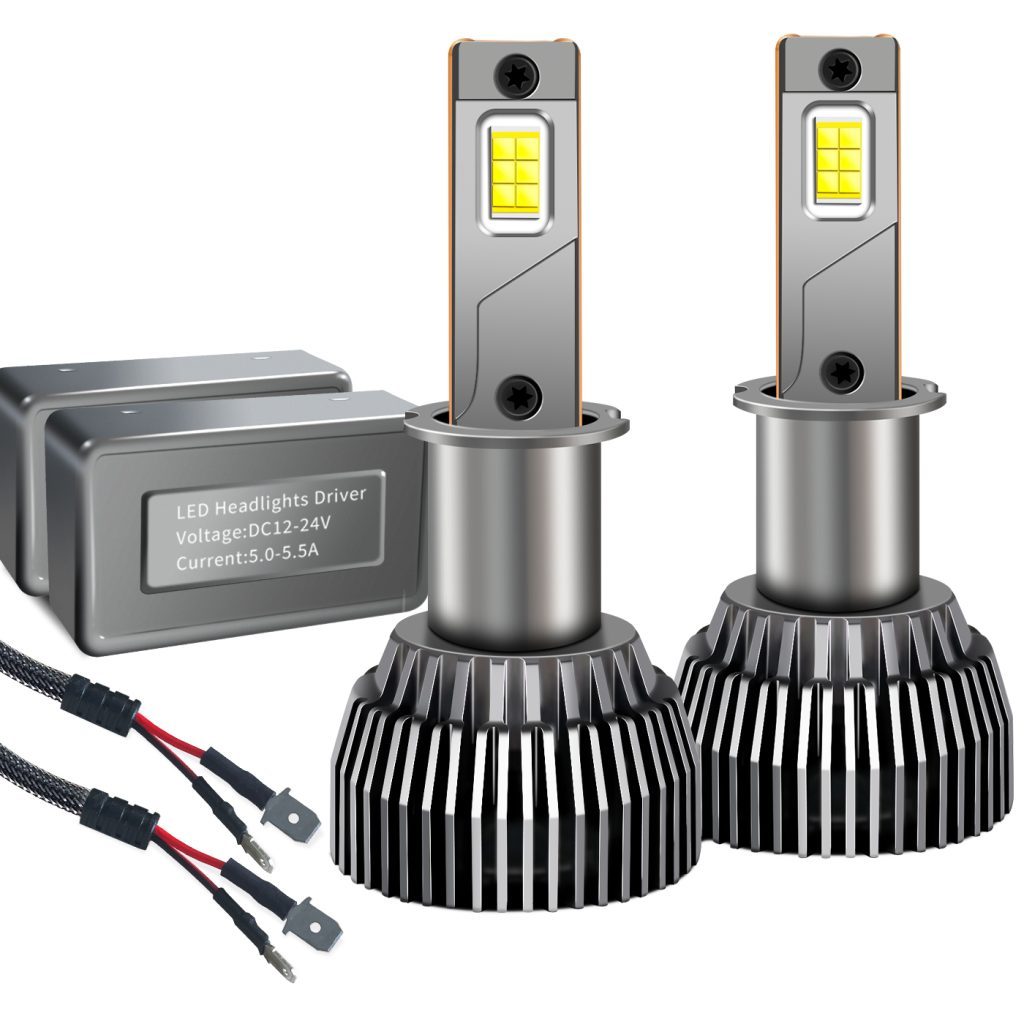
- Compliance & Annual Inspection Risk (Most Common Issue)
Traffic safety regulations restrict unauthorized changes to headlight lighting systems.
Directly swapping halogen bulbs with bare LED bulbs usually causes scattered light and blurry cutoff lines, which will be judged unqualified during inspection.
Color temperature exceeding 6000K will fail inspection; bluish-white light also delivers weak penetration in rain and fog.
If the original vehicle filing information records halogen headlights, large-scale lighting upgrades may be identified as unauthorized modification. - Potential Electrical System Impacts
Many modern vehicles adopt CAN-BUS lamp monitoring. Low-power LED bulbs trigger dashboard bulb failure warnings, flickering or intermittent lighting if without built-in decoders.
Poor-quality LED drivers have unstable voltage resistance, which may blow fuses and in extreme cases interfere with the body control module.
Loose wiring and unfastened decoders may cause abnormal heating of plugs, creating fire risks. - Driving Safety Problems Caused by Optical Mismatch
The original reflector bowl or factory projector is designed for halogen filament focal points.
If the LED chip position deviates from the focal point, severe scattered light occurs. The lights look bright to the driver but fail to illuminate the road effectively, while glaring oncoming vehicles and increasing collision risks.
Inferior LED products lack effective heat dissipation, leading to rapid luminous decay. Brightness gradually drops after several months of use. - Positive benefits of qualified LED upgrades
When fitted with standardized, certified products and professional calibration:
✅ Higher brightness, wider field of vision for night driving
✅ Lower power consumption than halogen lights, reducing alternator load
✅ Instant full brightness with zero warm-up delay
✅ Much longer service life than halogen bulbs
Brief Comparison: Halogen vs LED Headlights
Working Principle
Halogen: Tungsten filament generates light via thermal radiation; halogen gas slows filament evaporation.
LED: Solid semiconductor chip emits light through electroluminescence, no fragile filament.
Light Color & Color Temperature
Halogen: Warm yellow light, CCT 2000K–4000K, excellent penetration in rain and fog.
LED: Mostly cool white light, commonly 5000K–6000K; versions above 6000K suffer weak bad-weather penetration.
Cost & Application
Halogen: Low manufacturing cost, widely equipped on entry-level family cars.
LED: Higher initial cost; standard equipment on most new mid-range and premium vehicles.
Supplementary Industry Trend
Audi is famous for sophisticated LED light design and nicknamed “the lighting factory”. Laser headlights represent the next trend, featuring longer beam range, higher brightness and low energy consumption. Limited by high costs, laser lights are only available on top luxury models for now. Many vehicles are equipped with separate LED daytime running lights, independent of low/high beam headlights.
Final Suggestions
If your car has factory projector halogen lamps: Choose 1:1 filament-positioned LED bulbs with built-in CANBUS decoders and adjust beam height after installation.
If your car has reflector halogen housings without lenses: Avoid simple LED bulb replacement. Bi-LED projector modification is the safer, inspection-friendly solution.
Always select branded products with reliable heat dissipation and arrange professional fitting and optical calibration.