The brightness gap between HID xenon lamps and LED headlights cannot be simply defined as “one is brighter than the other”. Their lighting performance varies greatly depending on driving scenarios and technical features. Under clear weather conditions, HID xenon lights deliver 3200–3600 lumens of high light output. Their white light helps drivers clearly identify road signs and road potholes, offering outstanding apparent penetration. While many LED products produce lumens ranging from 2000 to 4000, they feature higher color temperature and concentrated beams, delivering better visibility in harsh weather such as rain and fog.
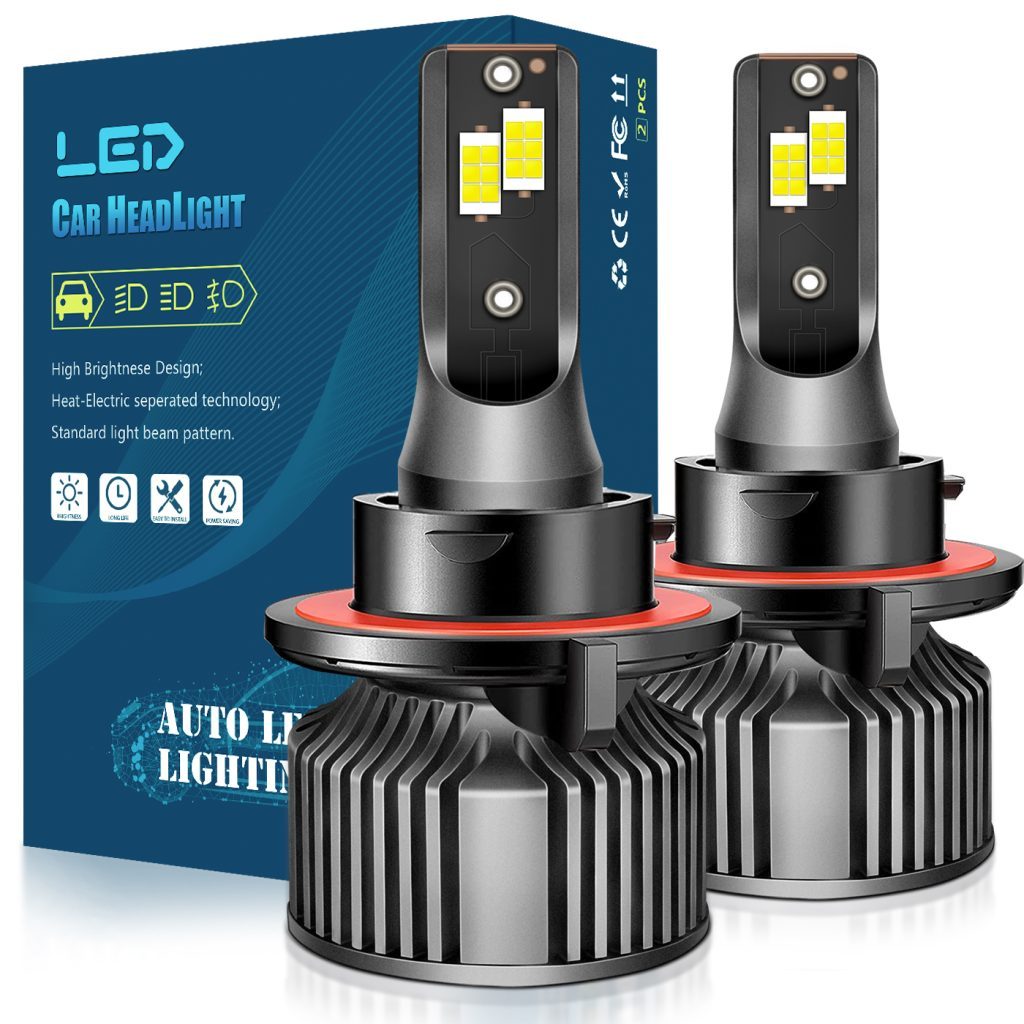
In terms of lighting principles, HID xenon lights generate strong illumination via high-voltage gas discharge, requiring 3 to 4 seconds to reach full rated brightness. LED headlights emit light through an array of diodes and light up instantly. In power specifications, most xenon kits run at 35W, whereas LED headlights operate at 20–40W with superior energy efficiency. Both light sources are 3–6 times brighter than traditional halogen bulbs. The final choice should be determined comprehensively by weather conditions and response requirements.
When it comes to real-world driving scenarios, the advantages of xenon headlights stand out significantly on dry, clear nights. For vehicles traveling on unlit suburban roads, xenon lights with over 3000 lumens can illuminate a wider road area. Their light spectrum is close to natural daylight, reducing eye strain and enabling drivers to easily read distant road signs and spot minor pavement defects.
Nevertheless, during heavy rain or dense fog, scattered xenon light tends to refract off water vapor and blur forward vision. In such cases, high-color-temperature LED light performs better at penetrating mist. Its focused beam maintains a clear illuminated zone under severe weather, improving vehicle visibility and lowering accident risks.
Regarding daily practicality, the difference in startup characteristics directly affects driving safety. The startup delay of xenon lamps may create temporary lighting gaps in emergencies, such as pulling away at night or entering tunnels, as drivers need to wait several seconds for sufficient brightness. By contrast, LEDs achieve stable illumination the moment power is supplied. The instant-on feature suits frequent stop-and-go city driving and grants drivers extra reaction time.
Energy consumption is another key factor to consider. At equivalent brightness output, LED headlights consume roughly 20%–30% less power than xenon lights. Continuous use reduces the electrical load on vehicles, matching global energy-saving and eco-friendly trends.
It is worth noting that perceived brightness also relies on light distribution and color temperature. Some LED bulbs register lower lumens than xenon lights, yet their color temperature commonly exceeds 5000K, producing cool white light. This creates a subjective impression of harsh glare, tricking people into believing they are brighter. Xenon lamps usually sit around 4300K, delivering light similar to midday sunlight with softer output that minimizes visual fatigue during long drives.
Additionally, the modular design of LEDs allows precise beam control when paired with lenses, effectively cutting glare for oncoming traffic. This is one major reason LED lighting has gained growing popularity in modern automobiles.
Overall, there is no absolute winner in brightness between xenon and LED headlights, as each boasts distinct strengths. High-lumen xenon lights are ideal for drivers pursuing maximum illumination range under ordinary conditions. LEDs excel with instant startup, low power draw and reliable performance in complicated weather, making them more suitable for urban commuting and variable road conditions.
When making a purchase decision, drivers should evaluate local climate, daily driving habits and vehicle electrical configurations to select the optimal lighting solution.