In automotive lighting, xenon (HID) and LED headlights are the two dominant choices. Many owners hesitate when upgrading or choosing a new car: which one suits them better? This article compares brightness, lifespan, energy consumption, cost, and use‑case suitability – with particular focus on energy efficiency – to help you decide.
1. Energy Efficiency and Consumption – LEDs Lead Across the Board
Energy conversion efficiency: LEDs convert electricity directly into light with 80‑90% efficiency. Xenon lamps rely on high‑voltage arcs to excite gas – a portion of energy is lost as heat, making them less efficient.
Typical power draw: For comparable brightness, xenon needs ~35W, while LEDs typically draw 20‑30W – a significant gap. LEDs use roughly half the power of xenon, reducing vehicle electrical load.
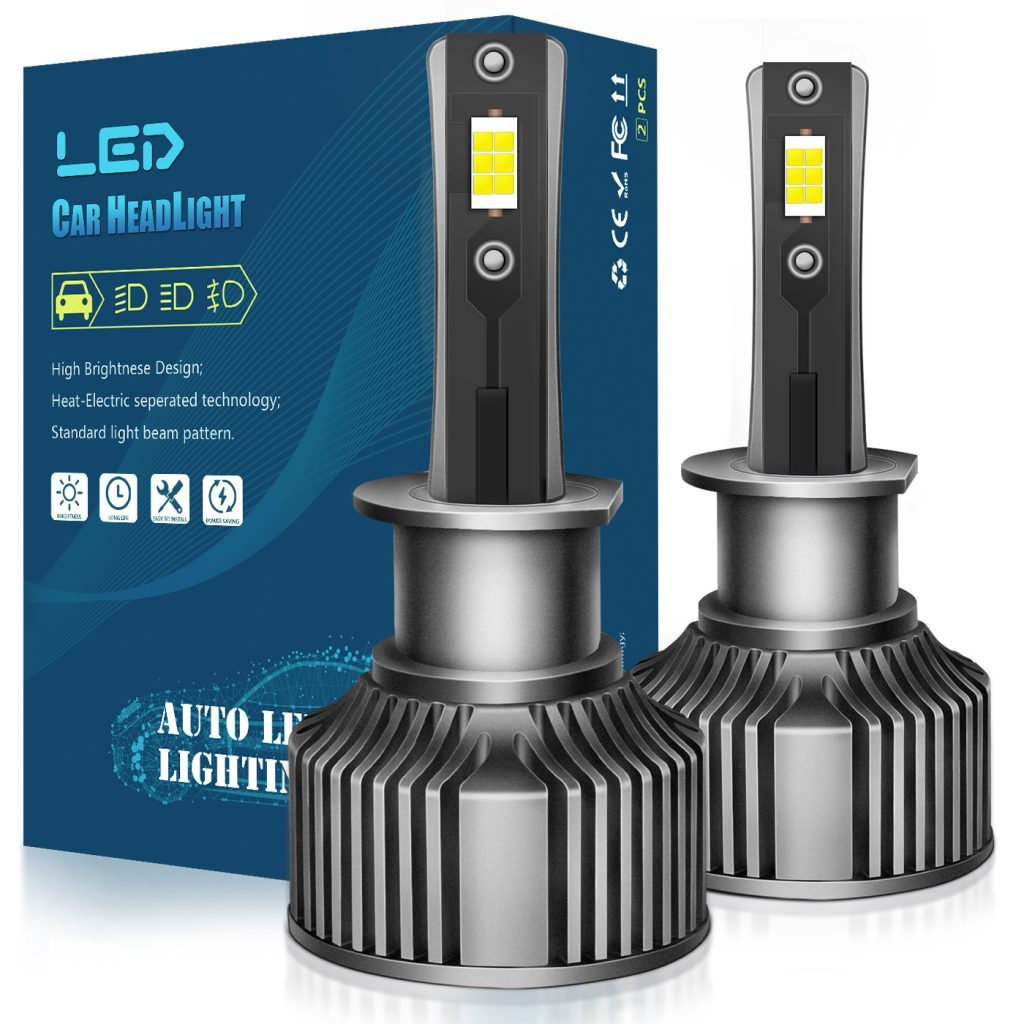
Start‑up characteristics: LEDs light instantly with no warm‑up waste. Xenon requires a brief warm‑up, with instantaneous power surging above 100W – creating extra ineffective energy consumption and strain on vehicle circuits, potentially increasing battery wear over time.
Lifecycle efficiency: LEDs typically last over 30,000 hours (far exceeding xenon’s ~5,000 hours) – reducing replacement frequency and the embodied energy of manufacturing and transport.
Overall conclusion: From instantaneous power draw to long‑term running costs, LEDs are comprehensively more energy‑efficient than xenon.
2. Brightness and Illumination – Different Strengths
Xenon lamps produce light through high‑voltage arcs – cool‑white light with brightness above 3,000 lumens. Wide beam and strong penetration – excellent for revealing road details in fog/rain. However, the beam scatters more easily – potential glare for oncoming traffic – requiring dedicated lenses.
LEDs emit light through semiconductors – higher colour temperature (typically 5000K‑6000K) – closer to natural daylight – better colour rendering at night – reducing eye fatigue. Brightness ranges 2000‑4000 lumens. Premium LED arrays with multiple sources enable precise beam control – but their penetration is slightly weaker than xenon in extreme weather.
3. Lifespan and Stability – LEDs Excel
| Metric | Xenon | LED |
|---|---|---|
| Lifespan | 3,000‑5,000 hours | 50,000+ hours |
| Start‑up | 2‑3 sec warm‑up | Instant full brightness |
| Shock resistance | Moderate (glass envelope) | High (solid‑state, no filament) |
| Stability | Ballast may degrade over time | Stable and reliable |
Xenon lifespan is typically 3,000‑5,000 hours – the ballast, as a high‑voltage start‑up device, may age over time, causing flickering or failure. Frequent switching shortens life.
LEDs last over 50,000 hours – 5‑8 years of normal use – with no filament or glass envelope, offering superior shock resistance on rough roads. Full brightness is achieved instantly – no warm‑up – a more convenient user experience.
4. Cost and Installation – Xenon Cheaper Upfront, LEDs More Economical Long‑Term
| Metric | Xenon | LED |
|---|---|---|
| Upfront cost | 300‑800 CNY/set | 800‑2,000 CNY/set |
| Maintenance | Regular bulb replacement | Virtually maintenance‑free |
| Installation | Requires additional lenses | Requires precise housing fit |
Xenon kits (bulb + ballast) cost 300‑800 CNY – with mature installation techniques available at most garages – ideal for budget‑conscious owners. But lenses are essential – without them, illumination suffers and regulations may be violated.
LEDs cost more upfront – a quality set runs 800‑2,000 CNY, with factory units on premium models exceeding 5,000 CNY. However, their ultra‑long life and low energy consumption make total cost of ownership lower over time. LEDs demand more precise installation – matching the headlight housing – otherwise beam scatter may occur.
5. Use‑Case Recommendations
- Frequent fog/rain or suburban night driving: Xenon’s strong penetration and high brightness provide better safety.
- Mainly city driving: LEDs’ efficiency, long life, and instant‑on advantages are more noticeable – ideal for cost‑conscious owners.
- Electric vehicles: LEDs’ low energy consumption makes them especially suitable for EV range optimisation.
6. Compliance Reminder
Whether choosing xenon or LEDs, always select products that meet national standards – avoid excessive brightness or scatter that compromises other drivers’ safety. Lighting modification regulations vary by region – check with local authorities before upgrading to ensure compliance.
Summary Comparison Table
| Dimension | Xenon (HID) | LED |
|---|---|---|
| Power draw | 35‑55W – surges >100W on start‑up | 20‑30W – ~half of xenon |
| Conversion efficiency | Lower – heat loss | 80‑90% – minimal loss |
| Start‑up | 2‑3 sec warm‑up | Instant‑on |
| Lifespan | 3,000‑5,000 hours | 50,000+ hours |
| Brightness | 3,000+ lumens | 2,000‑4,000 lumens |
| Penetration | Strong (fog/rain) | Moderate (high colour temp) |
| Upfront cost | 300‑800 CNY | 800‑2,000 CNY |
| Long‑term cost | Higher | Lower |